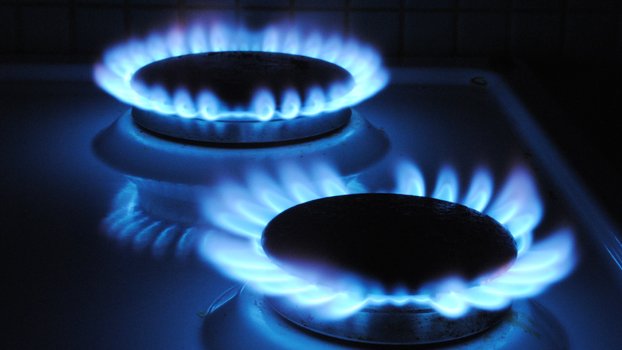
As the government decided not to allow new household pipeline gas connections, it is going to refund around Tk 40 crore about 56,000 applicants had deposited.
The Titas Gas Transmission and Distribution Company Limited (TGTDCL) has been instructed to carry out the decision, said an official.
The government has decided to permanently stop new gas connections through pipelines to households because of gas shortages in the country.
Earlier, the energy division had instructed six gas distribution companies to refund the deposited money for demand notes for new gas connections in household.
Out of six state-owned gas distribution companies, TGTDCL is selling around 58 per cent of gas. The company is responsible for selling gas in 12 districts including Dhaka.
When contacted, Ali Iqbal Mohammad Nurullah, Managing Director of TGTDCL, told Bangladesh Post, “Gas will no longer be provided in new households. We are considering to return the deposited money through online. It will reduce the harassment of customers. The names of the customers who have applied for connections and deposited money are in our database.”
Last year (May 21, 2019), the government had issued an order not to provide any new gas connection to residential, CNG and commercial places. But no decision has been made as to what will happen to the demand note money collected from the customers.
Meanwhile, total gas reserves of the country have come down to less than 10 TCF. The demand has to be met by importing LNG. In this situation, the government is considering of meeting the demand for household fuel with liquefied petroleum gas (LPG). Therefore, an initiative has been taken to provide LPG at a fair price to the customers in cylinders.
An official of Petro-Bangla said that most of the customers who received demand notes and deposited money were using gas illegally. Local officials and contractors of the distribution companies have arranged the illegal gas connections to these houses and are also collecting monthly bills. Theft of this gas due to inefficient management is wasting the national resources. There are also some damaged gas lines at some places. The state is being deprived of huge amount of revenue due to such negligence.
Syed Mohammad Nasir Uddin, Managing Director of Sundarban Gas Company Limited told Bangladesh Post, “We have got a letter from the ministry for discontinuing giving new gas connection. We will meet this week to implement the government instruction. Hopefully we will comply shortly.”
In addition, the government has stopped new gas connections in the domestic sector since 2010. Later, Bangladesh Oil, Gas and Mineral Resources Corporation (Petrobangla) announced to provide new connections in household and legalize illegal connections before June 2013.
It said that until June 2013, only those who were illegally using the extra stove without permission would be given legal connection. At that time, those who were waiting for gas connection also started taking illegal gas connections.
After the start of LNG import in 2018, it was learnt that the gas connection, which had been closed for a long time, would be resumed. Then some syndicates increased the number of illegal connections in different districts including Dhaka, Narayanganj, Munshiganj and Gazipur. They assured customers that they will legalise gas connections in a few days. But now it is time to disconnect all illegal connections, these connections will also be disconnected.
Energy officials said there are about 63,000 illegal gas connections in the country, mostly surrounding Dhaka.
Several reports were submitted to the authorities concerned over the years about illegal gas connections. In those reports, it was mentioned that a group of influential people and dishonest officials and employees of Titas are behind the illegal gas connections. The Ministry of Power, Energy and Mineral Resources also wants to remove illegal gas connections.
The imported LNG is mixed with domestic natural gas before the six state-owned distributors sell them to over four million consumers, mostly domestic consumers, across Bangladesh.
The government committee said that mixing LNG made piped household gas costlier but still less expensive than what households spent for using liquefied petroleum gas.
A cubic metre of LPG costs Tk 58.50 while the same quantity of LNG-mixture would cost Tk 35.40, said the committee. The existing price per cubic metre of gas supplied to households is Tk 12.60.
The country produces 2,750 mmcfd gas domestically and together with 1000 mmcfd of imported LNG the supply still falls short of meeting the demand for 4,000 mmcfd.
The country, however, could never fully use its imported LNG because of the inadequate length of gas pipeline.