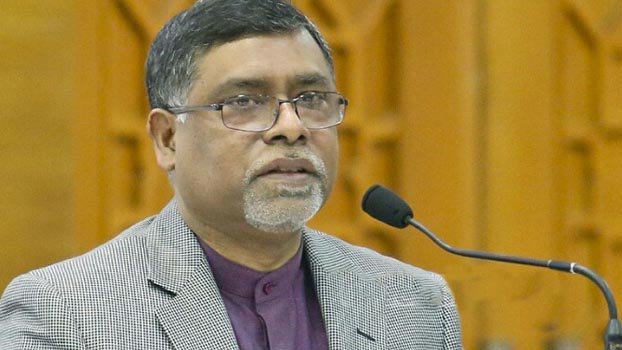
Health Minister Zahid Maleque on Monday urged expatriates not to come to Bangladesh at this moment to prevent the spread of coronavirus. He also urged all to limit all social, religious and sports gatherings. He said this emerging out of a meeting of the national committee formed over prevention of novel coronavirus at the ministry conference room in the capital.
The health minister urged all not to be panicked, rather be aware of the disease. He said the government had taken all the preparations to prevent the spread of the virus. “But I would say better not to travel now,” he said, adding that people can get affected while travelling from one country to another.
He said they would take special measures for the people who will come from the worst-affected countries including Italy and South Korea. “We also request you (who live in Bangladesh) not to travel out of the country if not very essential at this moment. If you come from abroad, please be self-quarantined,” he said, as the virus can spread anytime till 14 days of the exposure.
Earlier on Sunday the government postponed the grand opening of the Mujib Year which was scheduled to be held at the National Parade Ground on March 17. Experts suggest people washing hands often with soap for at least 20 seconds, especially before eating, after going to the bathroom and after blowing nose, coughing or sneezing.
People have been also asked to avoid touching eyes, nose and mouth with unwashed hands, cover cough or sneeze with a tissue and throw the tissue away, and maintain at least 1 metre (3 feet) distance from anyone who is coughing or sneezing. Viruses that affect the respiratory system enter the body through mucosal membranes which are found in the nose, oral cavity and lips. With poor hand hygiene, it is easy to acquire a viral infection this way.
The IEDCR also asked people to call the hotline numbers– 01937000011, 01937110011, 01927711784 and 01927711785 – if needed. The most common symptoms of COVID-19 are fever, tiredness and dry cough. Some patients may have aches and pains, nasal congestion, runny nose, sore throat or diarrhoea.
The symptoms are usually mild and begin gradually -- some people become infected but do not develop any symptoms and do not feel unwell, according to the WHO. Most people (about 80 percent) recover from the disease without needing special treatment. Around 1 out of every 6 people who gets COVID-19 becomes seriously ill and develops difficulty breathing.
Older people, and those with underlying medical problems like high blood pressure, heart problems or diabetes, are more likely to develop serious illness. WHO suggests that people with fever, cough and difficulty breathing should seek medical attention. The COVID-19 has infected more than 100,000 people in over 100 countries and killed over 3,400 while half of the infected people have so far recovered. Italy's outbreak is the worst in Europe, having infected more than 5,800 people and killed 233.
International experts urged media not to spread terror by using words such as ‘deadly’ or ‘killer’ virus in news stories. They also recommended media to spread awareness messages to give confidence to the people.