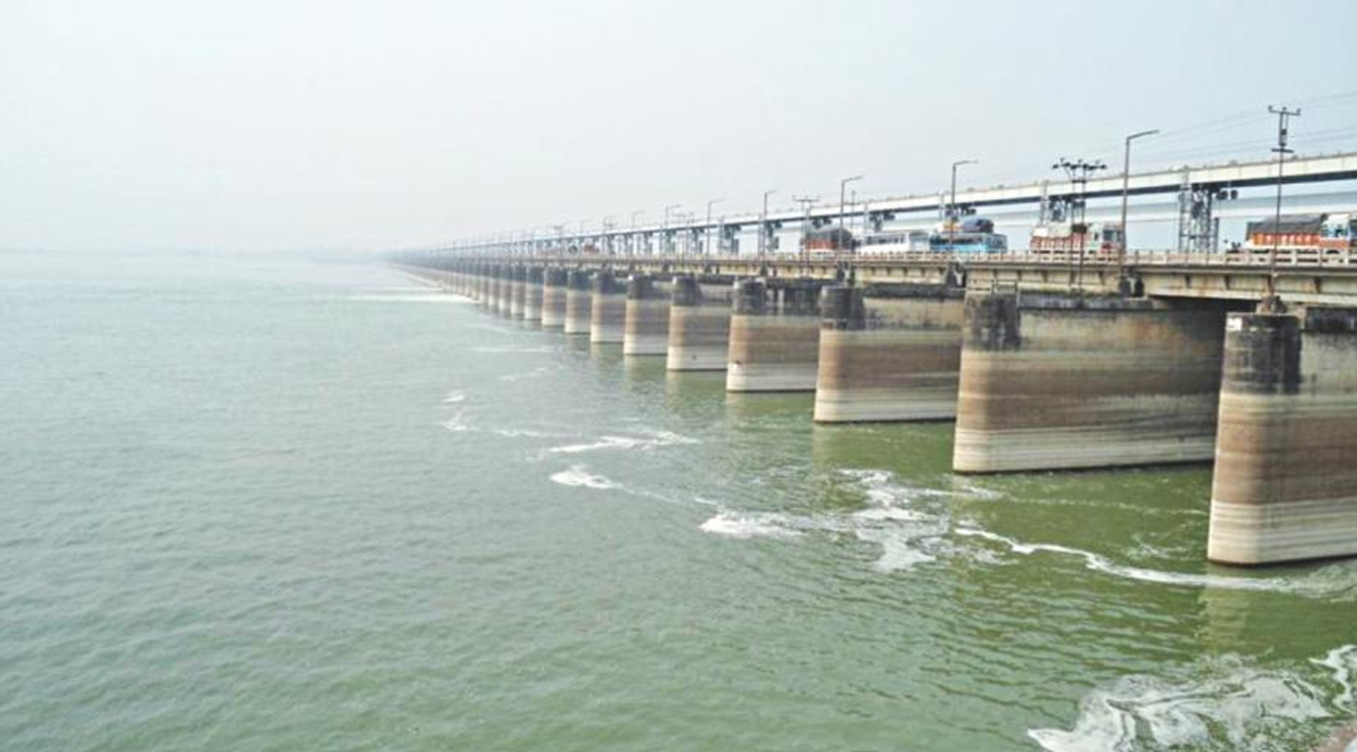
The thirty-year Ganges Water Treaty (GWT) is set to expire in December 2026. A lot of questions are being raised about this treaty among the experts. Even the big question that crops up is: whether this treaty should be continued or allowed to be terminated. According to experts, allowing the treaty to expire without negotiating anything would be a perilous choice, because in the event of the termination of the existing agreement, Bangladesh will lose an already established monitoring system, leaving it in an even more vulnerable position. So, the question of termination of the treaty is ruled out.
The important question is: how can Bangladesh reach a fair and efficient agreement with India regarding the water use in the Ganges basin once the treaty expires? Currently the main challenges posed to the GWT are related to climate change, upstream development, and the inherent flaws in the treaty. The empirical evidence over the last two decades shows that the water regime in the Ganges has shifted in favour of India. In many cases, Bangladesh received lower water flow per 10-day period at Hardinge Bridge than the quantity allocated under the agreement –especially during the dry season.
The fact that a part of Bangladesh receives less water than it is supposed to have under the treaty poses serious problem for the agricultural sector, fisheries, and ecosystems in the country. The 1996- treaty established a scheme for sharing the Ganges flow during the dry season between January and May, and its design relied on hydrological data from 1949 to 1988. One of the problems with this treaty was its reliance on historical average water flow data to decide water allocation in an ever changing system. Most of the annual precipitation in South Asia is accumulated during the monsoon, and the rest flows through the Ganges during the low-flow period. Any shift in precipitation rates or upstream consumption or withdrawal will significantly impact this system, rendering historical average data irrelevant.
These factors indicate the flaws in the treaty design—the lack of a sound method for resolving disputes. Although joint monitoring and periodic discussion of disagreements can be considered a sol, no effective verification of release volumes nor dispute resolution mechanisms are envisioned in it. Thus, any dispute ends up in negotiations, resulting only in procrastination. Besides, climate change is intensifying these challenges by introducing even greater variability in the Ganges hydrological cycle. Against this backdrop, it is very much needed to rethink the whole framework of the treaty and four major priorities arise for Bangladesh in negotiating over the agreement. First, it is essential to achieve full data transparency to create mutual understanding between the two parties regarding the situation and to facilitate further cooperation. Second, the idea of guaranteeing flow volume should be revised, with Bangladesh stressing the importance of guaranteed flow at Hardinge Bridge. Third, the allocation should be revised to account for climate variability using a rolling baseline of hydrological data. Fourth, the strong dispute resolution mechanism should be introduced.