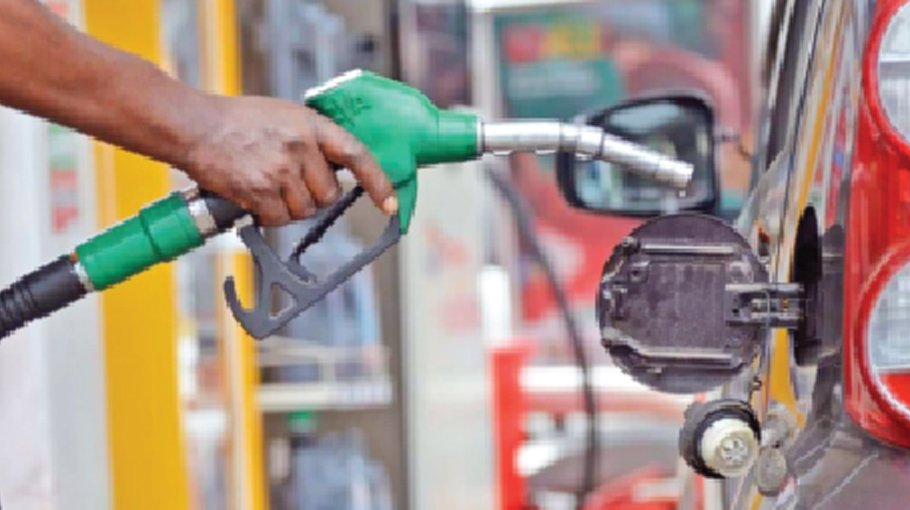
Automatic fuel oil pricing is likely to become effective from today (Thursday).
A proposed gazette, expected to be approved by the prime minister today will lower the prices of octane, petrol, diesel, and kerosene.
Prices for octane, petrol, diesel and kerosene are predicted to decrease by Tk 4 and Tk 15, respectively, per liter.
Currently diesel and kerosene are being sold at Tk 109 per litre, petrol at Tk 125, and octane at Tk 130.
The new price for diesel and kerosene will be Tk 105 per litre, and petrol at Tk 110, and octane at Tk 115. Given that today is the final day of the first week of March, sources confirm that a gazette modifying fuel prices for the month is expected to be released today.
The anticipated fuel price reductions hold promise for consumers, contingent upon effective implementation and regulatory oversight.
In order to adapt to changes in the global fuel market, the government long planned to implement an automated fuel pricing system. By bringing the price of kerosene into line with that of diesel, the automatic pricing mechanism aims to stop fuel adulteration.
According to an official from the Ministry of Power, Energy, and Mineral Resources, new fuel prices will be announced on the day the prime minister approves the proposal as she is the Minister of this ministry.
Global trends indicate a likely reduction in octane and petrol prices, dependent on diesel price adjustments. Despite delayed implementation, experts anticipate positive impacts on transportation and consumer costs.
The pricing structure, introduced to end fuel subsidies, emphasizes gradual adjustments to build public trust. However, effective regulation remains crucial to ensuring equitable benefits across sectors, notably transportation.
State Minister for Power, Energy, and Mineral Resources, Nasrul Hamid said, the adjustment, triggered by a new formula, aligns rates with global markets, with potential savings for consumers. Hamid emphasizes affordability, hinting at further reductions if global rates decrease.
However, concerns arise over potential oil smuggling, given the comparative prices between Bangladesh and India. The Ministry highlights the need for Prime Ministerial consent before the official announcement, expected alongside the new prices' revelation.
Once approved, the revised fuel prices are poised to impact public transport significantly, addressing complaints about previous adjustments' disproportionate effects. Hamid calls for stricter regulation of price-controlling organizations to mitigate such issues.
Data shows that Bangladesh has not lowered fuel prices since 2013, with the most recent adjustment occurring on August 30, 2022. Then the government increased the prices of different types of fuel by up to 51.7 percent, later reducing them marginally amid widespread criticism. Concerns anticipate that the general public will benefit from this new policy as fuel oil prices may drop in line with the world market.
The BPC profited a whopping Tk 45.86 billion in the 2022–23 fiscal after raising fuel prices on the pretext of subsidy adjustment. The state-owned corporation also made a profit of over Tk 5 billion in the first half (July–December) of the current fiscal, 2023–24, but fuel prices have not been adjusted yet.
Every month, the government will set the automatic fuel price in accordance with global market conditions. Initially, this system will be effective from March this year. In this regard, the Department of Power, Energy, and Mineral Resources published the notification 'Guidelines for Automatic Pricing of Fuel Oil' on March 1.
It is stated that the fuel oil automatic pricing determination system will go into effect, initially automatically coordinating with the global market. Petroleum products (diesel, kerosene, octane, and gasoline) and all government-fixed fuel oil grades will be subject to this automatic pricing system.
But, the aforementioned directive may also be applied, under certain restrictions, to other petroleum products if the government or Bangladesh Petroleum Corporation (BPC) thinks it necessary.
The cost components of both imported refined diesel and diesel made from crude oil at Eastern Refineries will be included in the automated pricing system for diesel and kerosene. The automatic price of kerosene and diesel will be established in the manner described below, taking into account the cost components of these two types of fuel oil:
According to the notification, the auto-selling price of diesel and kerosene will be calculated as (H) = Product Price (A) + Import Duty, Advance Income Tax, & VAT at Import Level (B) + Operational Expenses (C) + Finance, Administrative, & Maintenance Expenses (D) + BPC Margin (E) +VAT (F4) + Selling and Distribution Expenses (G).
Automatic price determination of octane and petrol will take into account the cost components of imported refined octane to determine the automatic price of octane as follows:
According to the notification, the auto-selling price of octane and petrol will be calculated as (H) = Product Price (A) + Import Duty, Advance Income Tax, and VAT at Import Level (B) + Operational Expenses (C) + Financial, Administrative, and Maintenance Expenses (D) + BPC's Margin (E) + ALPHA (α) + VAT (F) + Selling and Distribution Expenses (G).
The Department of Power, Energy, and Mineral Resources also said that, in reality, octane and petrol used in the country are used more in private vehicles, so their price is always higher than diesel as a luxury item. Currently, the retail price difference between diesel and octane is Tk 21 per litre.
According to the formula, while determining the price of octane, the difference with diesel should be at least 10 taka per liter, so the 'α' factor will be considered in the pricing formula.
Additionally, the Energy Division plans to introduce dynamic pricing for gas, making it parallel with production and import costs. This initiative aims to fulfill commitments to phase out subsidies by 2026. The government is optimistic about increasing gas production domestically and aims to minimize gas imports. Plans include drilling more wells and bringing in additional Floating Storage Regasification Units (FSRUs) by 2027.