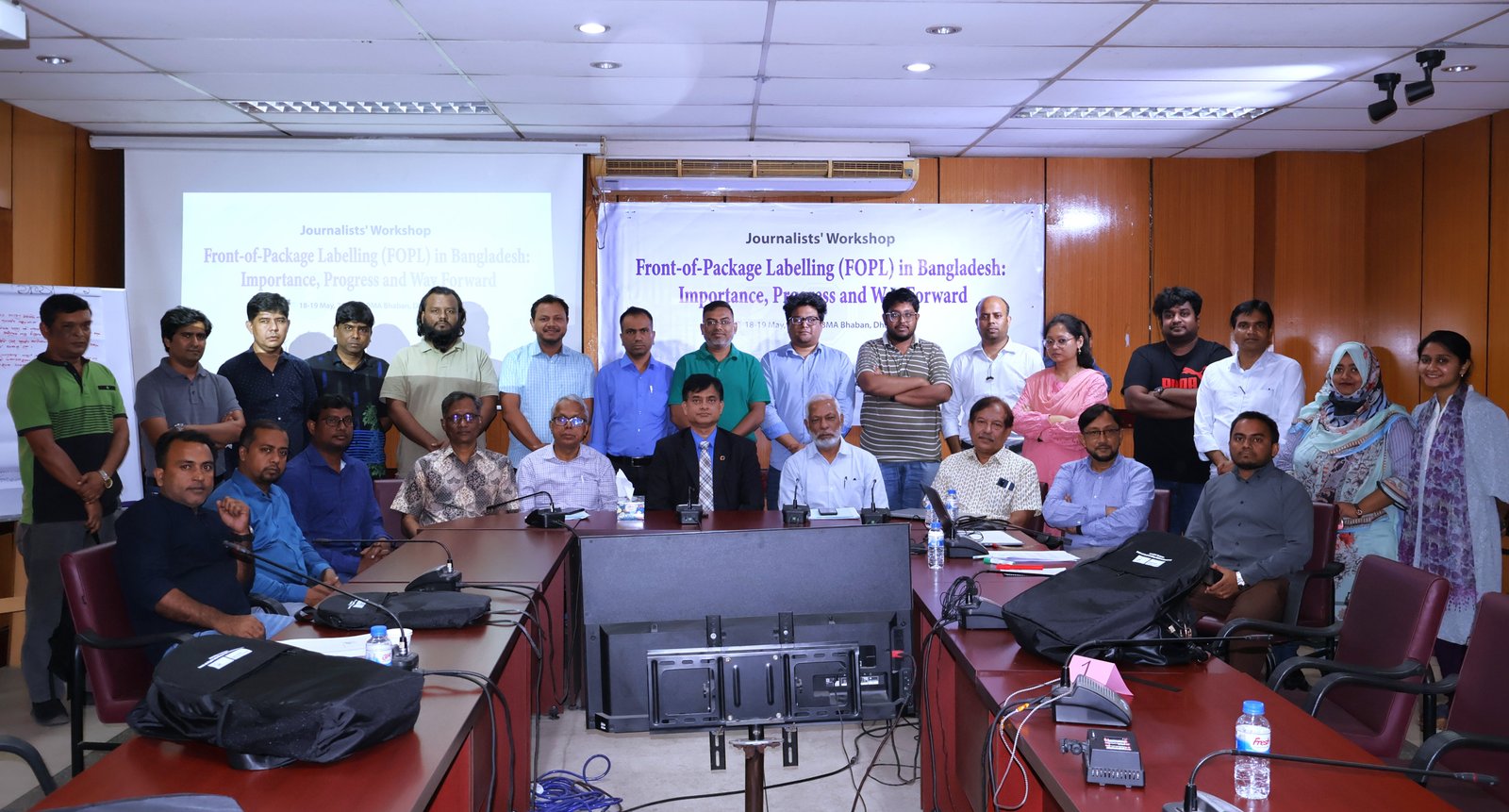
Public health experts on Tuesday stressed the need for introducing mandatory warning-based Front-of-Package Labelling (FOPL) on packaged foods to help reduce the growing burden of non-communicable diseases (NCDs) in Bangladesh.
They made the call at a two-day journalists’ workshop titled “Front-of-Package Labelling in Bangladesh: Importance, Progress and the Way Forward”, organised by PROGGA with support from the Global Health Advocacy Incubator at the Bangladesh Medical Association Bhaban in the capital on May 18-19.
A total of 27 journalists from print, television and online media participated in the workshop.
Speakers said ultra-processed packaged foods and beverages high in sugar, salt and trans-fat are major contributors to hypertension, diabetes, cardiovascular diseases, obesity and cancer.
According to the speakers, nearly 570,000 people die from NCDs every year in Bangladesh, accounting for around 71 percent of total deaths, while 19 percent of these deaths occur prematurely.
Citing World Health Organization data, they said unhealthy diets remain one of the leading preventable causes of NCD-related deaths.
The workshop highlighted findings from a nationwide survey conducted in 2025 among 974 adults, adolescents and children, which found that nearly 97 percent of respondents consumed packaged foods at least once a week.
Another analysis of 105 processed and ultra-processed food products across 14 categories found that 63 percent contained high levels of salt.
A separate 2023 study examining packaged foods from 24 brands revealed that most products contained sugar, salt and unhealthy fat levels exceeding WHO-recommended daily limits.
Speakers also noted that information regarding saturated fat, trans-fat, sugar and salt was often unclear or missing from product labels.
Professor Dr Mohammad Shoeb, member of the Bangladesh Food Safety Authority, said efforts are underway to introduce front-of-pack labelling in the country.
“Once implemented, it will reduce the risk of non-communicable diseases,” he said.
Abu Ahmed Shamim, associate scientist at the Centre for Non-Communicable Disease and Nutrition of the BRAC James P Grant School of Public Health, said FOPL helps consumers quickly identify excessive salt, sugar and harmful fats in packaged foods, enabling healthier choices.
Samina Israt, programme officer at the WHO, described FOPL as a cost-effective public health intervention for addressing diet-related NCDs in Bangladesh.
Muhammad Ruhul Quddus, Bangladesh country lead of GHAI, said implementation of FOPL could help reduce the country’s growing NCD burden.
Among others, Anti-Tobacco Media Alliance Convener Mortuza Haider Liton, Co-convener Nadira Kiron and PROGGA Executive Director ABM Zubair attended the event as discussants.