BBC
Fresh fighting has been reported in Afghanistan's Panjshir Valley, the final pocket of territory which remains out of the hands of the Taliban.
One of the resistance leaders in the valley, Amrullah Saleh, dismissed reports that the Taliban had captured it as "baseless".
But he admitted conditions are difficult, with the Taliban closing phone, internet and electricity lines.
The fighting comes with the Taliban set to finalise a government.
Panjshir Valley, north of the capital Kabul, is one of Afghanistan's smallest provinces and the only one not to have fallen to the Taliban.
The traditional anti-Taliban stronghold is home to somewhere between 150,000 and 200,000 people, and is hidden behind mountain peaks.
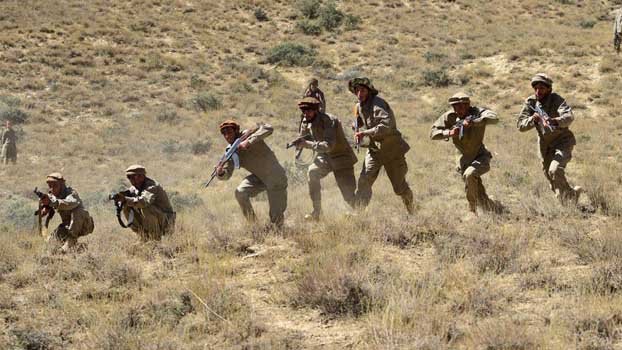
The resistance - which includes former Afghan security force members and local militias - is led by local tribal leader Ahmad Massoud. His father successfully fought the Soviets who invaded in the 1980s, and the Taliban in the 1990s. In a video message sent to the BBC, Mr Saleh, a former vice-president of Afghanistan, said there had been casualties on both sides.
"There is no doubt we are in a difficult situation. We are under invasion by the Taliban," he said, adding that his forces would not surrender.
But resistance leaders concede that some districts have fallen to the Taliban, while pro-Taliban social media showed clips seeming to show their fighters with captured tanks and other military gear.
Rumours that the Taliban had captured Panjshir prompted celebratory gunfire to ring out in Kabul and other cities, reportedly killing a number of people.
A Taliban spokesman said fighters should "avoid firing in the air and thank God instead".
With the Taliban expected to announce a new government in the coming days, foreign powers are adapting to the new reality of dealing with a Taliban administration.
The head of Pakistan's intelligence agency, Faiz Hameed, is in Kabul for talks. An official told Reuters earlier this week he could help the Taliban reorganise the Afghan military.
US Secretary of State Antony Blinken is travelling to Qatar on Sunday. The country plays a key mediating role in Afghanistan, but he is not expected to meet anyone from the Taliban.
The European Union and UK on Friday joined the US in saying they will deal with the Islamist group, but won't recognise them as Afghanistan's government.
The BBC's chief international correspondent Lyse Doucet, who is in Kabul, says that while the Taliban are seeking international acceptance, they are seeking it on their terms.
If the West does not want to deal with them, there are other powers such as China, Russia and Pakistan they can turn to, our correspondent adds.