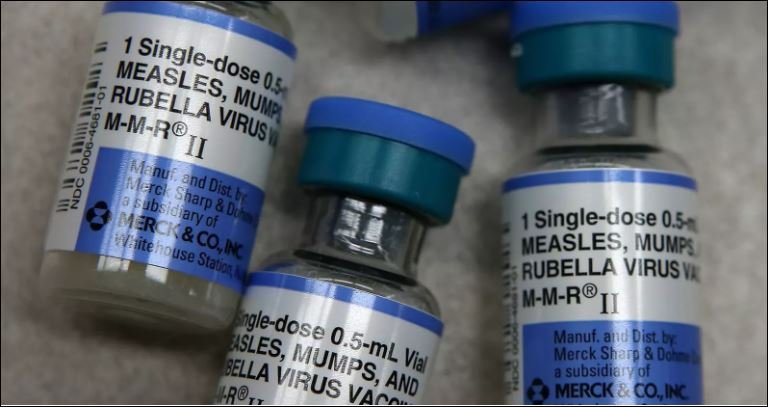
President Donald Trump stirred confusion about childhood vaccines in social media posts following changes to U.S. federal recommendations.
On Monday, the Trump administration took the unusual step of reducing the number of vaccines routinely recommended for all children. Previously, the government broadly advised immunizations against 11 diseases, plus additional vaccines that are now categorized for at-risk children or recommended through “shared decision-making” with a healthcare provider.
Leading medical organizations, however, continue to endorse prior schedules, saying no new scientific evidence supports the change and warning that conflicting guidance could leave children vulnerable to preventable illnesses.
Trump tweeted that “America will no longer require 72 ‘jabs’” for children and posted a graphic comparing U.S. vaccination numbers to a European country that supposedly gave 11 shots. Both claims were misleading.
According to federal records, the U.S. childhood vaccination schedule previously covered routine protection against 18 diseases, with doses spread across different ages. The total number of injections a child received varied depending on factors such as combination shots, brand differences, and the child’s starting age. Excluding annual flu vaccines and COVID-19 shots, most children received about three dozen injections.
Under the new schedule, children receiving only the recommended-for-all vaccines would get roughly 23 injections, covering diseases like measles, whooping cough, polio, chickenpox, and HPV.
Contrary to Trump’s claim, no child was ever required to receive 72 injections. While states mandate certain vaccines for school enrollment, these requirements are narrower than the prior federal schedule and allow exemptions in many cases.
Medical experts say clear communication is crucial to avoid public misunderstanding and maintain trust in vaccination programs.