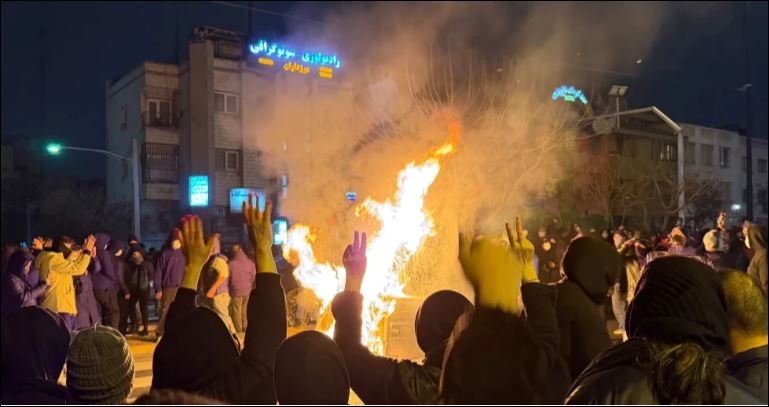
Iran is facing its deadliest crackdown on dissent since the 1979 Islamic Revolution, as authorities suppress nationwide protests with lethal force, despite cutting off internet and communication across the country.
Cities and towns are filled with smoke, with fire-damaged mosques, government offices, and banks lining the streets. State media reported at least $125 million in damage across more than 20 cities. Activists say the death toll continues to rise, accusing security forces of using long-standing tactics — firing from rooftops, shooting birdshot into crowds, and deploying motorcycle-riding Revolutionary Guard volunteers to beat and detain protesters.
“The vast majority of protesters were peaceful,” said Raha Bahreini of Amnesty International. “The authorities have opened fire unlawfully, targeting crowds that included children and families.”
Protests began on Dec. 28 at Tehran’s Grand Bazaar over the collapse of Iran’s currency, the rial, and spread nationwide. Violence escalated on Jan. 8 after calls from exiled crown prince Reza Pahlavi. Deputy Interior Minister Ali Akbar Pourjamshidian said more than 400 cities were affected.
Videos show security forces, including the Basij volunteer arm of the Revolutionary Guard, using shotguns, batons, and assault rifles. Many demonstrators suffered severe injuries, including eye wounds consistent with birdshot. Iran’s Farabi Eye Hospital mobilized all available doctors to treat the injured.
Casualty reports vary: the Iranian government said 3,117 were killed, including civilians and security personnel, while the U.S.-based Human Rights Activists News Agency reported 5,137 deaths, including 4,834 protesters. State media also reported widespread damage to banks, ATMs, government buildings, and vehicles.
Amid fears of U.S. military action, an American aircraft carrier and warships are moving toward the Middle East. Observers warn that Iran could see renewed protests around Feb. 17, the 40-day mourning period for those killed. Satellite images show large numbers of mourners at Tehran’s Behesht-e Zahra cemetery, chanting against Iran’s leadership.