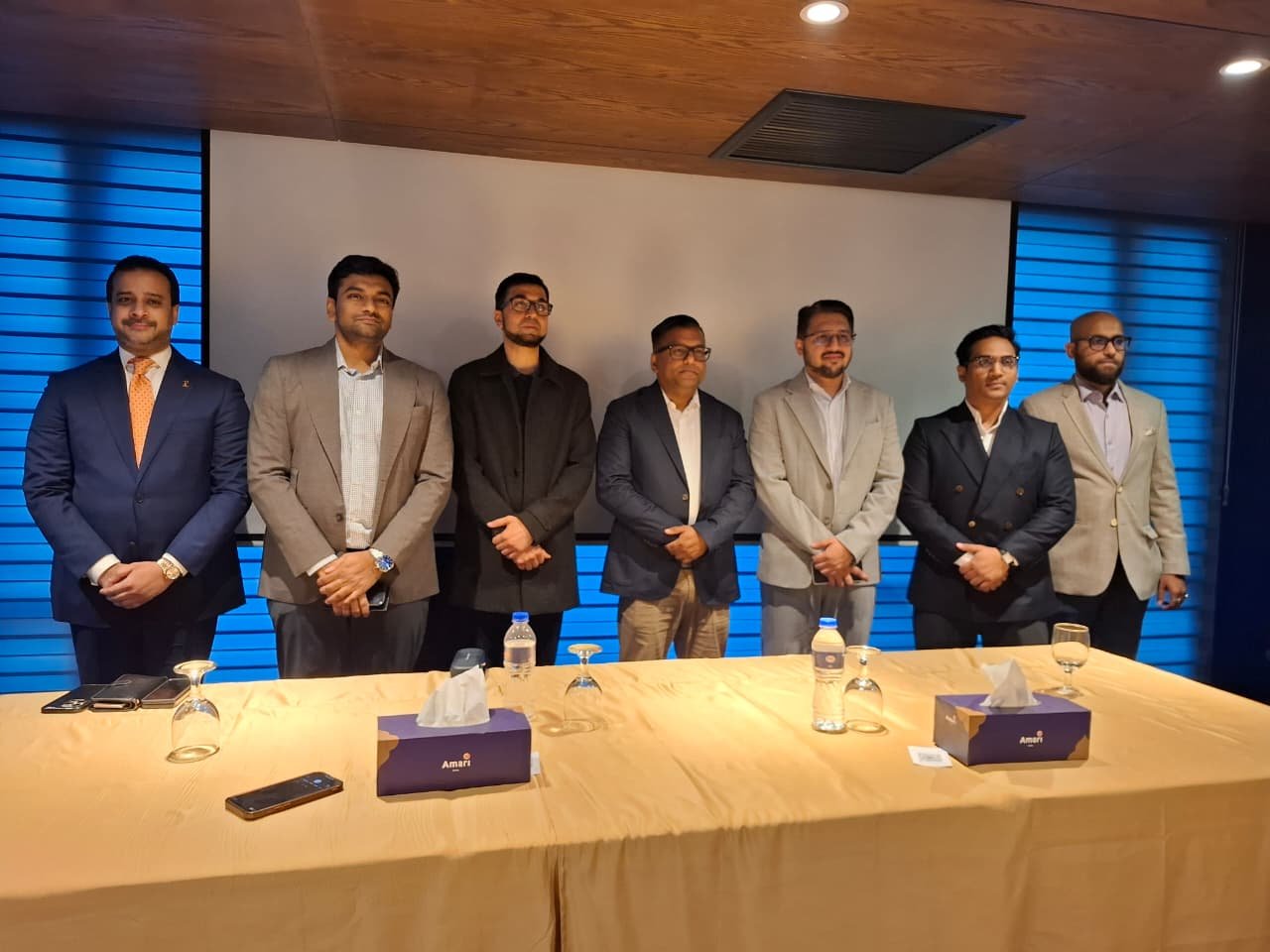
Bangladesh’s education system must urgently adapt to the transformative rise of Artificial Intelligence (AI) to remain globally competitive while ensuring equity and ethical integrity, speakers emphasized on Sunday at a dialogue titled “Education of Bangladesh in the Age of Artificial Intelligence”organised the Youth Council of Bangladesh.
The session brought together policymakers, education leaders, university stakeholders, ed-tech innovators, and development practitioners to examine how AI is reshaping global education—and what Bangladesh must do to prepare its learners, teachers, and institutions for an AI-driven future.
The program opened with welcome remarks from the Moderator, who highlighted the rapid global acceleration of AI in education and its profound implications for teaching, learning, governance, and workforce development. The Moderator underscored Bangladesh’s unique demographic advantage—a large youth population combined with growing digital penetration—and framed AI as a decisive opportunity if guided by thoughtful policy and inclusive planning.
Setting the global context, the session outlined how countries across the world are already integrating AI into classrooms through adaptive learning platforms, intelligent tutoring systems, automated assessments, and teacher-augmentation tools. Speakers also cautioned against unregulated adoption, noting global lessons around data privacy, algorithmic bias, widening inequality, and regulatory gaps.
Dr. Mahdi Amin, Advisor to the Acting BNP Chairman Tarique Rahman, outlinedBNP’s vision of prioritizing education-led development, saying the party’s focus would begin at the primary level with an emphasis on teacher quality ethics, and access. The party will do it instead of prioritising infrastructural ‘mega project’, he said.
He also highlighted the proposed “one Teacher, One Tab” scheme to equip teachers with digital tools and online training alongside multimedia classrooms at secondary schools.
He also stressed integrating technical and vocational education into mainstream curricula saying, “We want to invest in making global citizens”, adding that education must produce “employable, ethical, and self-reliant youth”.
Dr. Bobby Hajjaj, Chairman, Nationalist Democratic Movement(NDM) said, Bangladesh’s education crisis stems from over-centralisation and long-standing neglect of teachers, rather than artificial intelligence alone.
He noted that while economic growth relied on human capital, the country failed to transition to value-added skills.
Criticising weak research culture and the dominance of non-STEM disciplines, he said,” we haven’t adapted to the 20th century, let alone the 21st.”
On AI, he cautioned against blind reliance, describing it as a tool that demands strong foundation knowledge.
Shahir Chowdhury, founder and CEO of ed-tech startup Shikho, said technology is the only scalable solution to Bangladesh’s education inequality.
Describing EdTech as ‘architecture not just videos’, he explained how digital platforms can integrate teaching, assessment, and data analysis.
Banker, Educationalist ShafquatRabbee said AI will not eliminate jobs but redefine skills.
“AI will not take your job, but the person who knows AI will”, he said urging young people to strengthen communications, confidence, and problem-solving skills alongside technical literacy.
The session concluded with an interactive Q&A, allowing participants to raise targeted questions on policy readiness, ethics, infrastructure, and implementation challenges.