EU leaders decided on Friday to draw upa list of Turkish targets for sanctions in response to Ankara’s prospectingfor gas in Greek and Cypriot waters, reports AFP.
“The council adopted sanctions in the face of Turkey’s ‘unilateral actionsand provocations’,” French minister for European affairs Clement Beaunetweeted, citing the conclusions agreed by the bloc’s 27 leaders.
A diplomat told AFP the sanctions would target individuals and that furthermeasures could be imposed “if Turkey pursues its actions”.
There will be disappointment in Athens that the leaders, meeting at asummit in Brussels, did not agree to seek an arms embargo or to target entiresector’s of Turkey’s economy.
But the conclusions, released by a European Council spokesman, called for alist to be drawn up of targets for “restrictive measures”.
The leaders mandated chief EU diplomat JosepBorrell to prepare a report onmore measures that could be taken to “expand the scope” of the action, to be submitted by next March.
“The idea is to turn the vice progressively,” a diplomat said.
“Turkey has engaged in unilateral actions and provocations and escalatedits rhetoric against the EU, EU Member States and European leaders,” theleaders said.
“Turkish unilateral and provocative activities in the Eastern Mediterraneanare still taking place, including in Cyprus’s exclusive economic zone.”
On the eve of the EU summit, Turkey’s President RecepTayyipErdogandismissed the sanctions threat.
“Turkey does not care much about any sanctions decision to be made by theEU,” he said.
“The EU has never treated us honestly. The EU has never stood by anypromise it has given us but we always remained patient and we are stillpatient.”
Greece, with French backing, has led the charge for tougher EU actionagainst Turkey, which has repeatedly sent a gas drilling vessel into disputedwaters.
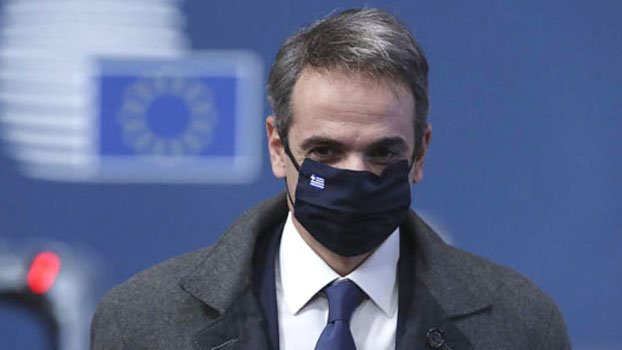
Greek Prime Minister KyriakosMitsotakis said the “credibility of theEuropean Union” was at stake as he arrived at Thursday’s summit.
He noted that the leaders had already agreed in October that something mustbe done about Turkey’s increasingly assertive actions in his region.
“This is the moment to show whether we, as Europe, really are credible inwhat we have agreed,” he said.
Some members of the European Union and of NATO — the military alliancethat includes both Greece and Turkey — have been more cautious.
Germany has led diplomatic outreach aimed at resolving the dispute, andNATO has set up a military hotline to head off accidental clashes.
Speaking just ahead of the summit, NATO secretary-general Jens Stoltenbergtried to soothe tempers.
He noted that Turkey was hosting around four million refugees, more thanany other NATO ally, and that the country had suffered from terroristattacks. “There are differences, there are disagreements, we need to address them,”Stoltenberg said.
“At the same time, we need to make sure that we realise the importance ofTurkey as part of NATO and also as part of the Western family.”
Turkey’s relationship with western allies has become increasingly strainedin recent months.
The United States has been infuriated by Ankara’s purchase of the RussianS-400 missile system, which is incompatible with NATO’s air defence grid.
Turkey has also been accused of breaching the UN arms embargo on Libya,where it is backing the Tripoli government in the civil war.
And Turkish support is seen as having encouraged Azerbaijan to resume along-dormant conflict with Armenia.
French President Emmanuel Macron has engaged in an increasingly bitter andpersonal war of words with Erdogan, and has called for EU solidarity with Greece.