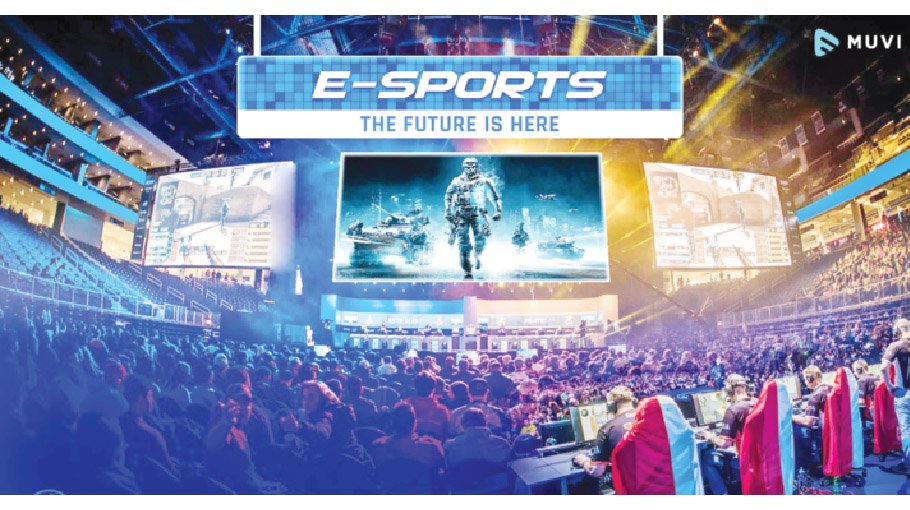
The government has officially recognized electronic sports (esports) as a sport, a landmark decision that industry experts believe unlocks the door for the country to tap into the multi-billion-dollar global gaming industry.
The announcement by the Ministry of Youth and Sports is seen as the first crucial step in building an ecosystem that could turn game development and esports into a major source of foreign exchange.
At a recent industry seminar, experts highlighted the enormous gap and opportunity.
Ahmed Arman, an official from Robi, pointed out that the global gaming market is worth over $300 billion, while the country’s market is currently a tiny fraction of that, at around $50 million to $60 million.
“We are working on launching cloud gaming platforms and expanding 5G services, keeping local gamers in mind. Game development is now a necessity,” he said.
During that seminar, IDEA project Director Altaf Hossain said, “Our children are playing foreign games. Why not develop and export our own games? If our youth engage in this industry, we could capture even a small portion of the global market, which would still be worth billions.” The new official status for esports is expected to provide the structure needed to nurture local talent. Khaja Md. Anas Khan, Country Manager for Gigabyte Bangladesh, called the move a milestone. He said, “With this recognition, Bangladesh is set to form a national esports association. This will open new doors for young esports talents and create opportunities for them to pursue it as a respected profession.” However, to realize this economic potential, significant investment in skills and infrastructure is needed. Project Director at the ICT Division Mohammad Anwar Hossain said that while a government project has already trained 28,000 young people, more support is required.
“Limited family support and lack of resources often hold them back. Game development should be a team effort—not everything can be done by one person,” he explained.
Game developer and entrepreneur Arif Mohammad stressed the need for better education in the field. “We have thousands of talented youth who want to be developers, but there’s a severe lack of training and institutional support.
If universities offer game development and animation as part of the curriculum, we could achieve much faster growth,” he said.
Experts also warned that one of the biggest obstacles is the absence of a local system for developers to make money from their games. Panelists at the seminar agreed that building a collaborative environment is key.