Staff Correspondent
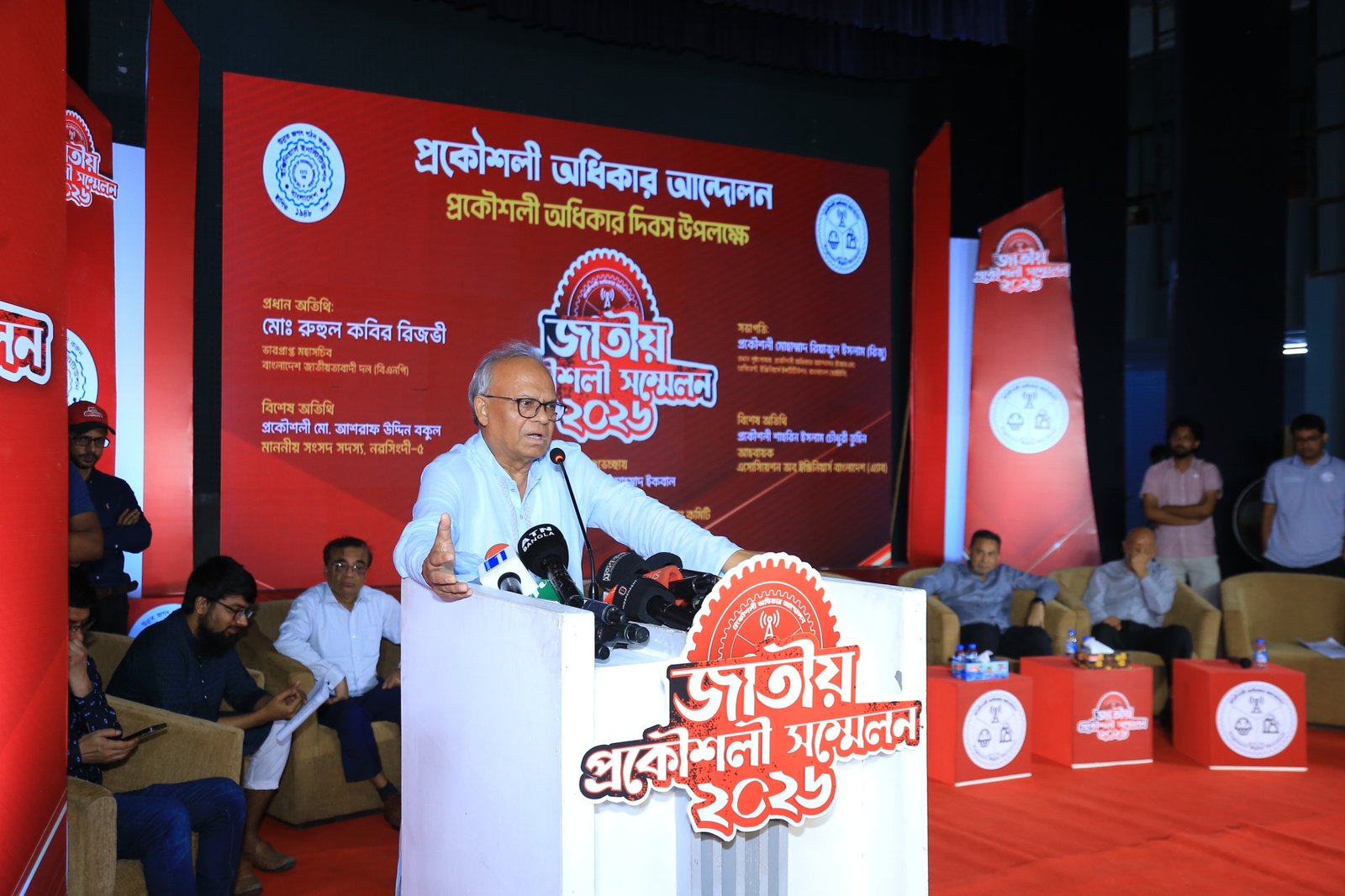
Advocate Md. Ruhul Kabir Rizvi, Senior Joint Secretary General of the BNP, has called for maximizing the expertise, skills, and experience of engineers and technologists to drive national development and progress.
Speaking as the chief guest at the "National Engineers Conference 2026" on Thursday—organized by the Engineer Rights Movement with support from the Institution of Engineers, Bangladesh (IEB) to mark Engineer Rights Day—Rizvi highlighted the systemic issues facing skilled professionals.
"A fair state naturally ensures that highly educated and skilled individuals have the opportunity to serve in leadership roles," Rizvi stated. "However, in Bangladesh, the qualifications and expertise of BSc engineers are consistently undervalued, and their employment opportunities are shrinking. This trajectory must be urgently reversed."
Emphasizing that national progress hinges on prioritizing technologists, Rizvi cited global models of success. Pointing to China's transition into an economic powerhouse, he attributed its growth largely to the strategic utilization of its engineering workforce. He noted that long-term national development is impossible without leveraging engineers in planned infrastructure, industrialization, technological innovation, and research.
"To move Bangladesh forward, we must strictly enforce meritocracy," the BNP leader urged. "We cannot allow mobocracy—or pressure-driven tactics—to supersede merit."
Rizvi argued that engineers must be assigned responsibilities and promotions based strictly on qualifications and performance. Allocating roles based on non-merit factors not only creates systemic discrimination but also undermines the nation's overall growth framework.
Highlighting local capability, Rizvi referenced the Teesta Barrage construction as proof of Bangladeshi engineers' ability to execute complex, large-scale national initiatives. He urged the government to integrate local engineering talent more deeply into major national projects.
Furthermore, he stressed the need to expand research and innovation across all sectors, noting that sustainable progress requires research-backed innovation and human capital development, not just physical infrastructure.
"Sustainable development in Bangladesh depends on three core elements: proper evaluation of merit, expanded opportunities for engineers, and research-driven initiatives," he concluded.
Addressing the conference as a special guest, Engineer Shahrin Islam Tuhin, Convener of the Association of Engineers Bangladesh (AEB), voiced support for ending discrimination against engineers and securing their professional dignity.
He called for actionable, long-term solutions to current challenges, specifically raising concerns over the declining number of Civil Services (BCS) posts designated for engineers.