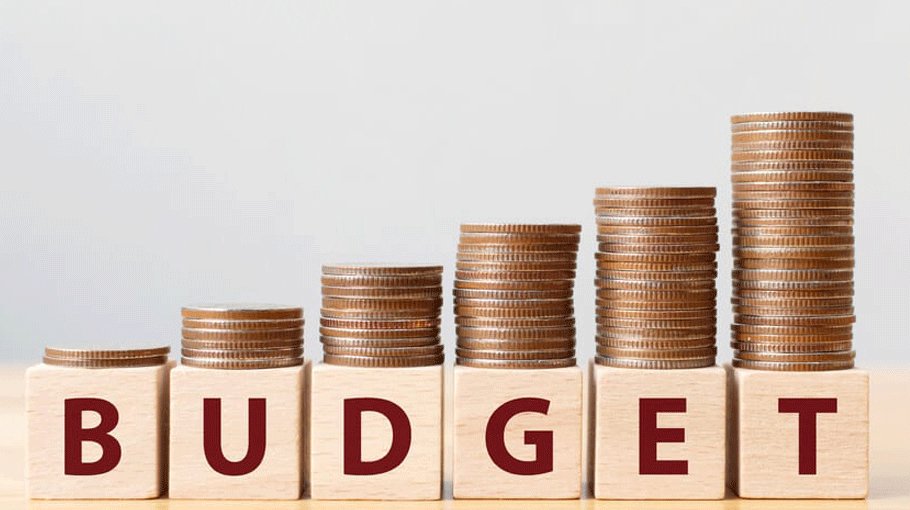
For the past fifteen years in a row, the share of GDP allotted to the education sector has stayed below three percent, despite economic growth and possible increases in government revenue.
This pattern highlights an ongoing inability to prioritise funding for education in proportion to the nation's economic output, which may impede initiatives to raise educational standards and achieve better results.
New Finance Minister Abul Hassan Mahmood Ali will present the budget for the fiscal year 2024–25 on June 6 for the first time in the National Parliament.
Before the budget, the government approved the Annual Development Programme (ADP) of Tk 265,000 crores for the fiscal year 2024-2025 on May 16. The highest allocated three sectors in the ADP for the next fiscal year (FY 24-25) are: transport and communication sector with an allocation of Tk 70,687.75 crore (26.67 pc), power and energy sector with Tk 40,751.86 crore (15.38 pc), and education sector with Tk 31,528.60 crore (11.36 pc). However, this falls short of the target set in the 8th Five-Year Plan, which aimed for a 16 percent allocation in the Education sector.
The amount allotted to the education sector was reduced from Tk 29,889 crore in 2023–24 to Tk 17,229 crore (6.21%). The allocation for 2022–2023 was 29,081.38 crore (11.8%); for 2021–2022 it was 23,178 crore (10.29%). The ADP allotment is less than the 16.5 percent suggested by the plan.
The ADP is a part of the national budget under which the government will implement 1,321 development projects this year to facilitate the economic growth of the country.
Experts said the amount allotted to ADP in the education sector will be reflected in the upcoming budget. By following the previous trend, the country will allocate less than 3 percent of its GDP to the education sector, significantly below the recommended 6 percent threshold.
International standards, especially those of UNESCO, suggest that a country's education budget should ideally account for 20 percent of the total national budget and a minimum of 6 percent of the gross domestic product (GDP).
According to the World Bank, of the 189 member states, Bangladesh is one of the 10 countries that allocate the least amount of money to education in proportion to their GDP. Bangladesh is followed by Bermuda, Haiti, Mauritania, Cambodia, Laos, Monaco, Papua New Guinea, Somalia, and South Sudan. Most of them are known as extremely poor countries. The amount is a mere 2 percent of the GDP, it says.
Experts said the sector involving fundamental rights is not getting sufficient attention in the national budget.
Experts have been saying for many years to increase the allocation for education and research in the budget, but this was not reflected in the last budget or in the upcoming budget either. Allocation increased as per the figure but not in the ratio.
Bangladesh's average expenditure on education as a percentage of GDP from 2016 to 2022 was the fifth lowest among 41 LDCs.
A report from the Centre for Policy Dialogue revealed that, since the Awami League-led 14-party alliance presented its first budget in 2009–10, the allocation to the education sector has been about 2 percent of GDP. In the financial year 2016–17, the government has allocated a maximum of 2.49 percent of the GDP to the education sector. Since then, the allocation has gradually declined over the past 7 years and has bottomed out in the last fiscal year 2023–24 budget of the previous term of the ruling government.
A source from the Planning Commission said that in the financial year 2023–24, the amount of allocation to the education sector was only 1.76 percent of GDP, compared to 1.83 percent in 2022–23. In the 2021–22 financial year, the allocation was 2.08 percent.
Director of the Centre on Budget and Policy at Dhaka University, Prof. Dr. M. Abu Eusuf, along with academician Prof. Dr. Mesbah Kamal, highlighted the disparity between budget allocation and the requirements for a developed Bangladesh. They emphasised that without adequate funding for research and training, the nation's aspiration for development will remain elusive.
M. Abu Eusuf underscored the need for a separate budget for education, suggesting that the current allocation is insufficient. He said a significant portion of the education budget is directed towards salaries, allowances, and infrastructure construction, leaving minimal resources for essential aspects like research and teacher training. This imbalance could adversely affect the quality of education across the country.
According to Dr. Shubhasish Barua, an associate professor in the Department of Development Studies at the University of Dhaka, the implementation of the new curriculum will present more of a challenge because it must address closing the technical skills and practical tool gap between rural and urban educational institutions while also ensuring that digital facilities and equipment are guaranteed by modern technology. Thus, the government must raise funding in the next budget in order to improve the wide range of educational opportunities.