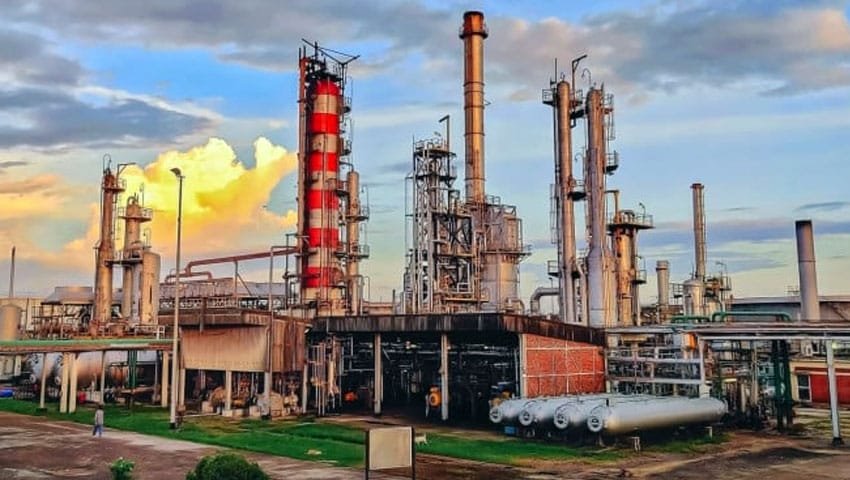
The country’s only state-owned oil refinery, Eastern Refinery Limited (ERL) has temporarily suspended its refining operations due to a shortage of crude oil. The refinery was shut down after exhausting its available stock following the last round of production.
Officials said operations will resume once new crude shipments arrive in the country.
However, Bangladesh Petroleum Corporation (BPC) and the Energy Division have assured that there is sufficient stock of refined fuel in the country and that there will be no immediate disruption in supply.
Imports Disrupted by Regional Conflict
Crude oil imports have effectively remained halted for nearly two months due to the ongoing Iran–United States–Israel conflict in the Middle East. In particular, disruptions in oil transportation through the Strait of Hormuz have directly impacted Bangladesh’s energy supply.
The last crude oil shipment arrived at Chattogram Port on February 18. Since then, no crude oil vessels have docked, leaving the country without imports for nearly 54 days.
Operations Sustained Using Dead Stock
According to ERL officials, operations had been sustained using around 5,000 tonnes of crude oil trapped in the pipeline at the Single Point Mooring (SPM) facility in Maheshkhali, Cox’s Bazar, along with approximately 33,000 tonnes of “dead stock” accumulated at the bottom of storage tanks.
An ERL official said, “Dead stock contains various impurities and sludge. These can clog pumps and damage machinery, making it unsafe to use.”
Typically, about 1.5 meters of oil at the bottom of tanks is considered dead stock. However, as the level dropped below 1 meter, it became unusable. As a result, operations were officially halted on Sunday afternoon.
ERL usually refines around 4,500 tonnes of crude oil per day. Due to the shortage, production had been reduced to approximately 3,500 tonnes daily. By March 4, usable crude reserves had fallen below 2,000 tonnes, ultimately leading to a complete shutdown.
Monir Hossain Chowdhury, spokesperson for the Energy and Mineral Resources Division said, “ERL attempted to continue operations using remaining reserves. However, even with the refinery shut down, there will be no fuel shortage in the country. We have sufficient stock of refined fuel and are ensuring supply according to demand.”
He said that a new shipment of crude oil is expected to arrive later this month.
According to BPC sources, a 100,000-tonne crude oil shipment from Saudi Aramco has been secured. The cargo is expected to be loaded at Fujairah Port in the United Arab Emirates on April 21 and may reach Bangladesh in the first week of May, avoiding the Persian Gulf by routing through the Arabian Sea. Another shipment from Malaysia is also expected.
Officials said alternative sources such as the United States, Canada, Russia, and Iraq are being considered, but imports from these destinations take significantly longer and shipping costs have increased substantially.
BPC data shows that Bangladesh imports around 65 to 68 lakh tonnes of fuel annually. Of this, approximately 15 lakh tonnes is crude oil sourced from the Middle East and refined at ERL.
In addition, about 45 lakh tonnes of refined fuel are imported each year from countries including India and China. ERL produces 13–16 types of petroleum products, including LPG, petrol, octane, kerosene, diesel, and furnace oil.
Sources at Chattogram Port and BPC said that 17 fuel-laden vessels arrived in March, none carrying crude oil. These included around 231,229 tonnes of diesel imported from Malaysia and Singapore, along with high-sulfur fuel oil, base oil, and other petroleum products.
India also supplied approximately 22,000 tonnes of diesel through pipeline shipments.
Additional consignments of diesel, octane, and furnace oil have arrived in April. However, no crude oil vessels are scheduled to arrive within the next 15 days.
Sector insiders warn that Bangladesh’s refining capacity has not been expanded for years, increasing reliance on imports. If the ongoing conflict persists, the country’s energy security could face significant challenges.
Although ERL has temporarily halted operations due to crude oil shortages, fuel supply in the country remains stable for now. However, prolonged disruption could lead to future risks.