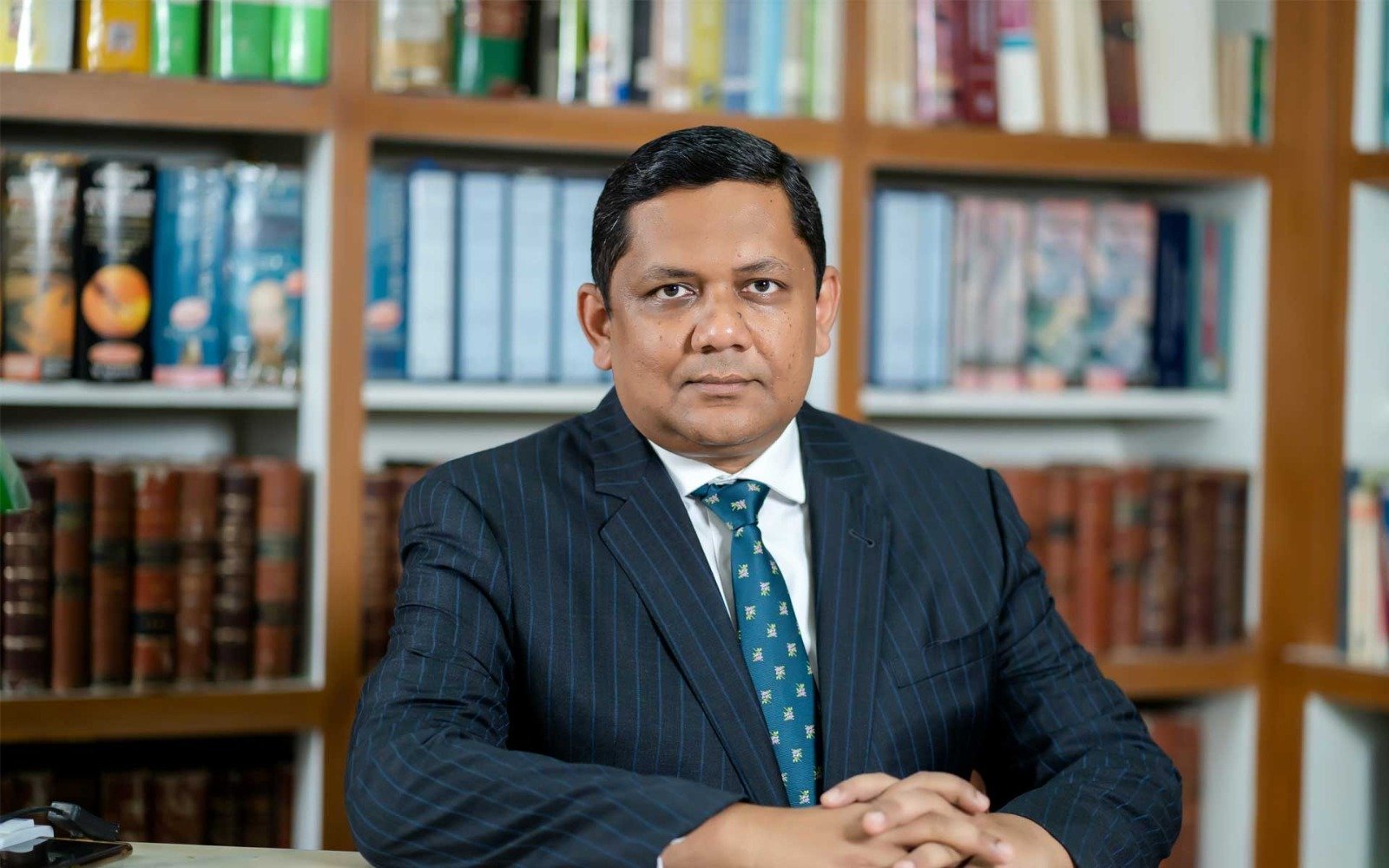
Barrister Omar Sadat
Recently a new administrator has been appointed to the Dhaka North City Corporation. What should we expect from him regarding Dhaka? Can Dhaka survive whatever he does?
Whenever we speak about Dhaka, it seems we ourselves become overwhelmed by it, unable to remain free from its burdens. We find ourselves buried under crisis, inequality, pollution, anxiety, instability, and uncertainty. Yet how many struggles we have fought to become free? Most recently, in a bloody struggle against authoritarian rule and inequality, we witnessed the July student-citizen uprising. But how much freedom did we truly gain? There was much talk of a new arrangement, yet the structures remained the same as before.
Dhaka too remains unchanged. During the July movement the walls filled with graffiti, rhetoric flowed endlessly, yet reconstruction never began. Amid so many discussions of reform, policymakers never truly engaged in reform discussions about Dhaka.
Political parties did mention Dhaka during election campaigns. BNP Chairman and the new Prime Minister, Tarique Rahman, was seen outlining some programs. Dhaka also appeared in political parties’ manifesto. Still, the question remains whether politicians truly hear the cry of the capital.
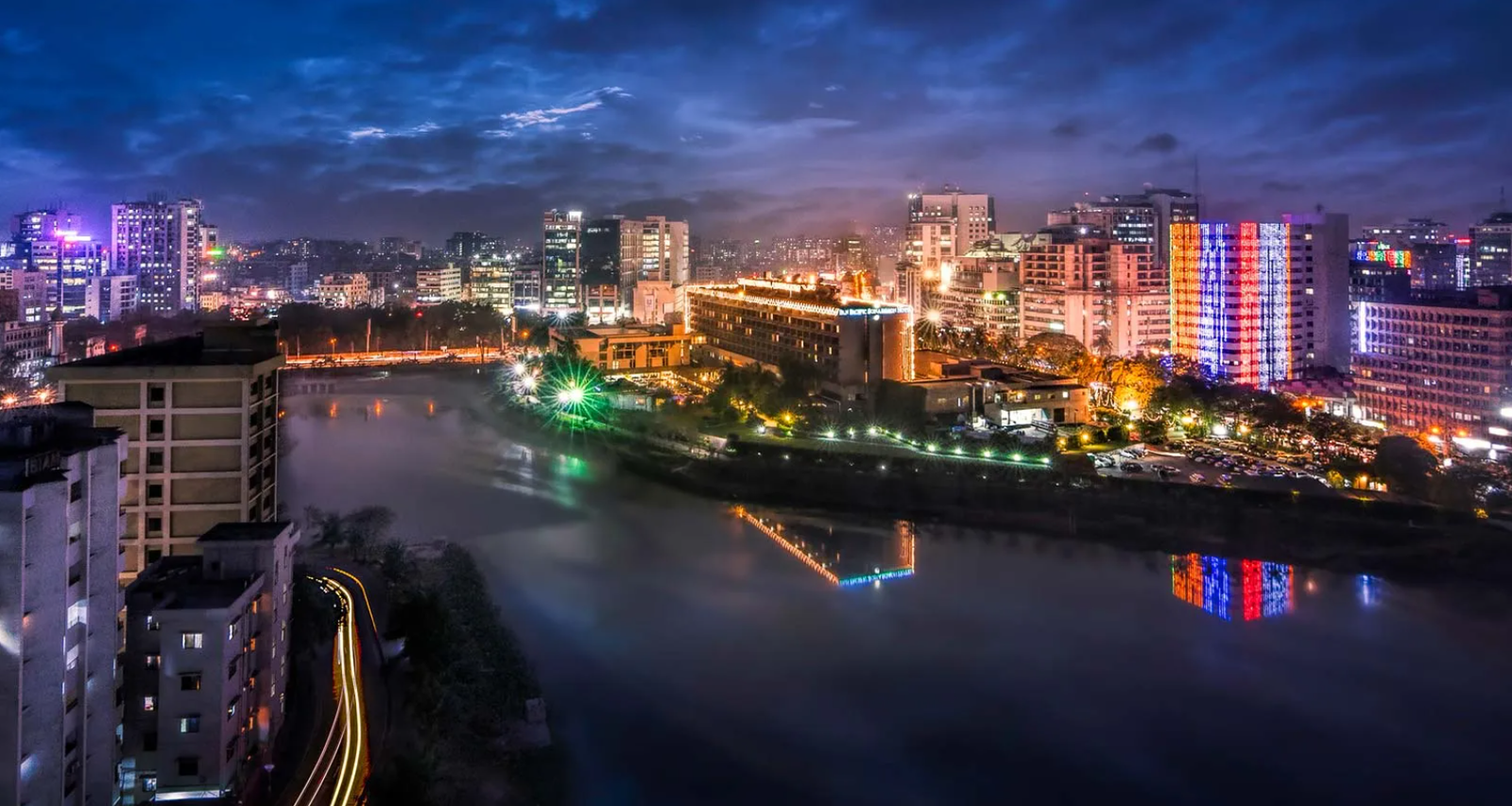
Famous Bengali singer Kabir Suman sang, ‘This city knows all my firsts.’ similarly, Dhaka is also my first everything. Here I saw the first light of life. Growing up with its air and water, going to school or sometimes running away from it, friendships, relatives, love, marriage, children, and countless people who taught me how to love, to struggle, and to stand. This is the city of millions of stories, the city that gave birth to 1952, 1969, 1971, and most recently 2024. The city that once gave us breath is itself now becoming doomed.
A great city dying in our own hands
Many call Dhaka a magical city. We arrive here with dreams. Yet every day we must send our dreams one by one to the museum. And perhaps one day the city itself will end up in a museum. This city is dying in our own hands.
If we examine the reasons behind Dhaka’s decline, the first thing that concerns us is population. According to the United Nations, Dhaka is already the world’s second largest city by population and by 2045 it may become the largest. But how many people actually live here? The Dhaka South City website says 12 million. Dhaka North City says 5.5 million. Combined that is 17.5 million. The Bangladesh Bureau of Statistics says about 10.3 million. The United Nations Department of Economic and Social Affairs estimates 36.6 million. Urban planners estimate around 21 million. Of those living in Dhaka North, nearly 80 percent belong to lower-middle income groups. The poor quality of life becomes evident when we look at the air, water, housing, and roads.
Living in Dhaka shortens life by seven years
When a person’s heart is sick, the entire body suffers. In the same way, when the capital is sick, the whole country is sick. The air is unhealthy. Ninety-eight percent of children in Dhaka have lead in their blood. Toxic substances spread from rickshaw batteries. Living in Dhaka shortens life by seven years. According to the Air Quality Life Index published by the Energy Policy Institute at the University of Chicago, air pollution reduces life expectancy in Dhaka by seven years and seven months. Nationwide the reduction is about five years and four months. If the average life expectancy is seventy-two years, living in Dhaka effectively reduces it to about sixty-five.
Water is also unsafe
Each year Dhaka’s groundwater level drops by about three meters. Sewer lines flow into lakes. Forty-five percent of water samples contain bacteria, iron, and ammonia. Eighty percent of groundwater samples exceed safe levels of iron, manganese, and lead. This is reported by the Bangladesh Institute of Health Sciences.
Where does 8,000 metric tons of daily waste go?
Urban areas generate about 33,574 tons of solid waste each day. Dhaka alone produces around 8,000 metric tons daily. Where is this waste managed? Much of it ends up filling our lakes, canals, and rivers.
Affordable housing is absent despite being a basic right
Korail slum has experienced ten fires in the last twelve years. According to BBS, nearly four thousand slums in Dhaka house more than four million people. Forty percent of them are climate displaced, 50.96 percent came seeking work, and 28.76 percent because of poverty. What kind of housing do these people have? Should they not have the right to a humane life? Only two to five percent of flats in Dhaka are affordable for lower middle-income families. According to the Center for Housing and Building Research, residents spend 40 to 60 percent of their income on rent, far above the World Health Organization’s recommended threshold of 30 percent. The Asian Development Bank and Bangladesh Institute of Planners report that the price of a flat is on average 12.5 times the annual income of an ordinary person. For lower middle-income families, the ratio reaches 20 or 21 times. Over the last 25 years rents in Dhaka have increased by nearly 400 percent.
Public toilets are another name for urban illness.
The two city corporations together have only 194 public toilets. Nearly ten million people commute daily in Dhaka. That means roughly one toilet for every 100,000 people. Eighty percent lack water, soap, or tissue. Ninety percent lack adequate lighting and security, making them especially unsafe for women. Without public sanitation how can public health be protected?
Healthcare is not accessible
In Dhaka North, only 36 primary healthcare facilities serve just 25 of the 54 wards. Citizens pay about 73 percent of healthcare costs out of pocket according to the Health Economics Unit. There are only 0.4 hospital beds per thousand people. About 80 percent of low-income and slum residents rely on pharmacies or informal practitioners for treatment according to the World Bank and BIDS.
Public transport is another crisis
The Bangladesh Road Transport Authority has registered 43,676 buses. Around 85 percent lack proper fitness certification. On most routes eight out of ten buses are visibly unfit. Public transport is both insufficient and controlled by syndicates. Can a city function without reliable public transport?
How can a stagnant city sustain its economy?
Traffic congestion wastes nearly 14 billion taka in work hours every day. The average vehicle speed is only 4.8 kilometers per hour. People spend about 46 minutes stuck in traffic every two hours according to BUET research. How can a city’s economy function under such paralysis?
How will Dhaka become a safe city?
About 25 percent of Dhaka residents have experienced robbery or mugging at some point in their lives according to BIDS. There is only one police officer for every 630 citizens. The ideal ratio is one for every 250. How can such a city be safe?
This city is not built for women
Eighty-seven percent of women face verbal, physical, or other harassment in public transport. Fifty-eight percent experience harassment in workplaces according to Ain o Salish Kendra. How can the city belong to women under such conditions?
Even in death there is no peace
A permanent grave here costs four crore taka. Can people not even find peace in death?
Dhaka’s liberation lies not in Regret, but in taking the right Step
Dhaka is a city that seems hostile to life every day. People struggle merely to survive. Yet they deserve a developed urban life. That does not happen because the city lacks inspiration, planning, and governance. After uprisings we speak of reform, during elections we hear promises, and afterwards we return to the same old arrangements. We regret but we do not any step.
Yet the life of Dhaka is in our own hands. Its liberation will come not through regret but through taking the right step. Politics must recognize this. Specially under the leadership of Prime Minister Tarique Rahman and the new government formed with the promise of “Bangladesh First,” rebuilding Dhaka must become an urgent national priority. That reconstruction requires a visionary, responsible, sensitive, and representative urban authority. Nearly 50 percent of the country’s economic activity occurs in Dhaka. Saving Dhaka means allowing it to flow like a living river. Just as a nation cannot survive if its rivers die, Bangladesh cannot thrive if its capital collapses. A vibrant, healthy, and beloved Dhaka is the essential precondition for transforming the country’s economy.
Dhaka has reached a moment when delay itself has become a danger. The problems of this city are no longer hidden. The data are clear, the suffering is visible, and the consequences are already shaping the lives of millions of citizens. What Dhaka requires now is not another cycle of promises or another catalogue of grievances. It requires deliberate and courageous steps.
The new government and the newly appointed administrators of Dhaka’s city corporations have before them a historic responsibility. They must move beyond short term responses and begin the structural reconstruction of the capital. This means restoring governance to urban planning, reclaiming rivers and canals, reforming public transport and breaking the syndicates that paralyze it, ensuring affordable housing, strengthening primary healthcare, improving waste management, expanding sanitation facilities, and building a city that is safe and dignified for women and children.
Dhaka cannot be governed as a collection of isolated problems. It must be treated as a living system whose health determines the wellbeing of the entire nation. Nearly half of Bangladesh’s economic activity flows through this city. If Dhaka fails, the country suffers. If Dhaka thrives, the nation moves forward.
The people of this city are not asking for miracles. They are asking for leadership, planning, and accountability. The new administration must therefore place Dhaka’s reconstruction at the center of national policy and work with citizens, planners, and institutions to create a long-term vision for a healthy, inclusive, and sustainable capital.
The message of this moment is simple. Dhaka’s future will not be secured by regret or rhetoric. It will be secured by action. The time has come to take those steps.
Barrister Omar Sadat, Urban Rights Activist and Senior Advocate, Supreme Court