The current interim government of Bangladesh wants to restart the negotiations with India on the water sharing of transboundary rivers.
The government of the lower-riparian country wants to resolve the much-talked about issue of water sharing for the Teesta River, the renewal of the Ganges water-sharing treaty and water sharing of other transboundary rivers as per the international principles.
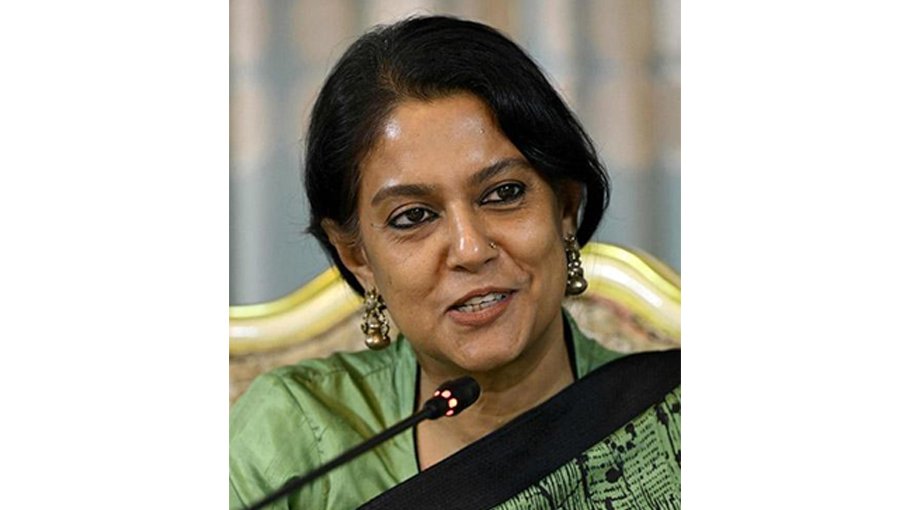
Syeda Rizwana Hasan, interim government’s adviser to the Ministry of Environment, Forest and Climate Change, and the Ministry of Water Resources; said that Bangladesh will soon take steps to engage in negotiations with India regarding its water rights and share of the common rivers.
The negotiations will be held after considering public input, and the outcomes will be shared with the people, she said adding that although the issue of waster sharing of international rivers is complex, the exchange of essential information, such as rainfall data and the location of structures, is not critical and these should not be politicised. This exchange can help prevent damage to lives and property.
Syeda Rizwana Hasan made these remarks while speaking as the chief guest at a seminar titled ‘Bangladesh\s Fair Share of Water in Common Rivers’ at the conference hall of the Pani Bhaban in the capital on Wednesday. The event took place on the occasion of the World Rivers Day.
Presided over by Mihir Biswas, convenor of the World Rivers Day Celebration Committee, the seminar was moderated by Md. Alamgir Kabir, general secretary of BAPA. The keynote presentation was delivered by Mohammad Azaz, chairman of the River and Delta Research Center. Md. Shahidul Islam, Professor of Geography and Environment at Dhaka University, and Shamsul Huda, Executive Director of the Association for Land Reform and Development; also spoke on the occasion, among others.
The speakers discussed methods to ensure equitable distribution of shared river waters and emphasised the need for the application of international law, accurate water data, and the strengthening of bilateral and multilateral discussions on river management.
Speaking at the event, Syeda Rizwana Hasan who is one of Bangladesh’s biggest champions for the environment and water resources for which she won the 2012 Magsaysay award; said that a country cannot approach the International Court unilaterally on such matters; both nations must be involved.
She further said that sharing rainfall data is a humanitarian issue, crucial for saving lives. Bangladesh’s claims will be made clearly and strongly. Besides international river water rights, she stressed the importance of protecting the country’s internal rivers, describing them as living entities that must be collectively preserved, she added.
A total of 57 transboundary rivers flow through Bangladesh, carrying an enormous volume of water flow. The country shares 54 of these rivers with India. These rivers effectively create one of the world’s largest riverine drainage basins-- the Ganges--Brahmaputra--Meghna (GBM) Basin.
Bangladesh has some agreements with India on shared rivers such as the Kushiara and Feni. Now Dhaka and New Delhi should initiate negotiation on the renewal of 1996 Ganges water sharing agreement. The Teesta water sharing issue did not make any progress even though Sheikh Hasina was in power for over 15 years. Her government was toppled by a massive public movement on August 5 this year.
As the lower riparian country within the GBM Basin, Bangladesh is highly dependent on and susceptible to run-off from India, with over 90 per cent of the country’s surface water provided by out-of-country sources.
Despite the fact that no other countries in the world share between them such a gigantic volume of transboundary water, Bangladesh and India have only one long-term water-sharing agreement between them on the Ganges. In absence of a functional mechanism for equitable water sharing of 53 other common rivers, the riverine environmental stress is now a challenge to Bangladesh, with long-term consequences for food security, health, and development in the region.
About the matter, Syeda Rizwana Hasan recently said, “We will maintain friendly relations with India but we will present our claims and demands and may even approach international platforms to speak about our just demands.” She pointed out that Bangladesh has received invitations to discuss water-related matters from multiple countries, including from China. “Wherever we feel necessary, we will send our interlocutor,” she said.