Staff Correspondent
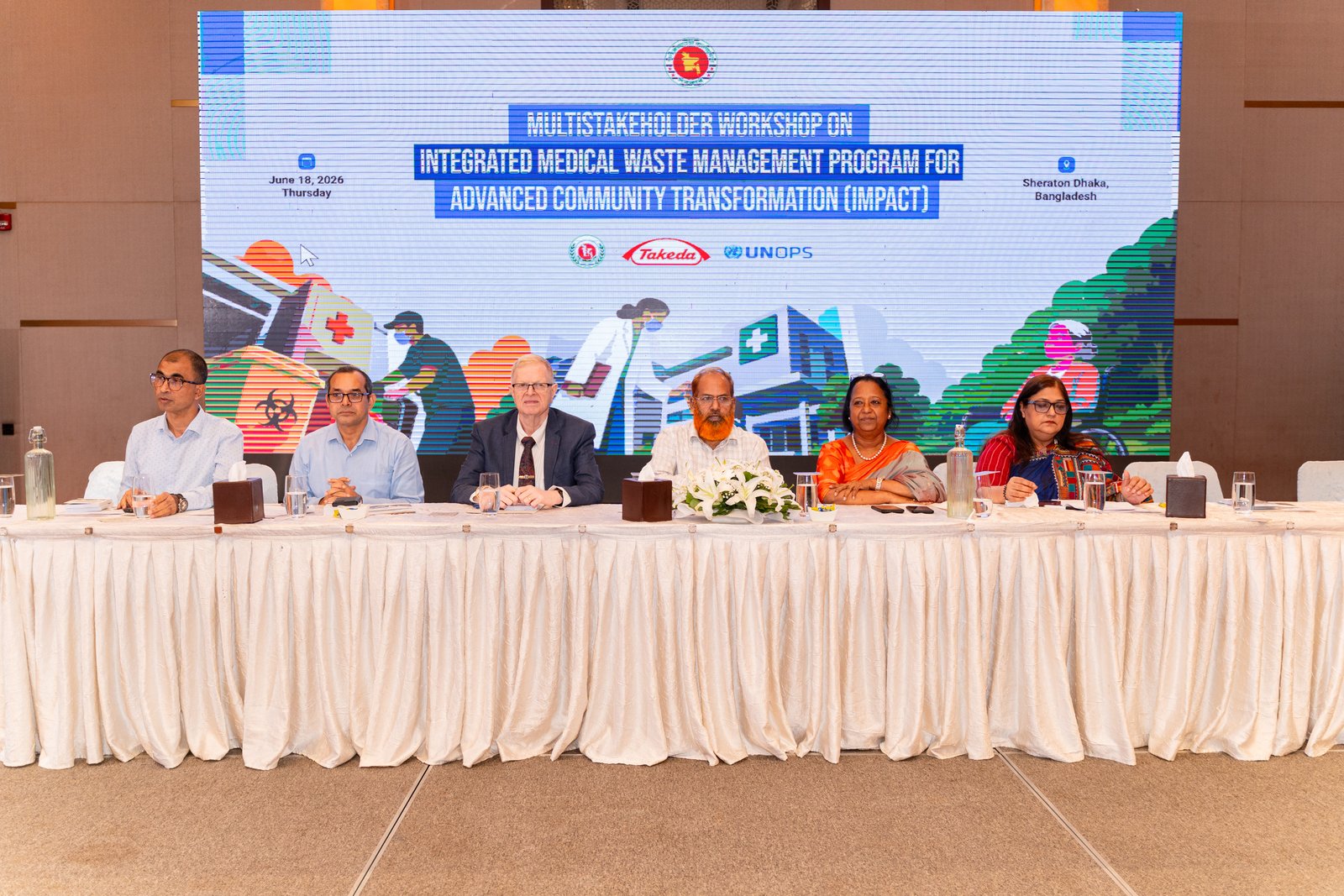
The Directorate General of Health Services (DGHS), under the Ministry of Health and Family Welfare (MoHFW), in collaboration with the United Nations Office for Project Services (UNOPS), today convened a multi-stakeholder consultative workshop on the Integrated Medical Waste Management Program (IMPACT) at Sheraton Dhaka.
The workshop brought together more than 100 representatives from government ministries and agencies, healthcare facilities, municipalities, development partners,, technical institutions, and civil society organizations to discuss strategies for strengthening medical waste management systems across Bangladesh.
Healthcare waste management remains a critical public health and environmental challenge in Bangladesh.
Despite existing policies and guidelines, gaps persist in infrastructure, operational capacity, regulatory compliance, and coordination among relevant stakeholders. Improper management of medical waste poses significant risks to healthcare workers, waste handlers, communities, and the environment.
The IMPACT initiative aims to establish a sustainable, safe, and environmentally sound medical waste management system through improved infrastructure, institutional strengthening, capacity development, and enhanced coordination mechanisms.
The workshop was inaugurated by Dr. Abu Hussain Md. Moinul Ahsan, Director (Hospital), DGHS, who emphasized the importance of strengthening healthcare waste management systems to protect public health and ensure environmental sustainability.
The workshop featured remarks from distinguished guests, including Sudhir Muralidharan, Country Manager, UNOPS Bangladesh and Bhutan; Sheikh Momena Moni, Additional Secretary, WHO Wing, Ministry of Health, Dr. Pravath Chandra Biswas, Director General, Directorate General of Health Services (DGHS), who attended as Guest of Honour; and Md. Khorshed Alam, ndc, Additional Secretary, Admin Wing, Ministry of Health and Family Welfare, who graced the occasion as Chief Guest.
Throughout the day, participants reviewed findings from field assessments conducted in selected project locations, examined existing medical waste management practices, and identified key challenges related to waste generation, infrastructure, regulatory compliance, occupational health and safety, and operational sustainability.
The key recommendations and next steps emerging from the workshop were consolidated during the closing session, followed by remarks from Professor Dr. Foara Tasmim, Additional Director General (Planning), DGHS
In his written remarks, shared with participants during the workshop, Sardar Md. Sakhawat Hussain, Minister, Ministry of Health and Family Welfare, reiterated, “The success of this initiative depends on strong hospital leadership, adequate trained manpower, and sustainable budgets for operations and maintenance. The Ministry of Health & Family Welfare is committed to ensuring our facilities have the resources and support needed from day one, so we can protect both public health and our environment.”
The workshop concluded with a consolidated set of recommendations and priority actions aimed at strengthening inter-agency coordination, enhancing institutional capacities, improving infrastructure investments, and establishing clear implementation and accountability mechanisms.