Mozahidur Rahaman, Khulna Bureau
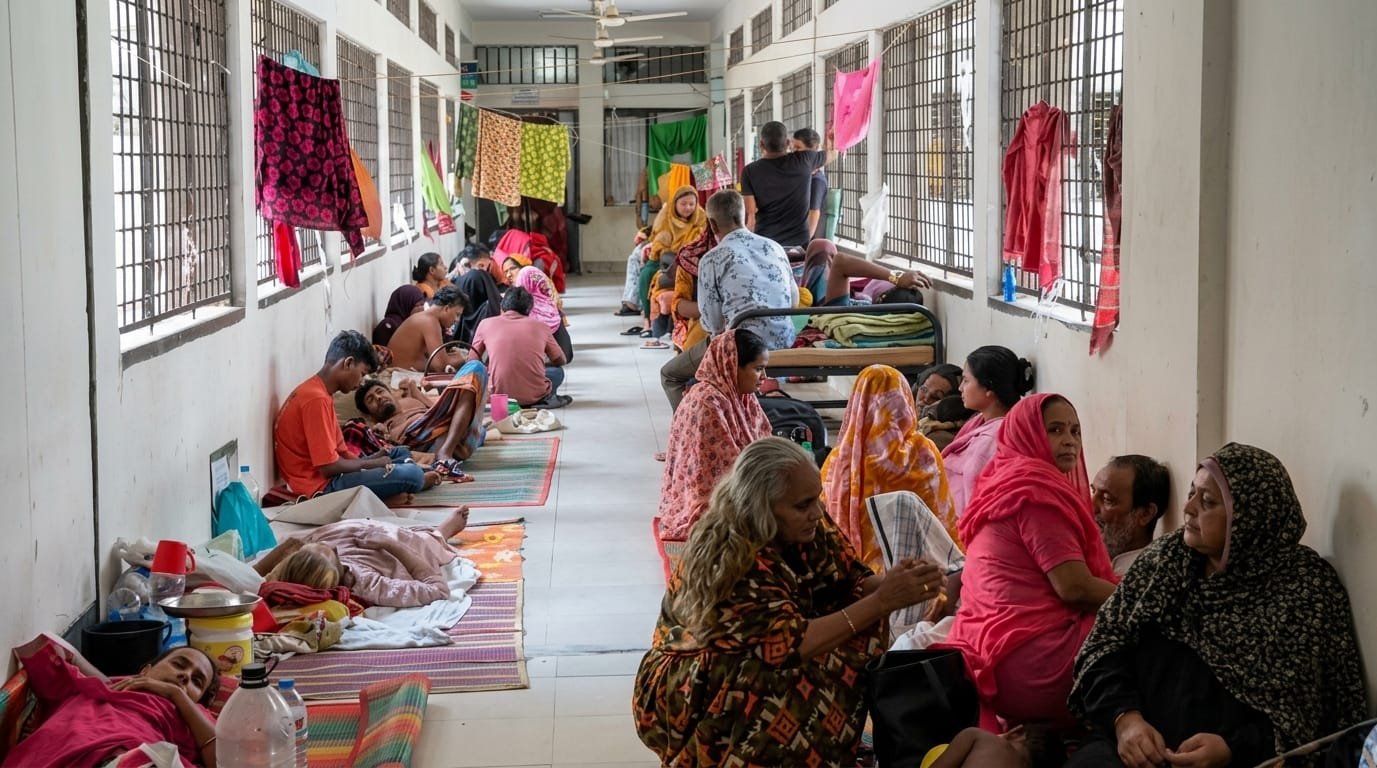
The dengue outbreak in Khulna is overwhelming hospitals, with patients being treated in corridors, verandas and on floors as beds and medical staff fall short of demand.
As of October 3, Khulna Division had recorded 14,125 dengue cases and 48 deaths. A total of 1,223 patients were undergoing treatment, while 274 new patients were admitted in the past 24 hours.
Health Department data show that cases rose from 2,071 by July 31 to 6,094 by September 1 and 13,411 by the end of September. More than 4,000 new cases were recorded in August and over 7,000 in September. Deaths increased from 20 at the end of August to 48 by the end of September.
Daily admissions also remained high, reaching 349 on September 16 and 329 on September 27. In the past 24 hours, 106 patients were admitted to government and private hospitals in Khulna district and another 85 to Khulna Medical College Hospital (KhUMC), taking the combined total to 191.
At KhUMC Hospital, patients are being treated in corridors, verandas and on floors after designated beds filled up. Relatives have also alleged shortages of medicines and nursing services.
Patient’s relative Khadija Khatun said, “There are no beds. We thought we would go for a cabin, but we could not get a cabin either.”
Another relative, Asadul, said some necessary medicines had to be purchased from outside. A third relative alleged that the shortage of nurses was more acute than that of doctors.
Dr Md Rafiqul Islam Gazi, superintendent of Khulna 250-Bed General Hospital, said, “We have not arranged separate beds for dengue patients. However, with the increasing patient pressure, we are struggling to provide treatment.”
KhUMC Hospital authorities, however, said medicines were adequately available and patients were not being forced to leave without treatment.
Kazi Md Ainul Islam, director of KhUMC Hospital, said, “There is a shortage of manpower, but the situation is not so critical that patients are returning without receiving treatment.”
Sheikh Md Mosharraf Hossain, divisional health director, said KhUMC Hospital had requested six doctors but received only two. Efforts were underway to redistribute manpower from areas facing comparatively lower pressure.
According to Health Department data, 13,667 dengue patients have been identified in Khulna Division since January 1 this year. Of them, 12,124 have recovered, while 1,167 are undergoing treatment. Another 328 patients have been transferred to other facilities for advanced treatment.
Children's healthcare facilities are also under pressure. Dr Pradip Debnath, senior consultant and superintendent of Khulna Shishu Hospital, said the 275-bed hospital remained full, often forcing authorities to refer patients elsewhere.
Private hospitals are also struggling with bed shortages. Mokarram Billah Ansari, administrative officer of Islami Bank Hospital, said beds were rarely available and many patients had to be turned away.
Dr Md Shawkat Ali, deputy civil surgeon of Khulna, said Khulna Civil Surgeon Mahfuza Khatun had contracted dengue and was receiving treatment in a guest room at the School Health Building. He said at least five isolation beds had been arranged at every upazila hospital in the district and sufficient medicines were in stock.
Meanwhile, questions have emerged over mosquito-control activities. In September, concerns were raised about the quality of chemicals procured by Khulna City Corporation after they reportedly failed an initial test. Samples were subsequently sent to multiple laboratories for further testing.
Khulna City Corporation Administrator Nazrul Islam Manju said preparations were underway to establish a field hospital on the KhUMC Hospital premises if the next wave of dengue did not subside. He also stressed the need for public participation in destroying mosquito breeding grounds.
As of October 1, Khulna district had recorded 5,217 cases and 16 deaths, with 448 patients undergoing treatment. KhUMC Hospital had recorded 2,763 cases and 25 deaths. Bagerhat and Jashore had reported 1,898 and 1,353 cases respectively, while infections were also increasing in Narail, Satkhira, Jhenaidah, Kushtia, Magura, Meherpur and Chuadanga.
With dengue spreading across almost every district of the division, Khulna city hospitals are bearing much of the treatment burden, receiving both local patients and critically ill people referred from other districts.#EK