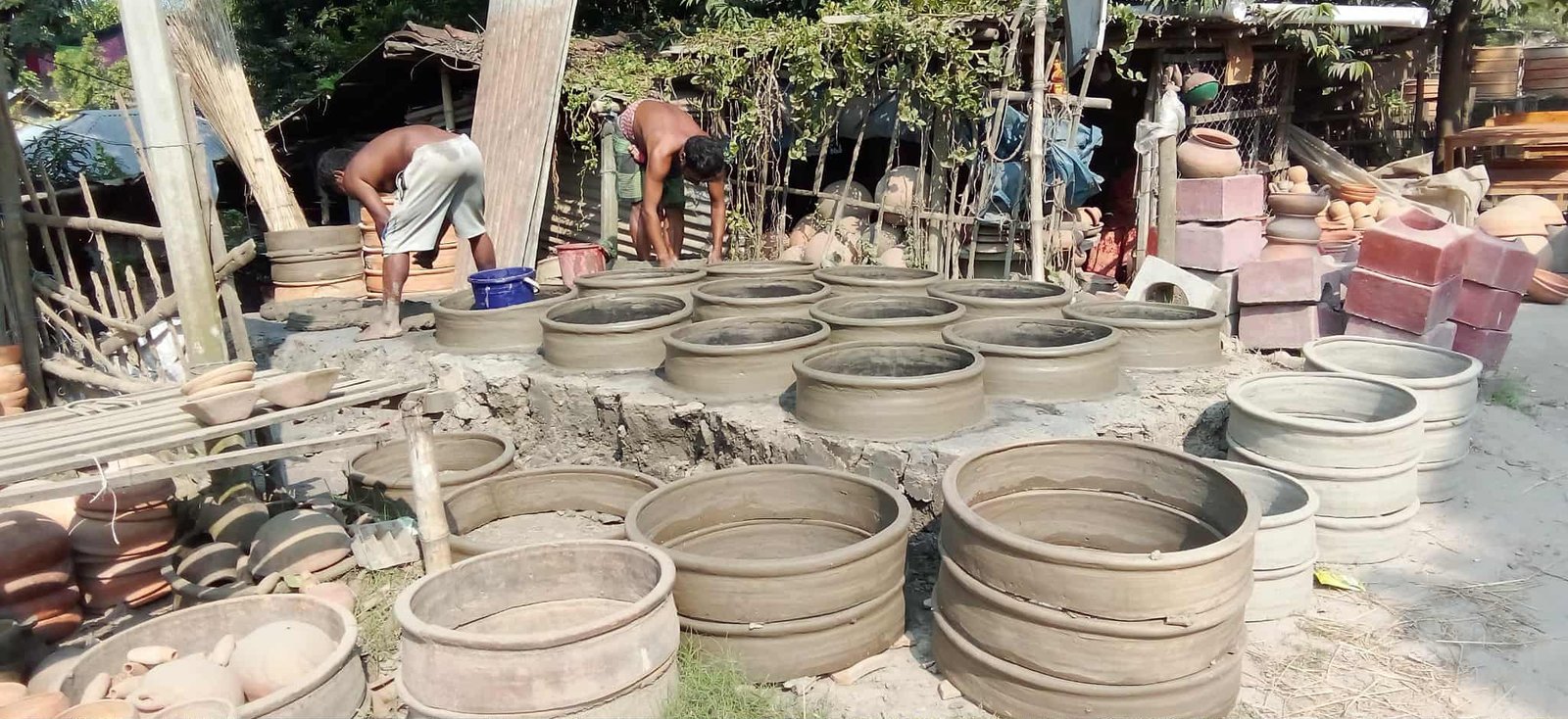
Demand for traditional earthen toilet pits—locally known as pat or chaki—has been rising in Ishwardi upazila of Pabna, as the eco-friendly product continues to prove strong and durable for up to 50 years in use.
For generations, around 20 families in Palpara of Muladuli Union have been making these earthen rings along with jars, yoghurt pots, and small clay banks. Despite the growing dominance of plastic and metal items in the market, these families are holding on to their ancestral craft for survival.
“Life is hard, but I continue the work my forefathers started,” said Bimal Chandra Pal, a veteran craftsman from Muladuli. “The demand for pat had dropped earlier, but it’s now increasing again. Many people still prefer clay-made pits for toilet waste systems because they are natural, long-lasting, and safe.”
Potters in the area said buyers from Pabna, Kushtia, Sirajganj, and even Natore’s Lalpur and Duruduria come to purchase the earthen rings. Each large-sized pat sells for Tk 100, while smaller ones are priced at Tk 70–80. “With proper drying, the product becomes durable and can last for 40 to 50 years,” said Sadhan Pal, who has been in the profession for over two decades.
However, craftsmen said rising clay prices and lack of government support have reduced their profit margins. “Earlier we could collect clay freely, but now we must buy it. The cost is high, so we barely make a living,” Bimal Chandra added.
Currently, more than 100 families in Muladuli and Arambaria areas are engaged in making clay products, but most other items like pots and tubs have lost their market due to plastic alternatives. “We continue this profession not for profit, but to preserve our family tradition,” Bimal said.
When asked about assistance for potters, Md Atiqur Rahman, Upazila Social Services Officer of Ishwardi, said, “We have small loan and allowance facilities for underprivileged artisans. If they apply and allocations are available, they will receive support following due procedures.”
The potters hope that with some government aid and proper market access, their age-old craftsmanship—once central to rural life—can survive in the modern era.