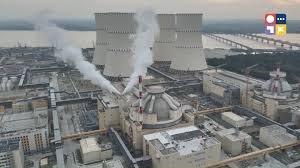
With the start of fuel loading into the reactor core of unit-1 at the Rooppur Nuclear Power Plant Bangladesh moves a step closer to achieving its long-cherished goal of generating nuclear energy on Tuesday. The project long seen as a pipe dream is finally coming into view. With this milestone, Bangladesh is poised to join a select group of over 30 nuclear power producing countries and become the third South Asian country, after India and Pakistan, to generate nuclear energy. According to reports, fuel loading will be completed in less than 45days and it will take three months for the reactor core to warm up. However, electricity will then be generated on a trial basis and fed into the national grid.
According to experts, if the commissioning progresses smoothly, a minimum of 300 megawatts is expected to add to the national grid by late July or early August.
Production will then gradually increase reaching the ceiling of 1,200 megawatts by late 2026 or early 2027. Located on the bank of the Padma River in Ishwardi, $12.65 billion plant is the single largest infrastructure investment in the history of Bangladesh. It consists of two units built with Russia’s financial and technical assistance. Once both units become fully operational, the plant will generate 2,400MW.
At present, Bangladesh has an installed generation capacity of 28,919MW from 136 power plants, including government, non-government, and imported sources. However, over 95 percent of this capacity depends on fossil fuels, of which 70 percent is imported.
The country is heavily dependent on imported fossil fuels. In the current global context, we are unable to secure sufficient fuel to operate most of the plants, which has severely hampered power generation. The addition of power from Rooppur plant to the national grid is expected to resolve this crisis by providing a stable power which is not subject to the volatility of fossil fuel prices. The price of electricity per unit is likely to be cheaper than that of the coal generated power.
The commencement of fuel loading into the Rooppur plant has been taken by the people to be a moment of elation as it will ease the discomfort of loadshedding; but at the same time, some people express their worries about safety. There is no reason to be worried about radioactive waste as Russia will take back the spent fuel. The Rooppur Nuclear Power Plant (RNPP) utilizes advanced technology with minimal risk.
Majority of the people lack a clear understanding of radioactive waste and much of their fear is based on rumours, which creates unnecessary anxiety. According to experts, as fuel loading begins, the authorities must educate people on safety protocols, and emergency medical treatment. Modern technology is significantly safer, but that message is not reaching the people. Built in line with the post-Fukushima safety standards, the plant features all the highest safety and security measures. However, robust awareness programmes must be carried out for the surrounding population.