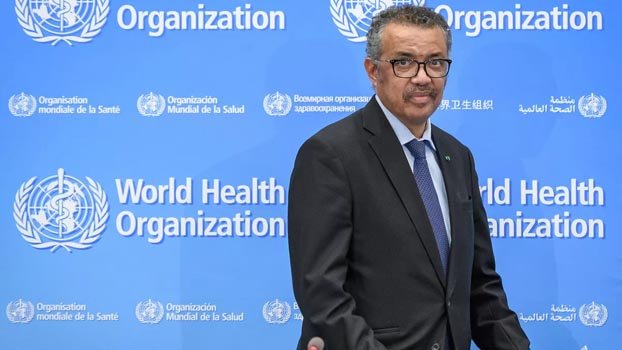
The World Health Organisation (WHO) has declared the novel coronavirus outbreak a pandemic, asking countries to take ‘urgent and aggressive’ action to stop ‘unnecessary’ sufferings and deaths. “We have rung the alarm bell loud and clear,” WHO Director-General Tedros Adhanom Ghebreyesus said on Wednesday night at the media briefing on COVID-19 at the UN agency’s headquarter in Geneva.
He said in the past two weeks, the number of cases of COVID-19 outside China has increased 13-fold, and the number of affected countries has tripled. There are now more than 118,000 cases in 114 countries and 4,291 people have lost their lives. Thousands more are fighting for their lives in hospitals, he said.
“In the days and weeks ahead, we expect to see the number of cases, the number of deaths, and the number of affected countries climb even higher,” he said.
“WHO has been assessing this outbreak around the clock and we are deeply concerned both by the alarming levels of spread and severity, and by the alarming levels of inaction. We have therefore made the assessment that COVID-19 can be characterized as a pandemic,” he said.
“Pandemic is not a word to use lightly or carelessly. It is a word that, if misused, can cause unreasonable fear, or unjustified acceptance that the fight is over, leading to unnecessary suffering and death.
“Describing the situation as a pandemic does not change WHO’s assessment of the threat posed by this virus. It doesn’t change what WHO is doing, and it doesn’t change what countries should do.
“We have never before seen a pandemic sparked by a coronavirus. This is the first pandemic caused by a coronavirus. And we have never before seen a pandemic that can be controlled, at the same time. WHO has been in full response mode since we were notified of the first cases,” he said.
The WHO chief also asked countries to take “a whole-of-government, whole-of-society approach, built around a comprehensive strategy to prevent infections, save lives and minimize impact.” He summarised that in four key areas. “First, prepare and be ready. Second, detect, protect and treat. Third, reduce transmission. Fourth, innovate and learn.”
“I remind all countries that we are calling on you to activate and scale up your emergency response mechanisms; communicate with your people about the risks and how they can protect themselves – this is everybody’s business; find, isolate, test and treat every case and trace every contact; ready your hospitals; protect and train your health workers. And let’s all look out for each other, because we need each other.”
Bangladesh earlier on March 8 confirmed the first three cases – two returned from Italy and the other was a family member of them. After the declaration of pandemic, IEDCR Director Prof Meerjady Sabrina Flora told Bangladesh Post they have strengthened their preparations.
“We are already prepared. From airport screening to treating patients, we are strictly following WHO’s guidelines,” she said. “We don’t have new cases or local transmission. But still we have taken both containment and mitigation plans since it’s a pandemic”.
She, however, urged all not to be panicked. “Be aware of the disease and take prevention measures,” she said, asking all for washing hands with soap often, keep at least 1 meter distance from the sick person and cover cough and sneezing.
Of the total cases reported globally, more than 90 percent of cases are in just four countries, and two of those – China and South Korea - have significantly declining epidemics. According to the WHO, 81 countries have not reported any cases, and 57 countries have reported 10 cases or less.
“We cannot say this loudly enough, or clearly enough, or often enough: all countries can still change the course of this pandemic,” the WHO director general said. “If countries detect, test, treat, isolate, trace, and mobilize their people in the response, those with a handful of cases can prevent those cases becoming clusters, and those clusters becoming community transmission.
“Even those countries with community transmission or large clusters can turn the tide on this virus. Several countries have demonstrated that this virus can be suppressed and controlled,” he said.