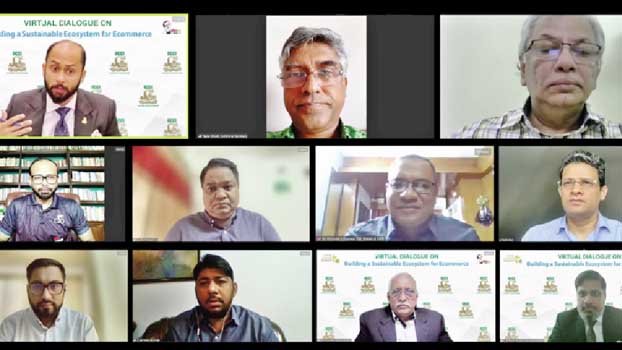
Transparent automation, easy regulations, access to finance, inter-ministerial coordination, easy tax structure, cross border digital commerce trade facilitation are key to foster ecommerce in Bangladesh, stakeholders told in a discussion meeting on Saturday.
Dhaka Chamber of Commerce & Industry (DCCI) organised the dialogue titled “Building a Sustainable Ecosystem for Ecommerce”. Commerce Secretary Tapan Kanti Ghosh joined the discussion as the chief guest.
While addressing, Commerce Secretary said private sector is playing the dominant role in the economy. In the ecommerce sector, reliability is the key issue to help this sector to grow.
"Government does not want to impose strong regulations upon the sector so that small entrepreneurs can come on board easily. Recently the Escrow system to see the compliance has been introduced but the number of transactions fell down. He therefore suggested for a coordinated platform to overview the compliance", Secretary added. He also said that government is working hard to create a congenial regulatory atmosphere for ecommerce business. But he also requested the consumers not to be greedy or discount hunter. In the opening remarks, DCCI President Rizwan Rahman said that the ecommerce ecosystem saw a massive vibe in recent past. Despite we have seen some challenges the sector is facing recently, but with the intervention of the government, regulators and stakeholders a sustainable development will come in the sector.
He said according to an estimated data, in 2020 transaction in the ecommerce sector was about USD2 billion, which may increase up to USD2.5 billion in the current year. According to an estimated data, in 2020 transaction in only f-commerce sector was about 320 crore taka, he cited.
He also said that 15% VAT imposed on ecommerce sector may hamper the growth of small investors in this sector. Moreover if international market leaders like Amazon comes in our market, it may create opportunity for local CMSME traders and manufacturers, he said.
Barrister K. M. Tanjib-ul-Alam, Head of the Chamber, Tanjib Alam and Associates also underscored importance of reliability for a sustainable market. For sustainability, repeat customers are needed and depending on only discount hunter and for a few opportunists, the market may be hampered.
He thus urged for a proper policy and guidelines with a scope of reward and punishment. Government should come forward to safeguard the ecosystem. Fahim Ahmed, President, Pathao said policy and regulatory guidelines are needed for a sustainable ecosystem. Unsuccessful ecommerce platforms with a huge liability and discounting method cannot sustain in the market as it is not economically viable.
Khorshed Anwar, Deputy Managing Director, Eastern Bank Limited said small e-commerce, startups or f-commerce entrepreneurs are sometimes deprived of access to finance due to lack of documentation. We are working on the issue and do training programmes for the small startups.
Khondoker Tasfin Alam, Chief Operating Officer, Daraz Bangladesh said excessive discounting model is not sustainable. Customer readiness as well as seller’s readiness is equally important. Sometimes wrong model can become famous for the time being but it is not sustainable but will hamper the ecosystem.