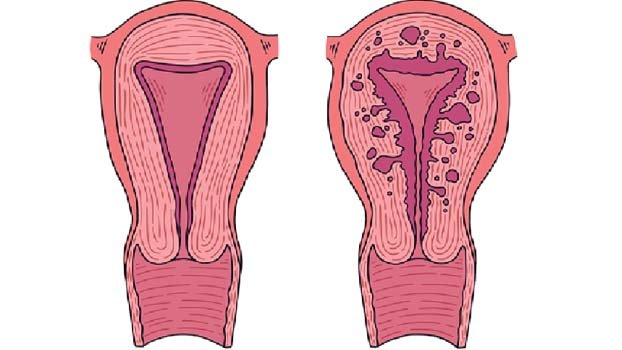
Complications:
If you often have prolonged, heavy bleeding during your periods, you can develop chronic anemia, which causes fatigue and other health problems.
Although not harmful, the pain and excessive bleeding associated with adenomyosis can disrupt your lifestyle. You might avoid activities you've enjoyed in the past because you're in pain or you worry that you might start bleeding.
Diagnosis:
Some other uterine conditions can cause signs and symptoms similar to those of adenomyosis, making adenomyosis difficult to diagnose. These conditions include fibroid tumors (leiomyomas), uterine cells growing outside the uterus (endometriosis) and growths in the uterine lining (endometrial polyps).
• Signs and symptoms
• A pelvic exam that reveals an enlarged, tender uterus
• Ultrasound imaging of the uterus
• Magnetic resonance imaging (MRI) of the uterus
In some instances, your doctor might collect a sample of uterine tissue for testing (endometrial biopsy) to make sure you don't have a more serious condition. But an endometrial biopsy won't help your doctor confirm a diagnosis of adenomyosis.
Pelvic imaging such as ultrasound and MRI can detect signs of adenomyosis, but the only way to confirm it is to examine the uterus after hysterectomy.
Courtesy: Mayo Clinic