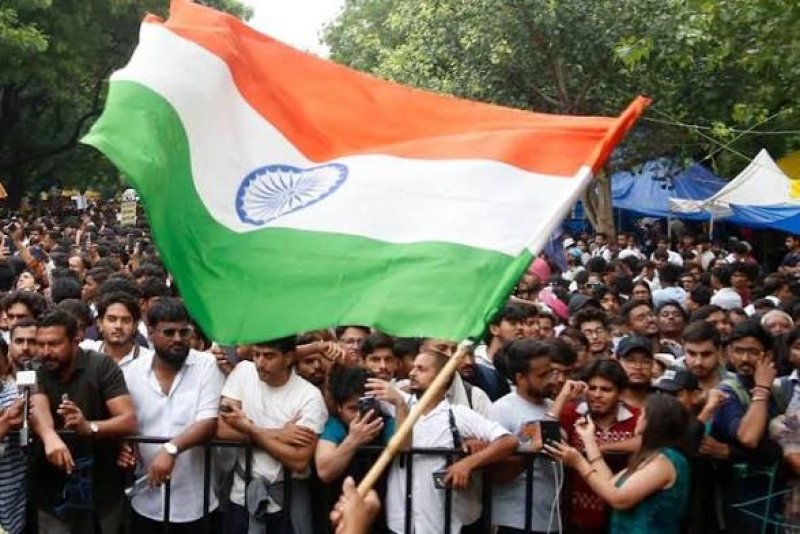
A youth-led protest movement in India that began as an online reaction to a controversial court remark has grown into a major challenge to the government of Prime Minister Narendra Modi, expanding from demands for education reforms to wider calls for accountability and institutional change.
Known as the "Cockroaches" movement, the campaign was initially driven by anger over alleged leaks of highly competitive entrance examinations for medical colleges and government jobs — exams considered crucial pathways to employment and social mobility for millions of young Indians.
The protests gained momentum in May after India's Supreme Court Chief Justice Surya Kant reportedly compared some unemployed young people to "cockroaches" during an unrelated hearing. The comment triggered widespread backlash on social media, prompting Boston University student Abhijeet Dipke to launch the Cockroach Janta Party (Cockroach People's Party).
Many young people adopted the term as a symbol of resilience, turning it into a digital campaign featuring satire and criticism over unemployment, limited job opportunities and economic hardships.
The movement later shifted from online platforms to street demonstrations in June after Dipke returned to India and organized protests in several cities and university campuses.
Protesters are demanding the resignation of Education Minister Dharmendra Pradhan, reforms to the examination system and compensation for families of students who died by suicide following alleged exam paper leaks.
What started with a few hundred participants has since drawn thousands of supporters. The movement received further attention after activist Sonam Wangchuk joined the protests and launched a hunger strike lasting more than three weeks before being taken to hospital by police.
The campaign has gradually expanded beyond student issues, reflecting broader public concerns over unemployment, government accountability and trust in institutions, including the education system, political leadership, judiciary and media.
Professionals, families and volunteers have also joined the campaign, offering support through donations and online initiatives rather than traditional political organizations.
The Indian government initially rejected the protesters’ demands. Education Minister Dharmendra Pradhan said authorities had addressed concerns over examination irregularities by ordering fresh tests and accused the protesters of acting against national interests.
However, the government's position shifted after police used tear gas and batons to disperse protesters attempting to march towards Parliament earlier this week. The action triggered criticism and led government representatives to open discussions with protest leaders, though no agreement has been reached.
The movement has also received support from opposition leader Rahul Gandhi and several rights groups, who have described it as a broader campaign for democratic accountability and the right to peaceful protest.
Political observers say the decentralized youth movement poses an unusual challenge for Prime Minister Narendra Modi’s government, especially as India’s large youth population could play a key role in future elections.