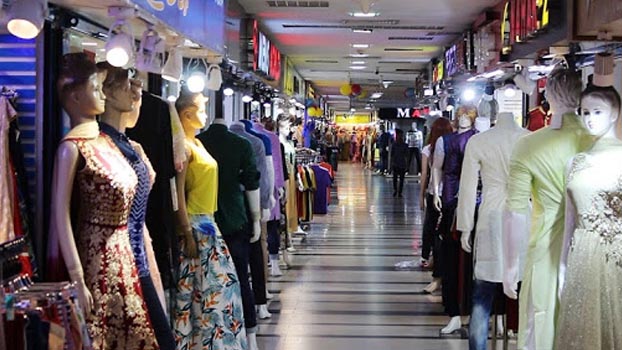
The government decision to open markets and shopping malls from May 10, has ushered a glimmer of hope among the wholesale and retail clothes traders, now preparing to conduct trade targeting the largest festival, Eid-ul-Fitr.
Welcoming the government decision, Shop Owners Association president Helal Uddin in a video statement said, “Despite the coronavirus spread, the government’s bold decision will help to save lives on both sides. I urged my fellows to follow the government rule strictly and ensure health safety measures at every shopping mall.”
At the same time, he suggested that customers not go to such shopping malls or markets where they find inadequate safety preparations.
Immediately after the announcement, clothes-laden trucks and cargos were sent to different districts from Islampur Wholesale Market on Tuesday. On the same day, wholesale traders from Keraniganj also sent their pre-orders to other parts of the country.
The biggest cloth market in Bangladesh is Islampur Cloth Market, located close to Sadarghat and has been around since the British period. It's a popular destination for tourists because of its amazing architecture from different eras throughout time periods when it was developed further after independence in 1971 with Pakistani investors who had started building there at some point before hand too!
The Islampur bazaar is a popular destination for cloth shoppers in Dhaka. The market draws from long association with weaving and sewing traditions prevalent here, ranging from Jamdani fabrics to katan fabric made of silk obtained exclusively by women traders who have been trading since before Bangladesh was independent. There's also rajshahi silks available which were exported during colonial times when they were prized not only because their colouring set them apart but primarily due how well it blended into other clothes worn alongside its own shade - this type would eventually become known locally as batik after being brought back form Dutch settlers' possession at some point following Mughal rule over Bengal.
Based on wholesale traders' information, many of them made stocks of clothes for Eid before the coronavirus infection, and are now sending the items to retailers as per their demand. Earlier, when the lethal virus hit hard, they were in confusion over whether they would be able to sell their products.
Islampur Clothes Traders Samity (ICTS) president, Md Shamsul Alam told journalists, “Retailers from all over the country come here to purchase clothes. This year, we took early preparation for Eid, but the coronavirus put a halt to everything”.
“This year, wholesalers of Islampur Market have to incur huge losses, amounting to Tk 4000 to Tk 5000 crore approximately. But after the government decision, we have found new hope. Businessmen from different parts are communicating with us, and we are delivering products as per their demand,” he added.
Read More: Vietnam’s lockdown ensnares world’s clothing giants
According to ICTS information, there are more than 4000 small and large shops in the market. In its adjacent area, there are almost 6000 small-medium shops conducting clothes trade including three pieces, shirt-pant, Panjabi, Fatua, Shari, Lungi, and others.
At Keraniganj, there are cloth-making factories that are the biggest suppliers of different types of clothes after Islampur. There are almost 7000 cloth factories and around 10000 shops in which near about three lakh people work.
Keraniganj Garment Traders and Shop Owners Cooperative Society president, Shadhin Sheikh said, “This year we could not sell a piece of clothes during the Boishakh, though many of us made huge investments for that occasion. Traders made similar investments for Eid, the government decision in this pandemic is bringing relief among us”.
Dhaka New Market and Gawsia Market insiders said they are really happy with such a decision, and are now preparing to open markets maintaining health precautions.
Traders from different markets and shopping malls said, the month-long shut down of their shops for the virus, severely reduced their income. Hence, they have to pay their shop rent, employee salaries, utility bills from their investment.
But now they are happy as such a decision of the government before eid can bring good days for them.
However, despite such announcements, traders are fearing that due to the fear of coronavirus spread, customers will be reluctant to shop this year. On the other hand, due to the extended general holiday, sufficient salespersons are not available in the capital.
Read More: No influence of Indian clothes, buyers satisfied with local clothes
To use the government privilege, they are committed to resuming their businesses maintaining social distancing and health safety measures.
It is to be noted the Cabinet Division issued a gazette notification on Monday to allow all shops and shopping malls to remain open till 4 pm to continue trading on a limited scale at different districts and upazilas from May 10 on the occasion of the upcoming Eid-ul-Fitr amid the ongoing countrywide shutdown to contain the spread of coronavirus.