By Md. Nazmul Hossain
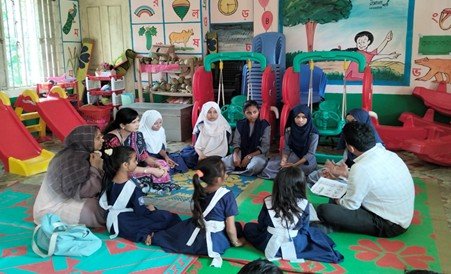
RDRS Bangladesh has amplified the voices of children from eight schools in five upazilas in Cox’s Bazar to better understand the factors shaping their learning, well-being, and sense of agency. A baseline survey conducted with 350 students examined how available school resources are translated into meaningful opportunities for learning, participation, and aspiration, using the Capability Approach alongside a Gender Equality and Social Inclusion (GESI) lens.
The findings contribute directly to SDG 4 (Quality Education) and SDG 5 (Gender Equality). While most students reported access to basic learning materials such as textbooks and stationery, several critical gaps persist. Common challenges included teacher shortages, limited access to libraries and computers, weak health and first aid services, and inadequate sanitation facilities. Girls highlighted the absence of menstrual hygiene support, while children with disabilities pointed to barriers created by insufficient inclusive infrastructure.
Gendered experiences revealed a complex reality. Boys generally enjoy greater freedom of mobility and participation, reflecting entrenched social norms. In contrast, girls expressed strong aspirations and positive engagement with gender-responsive learning, alongside heightened concerns about safety. However, unmet needs—particularly in menstrual hygiene management and safe school environments—demonstrate that inclusive policies have yet to be fully realized in practice. This gap is most evident in the “Understand, Interpret, Plan/Imagine and Think” domain, where limited access to libraries and computers significantly restricts the development of critical cognitive capabilities essential for lifelong learning and agency.
Lower scores in overall well-being, especially in mental and nutritional well-being and freedom from exploitation, further highlight the influence of structural barriers beyond the school environment. Poverty, cultural norms, and inadequate social protection systems continue to constrain children’s ability to fully realize their potential, underscoring the limitations of education interventions implemented in isolation.
The message is clear: school enrolment alone is not enough. For children to truly thrive, schools must provide quality education, inclusive infrastructure, and safe, supportive spaces where students can participate, express their views, and build confidence. Strengthening these dimensions will help transform schools into environments where every child is empowered not only to learn, but also to grow, choose, and aspire.
Md. Nazmul Hossain, Research Associate, RDRS Bangladesh, Cox’s Bazar