Rokaiya Ahmed
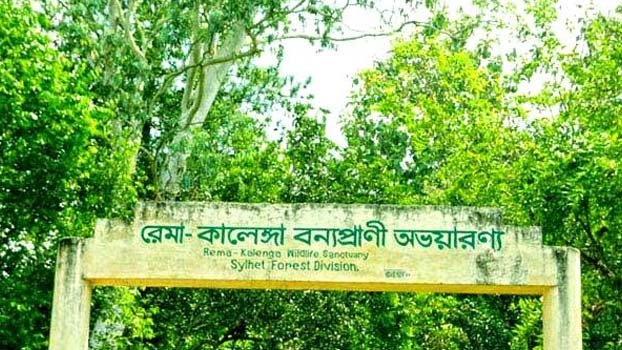
Some 17.5 percent of the total land in Bangladesh is covered by forestlands, which equates to 2.53 million hectares of land. Though there are different varieties of forestry dispersed in different regions of Bangladesh, the core zones are Chittagong (CTH) and Sylhet. Rema-Kalenga are two of the forestries situated in the Sylhet region, the northeastern part of Bangladesh. Though these man-made forestries were modelled in 1996, people are still unacquainted with Rema-Kalenga.
Forests are conventionally managed by the Department of Forest in Bangladesh, however, recently it has been handed over to the Ministry of Environment, Forest and Climate change. Rema-Kalenga is overseen by a co-management arrangement, where the local people, government and groups of stakeholders play significant roles to protect forestry as well as forest resources. Though forestry co-management is an effective system of forest restoration, in Rema- Kalenga, it has foundered because of the incompetence of the government as well as other co-management bodies. Authorities concerned and local people often get into disputes over resource ownership and profit made from Rema-Kalenga. They also either neglect or intentionally harm the forestries to stop their counterparts to reap benefit from Rema-Kalenga. Moreover, various unscrupulous co-management entities, reflect bio-colonial (taking over the knowledge and biological resources from indigenous people without consent and compensation) attitude by denying the rights and inclusion of the indigenous people- which is ethically unacceptable. Such inadequacy of the co-management is not only noticeable in unfamiliar, or smaller forestries in Bangladesh but also significant forestries like Sunderbans exist as burning examples of that.
Human negligence and hostility towards our forestlands can be judged from an ethical point of view. From an ethical perspective, nature possesses equal rights as humankind. Human beings exist at the top level of the power hierarchy possessing all the power to control, consume and capitalize from other levels beneath them as our modern-day capitalist society only believes in anthropocentric (centring only human interests) values. On the other hand, because of its exploitability, the environment is placed at the bottom of the existing power hierarchy. We, humans, feel entitled to all the resources nature and environment can offer. Thus, we have been exploiting the environment for centuries up until now.
Now we all are standing at crossroads, where we have to act from an ethical point of view to determine the wellbeing of our planet. It’s high time to adopt bio-centric (centring nature’s interest) behaviour. Managing as well as conserving our forests lands and resources effectively is a must along with changing our day to day behaviours to ensure the best interest of our environment. Such active changes will help us to mitigate the harmful effects of climate change. If we fail to do so, Bangladesh will fall short to ensure a better future for its next generation. And, we, humans, will be solely responsible for that. To make the earth sustainable, we need to work hard and follow the ethical route, which ensures the precedence of the environment before anything else.
One of the most concerning issues regarding Bangladesh is the environmental issue. Bangladesh is the most vulnerable to be execrable affected by climate change, however, if we replace our anthropocentric point of view with a biocentric approach, we can at least pass down a rightful and ethical attitude to our future generation. Consequently, Rema-Kalenga can be the small start towards that new change.
Rokaiya Ahmed studies at the Department of Environmental Science and Management, North South University