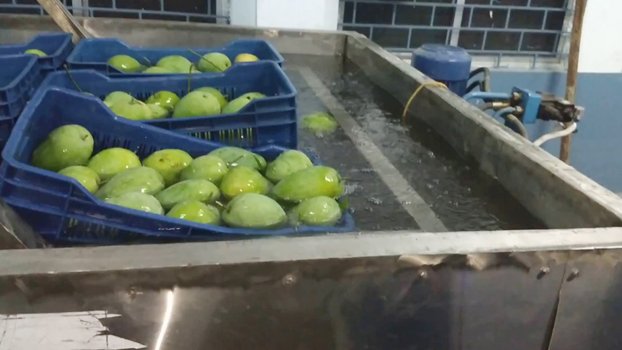
Substantial and sustainable adoption and use of hot water treatment plants can be the vital means of reducing postharvest losses of mangoes due to conventional and unscientific handling practices,reports BSS.
The traditional practices cause huge loss of mangoes at different stages of the supply chain every year but the losses can be reduced to an acceptable level qualitatively and quantitatively through promoting improved handling practices.
Mango scientists and researchers made these observations while addressing a field demonstration of a hot water treatment plant at Baneswar Bazar, one of the biggest mango markets in the region, under Puthiya Upazila in the district Thursday.
Farm Machinery and Postharvest Process Engineering Division of Bangladesh Agriculture Research Institute (BARI) organized the programme in association with Rajshahi Fruit Research Station (RFRS) through maintaining social distancing and other health guidelines amid the Covid-19 pandemic.
Integration of Postharvest Technology and Best Practices in the Value Chain of Fruits and Vegetables Project and National Agricultural Technology Project (NATP) jointly supported the field demonstration aimed at sensitizing and motivating the mango farmers and traders on how they can promote and use the hot water treatment plant.
Additional Secretary to the Ministry of Agriculture Komola Ranjan Das addressed the discussion as chief guest while RFRS Principal Scientific Officer Dr Alim Uddin was in the chair.
BARI Director General Dr Nazirul Islam and its Directors Dr Miar Uddin and Dr Roish Uddin, Chief Scientific Officer Dr Nazrul Islam and Deputy Director of Department of Agriculture Extension Shamsul Haque addressed the programme as resource persons disseminating their expertise on the issue.
In his remarks, Dr Nazirul Islam said the major causes of postharvest losses are enormous like improper harvesting, traditional handling practices at different stages of supply chain and postharvest diseases.
To overcome the odd situation, it is essential to apply improved postharvest handling practices to reduce the postharvest losses of mangoes to a minimum acceptable level in the industry.
Postharvest measures of mango include improved handling, packaging, transportation and storage facilities.
Dr Islam told the meeting that mango is a very demandable fruit and is one of the most relished fruit crops in the country and its demand is increasing very rapidly. From a nutritional point of view, it contains adequate quantities of appreciable -carotene, vitamin C, and dietary fiber. It also contains soluble sugars and different minerals.
Komola Ranjan Das said steps should be taken to disseminate the improved postharvest handling technologies among different stakeholders at different stages of the supply chain of mango fruit as it plays a vital role towards uplifting the region’s socio-economic condition.
Besides, he said the present government under the dynamic leadership of Prime Minister Sheikh Hasina has given highest importance towards agricultural modernization for successful value addition to the agriculture sector. So, all the extension and research entities concerned should put in their best level efforts to supplement the government endeavor.
Utmost emphasis should be given to reduce the postharvest losses of mangoes at different supply chains starting from harvesting to retailers, he added.