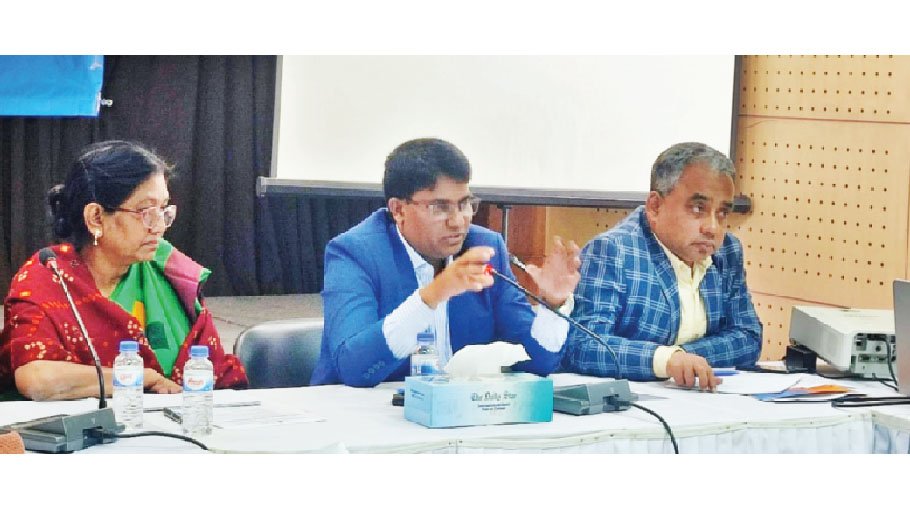
Speakers at a workshop in Dhaka have called upon the government and all concerned to take initiatives for ensuring occupational health, safety, labour rights and social security of sanitation workers.
Bangladesh Occupational Safety Health and Environment Foundation- OSHE arranged the workshop on safety and rights of sanitation workers in Bangladesh.
The event was arranged on Saturday with the support of OSHE Foundation Water Aid to present the results of a research on occupational health and safety conditions of sewage workers.
Vice-Chair of OSHE Foundation Dr SM Murshed moderated the event, while Professor Dr. Hasnat Alamgir and Professor Dr. Mohammad Ismail Hossain presented the draft and results of the research report.
Chair of OSHE Foundation Saki Rizwana presided over the workshop, while Chief Waste Management Officer of Gazipur City Corporation Shariful Islam, Assistant Chief Waste Management Officer of Dhaka North City Corporation Iqbal Karim, Junior Consultant of Health Economics Unit of Ministry of Health and Family Welfare Md. Golam Rabbani, Deputy Director of Department of Labour Rokhsana Chowdhury and others were present as panel discussants in the event. According to the research report presented in the workshop, the sewage workers are not satisfied with their financial status as their average monthly income is Tk. 9000 to 13000. However, there is no structured leave for the sewage workers. They face various security and health related problems regularly. Most of the sanitation workers experience cuts, falls or slips and sprains while on the job. Common ailments among sanitation workers are muscle and joint problems, headaches, breathing problems, skin problems and sore throats. Many workers, who are mainly over 35 years old, also face eye problems.
The research makes some recommendations for improving the occupational safety and health conditions of waste workers.
The recommendations include providing training on use of personal protective equipment materials to waste workers; subsidizing housing, utility bills, healthcare and childrens’ education for sewage workers; ensuring the right to form trade unions; and proper implementation of existing laws and policies for the sanitation workers.