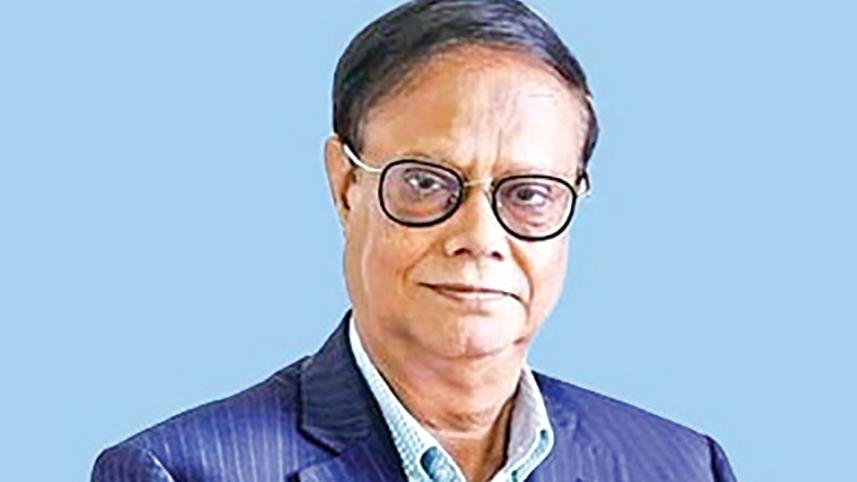
Economist and former Bangladesh Bank governor Ahsan H Mansur has described the proposed national budget as broadly realistic but cautioned that it falls short on concrete reform measures needed to ensure effective implementation and long-term stability.
Speaking on the fiscal framework announced for the 2026–27 financial year, Mansur said the budget has been prepared in an exceptionally difficult global and domestic economic environment. While he acknowledged that the overall structure reflects ground realities, he warned that several of the government’s ambitions may prove difficult to achieve in practice.
He argued that the budget is expansionary in nature and carries targets that appear overly ambitious given current constraints. According to him, the main challenge lies not in formulation but in execution, particularly as institutional weaknesses and macroeconomic pressures continue to persist.
Mansur identified three major risks facing the budget. First, he said revenue mobilisation will remain a significant challenge, as the impact of ongoing tax and administrative reforms will take at least three to five years to materialise. Second, he noted that projected revenue growth appears optimistic and may not align with current collection capacity. Third, he raised concerns over financing the budget, pointing to vulnerabilities in both the domestic banking system and external funding channels.
He highlighted that the banking sector is already under strain, and recent developments involving Islamic Bank could further tighten liquidity conditions. In such a scenario, he warned, uncertainty remains over how banks will mobilise sufficient funds to support government borrowing needs, raising the possibility of increased reliance on money creation if gaps persist.
On external financing, the former central bank governor noted a worrying trend: Bangladesh recorded negative net foreign financing in the current fiscal year, meaning repayments to external creditors exceeded new inflows. If this pattern continues, he cautioned, it could complicate future negotiations with the IMF and other development partners, potentially limiting access to concessional funding.
While acknowledging that the budget recognises weaknesses in the banking sector, Mansur said it lacks a detailed and actionable reform roadmap. He pointed to proposals such as the Bank Resolution Act and governance improvement measures as positive steps, but stressed that statements and intentions must be followed by immediate implementation to be effective.
He further warned that the proposed Tk 60,000 crore stimulus package for closed or struggling industries could carry inflationary risks. Injecting large sums into unproductive or previously failed enterprises, he said, may not yield sustainable economic returns. Instead, he suggested that non-performing industrial assets should be transferred to capable new investors who can restore productivity and efficiency.
Mansur also expressed concern over the absence of several previously discussed structural reforms, including tax administration modernization, financial sector restructuring, and enhanced operational independence for Bangladesh Bank. He said these reforms are essential for restoring confidence in the macroeconomic framework but are not clearly reflected in the current budget.
Turning to the situation surrounding Islamic Bank, he warned that ongoing instability could escalate if not resolved quickly. Given the institution’s large depositor base, prolonged uncertainty could have wider implications for financial sector stability. He urged all stakeholders to seek a compromise solution in the national interest, suggesting that the bank be placed under a neutral and professional management structure acceptable to all parties.
Concluding his remarks, Mansur emphasized that while the budget identifies key challenges correctly, its success will ultimately depend on whether the government can move beyond policy statements and implement credible, timely reforms that strengthen institutions and restore confidence in the financial system.