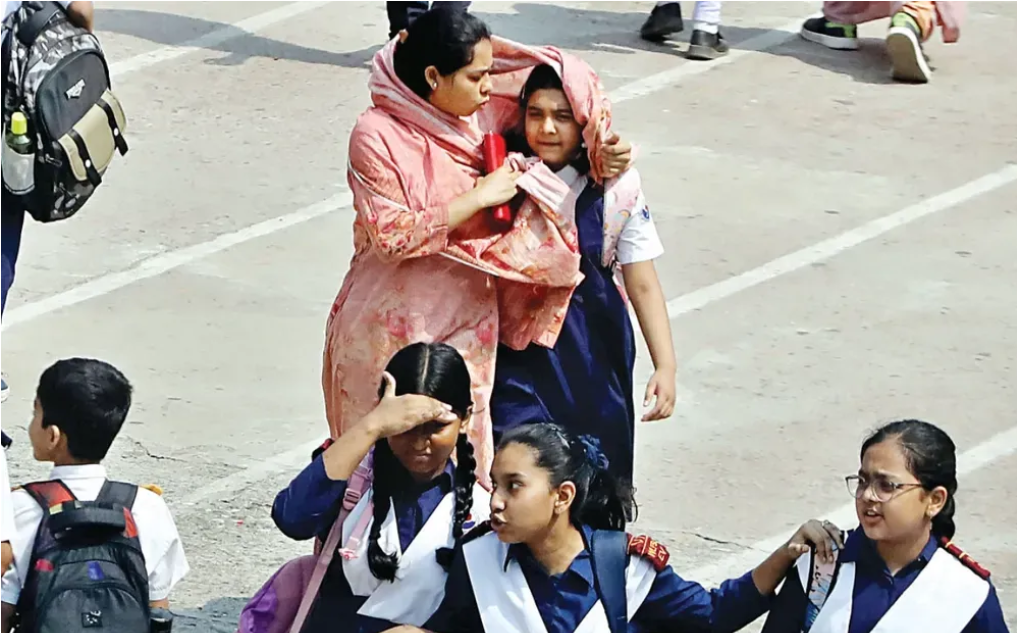
The escalating heat waves gripping Bangladesh are a symptom that the country is in a crisis amplified by global warming and local environmental degradation. The country is, as though, gasping for breath amid the sweltering heat sweeping all the districts, with temperatures soaring and soaring every day. The country looks like arid plains under a merciless sun without any sign of probable relief rain. This is a dire warning as the suffering is immense, and the solutions demand urgent and collective action.
According to experts, the primary reason for this sort of cataclysm is largely human-induced climate change. The Intergovernmental Panel on Climate Change (IPPCC) has long warned that South Asia, including Bangladesh, will face intensifying heat waves as global temperatures rise. The Earth’s average temperature has already increased by 1.1degree C sinced pre-industrial times, but in Bangladesh, the rise is closer to 1.5 degree C due to geographic vulnerability. Fossil fuel combustion, denudation of forests, and industrial emissions – lagely by rich nations- have trapped heat in the atmosphere, disrupting weather patterns. A 2023 World Bank report highlighted that Bangladesh emits less than o.5 % of global greenhouse gases, yet it ranks among the top ten countries most affected by extreme weather. This injustice underscores the paradox of climate change: those least responsible bear the brunt heavily of the disaster.
Global factors alone do not explain the severity of Bangladesh’s heat crisis. Local mismanagement has compounded the problem. Rampant deforestation, particularly in Sundarbans and Chittagong Hill Tracts, has stripped the land of natural cooling systems. Urbanization has replaced wetlands and forests with concrete, creating “heat islands” in cities like Dhaka and Chattogram, where temperatures are 5-7 degree C higher than the rural areas. Rivers and water bodies, once the lifelines of cooling, are shrinking due to siltation and pollution. Rivers now run shallow, and their waters are now unable to temper the rising heat. These factors turn the country into a tinderbox of thermal extremes.
Along with intolerable human sufferings heat-related diseases surge; dehydration, kidney failure, and cardiovascular ailments increase. The economic fallout is equally severe. Crop yields plummet. Biodiversity, too, faces annihilation due to severe heat.
The Sundarbans is witnessing mangrove die-offs as heat-stress disrupted ecosystems.
The heat waves are eroding the ecological fabric that sustains Bangladesh’s identity.
Native species like the Bengal Tiger and Irrawaddy dolphin are fast vanishing. Wetlands in Haor regions are drying up jeopardizing aquatic life and the livelihoods of millions dependent on fisheries.
However, cooler days can still dawn if wealthy nations, at the international level, honour their climate finance pledges to support vulnerable countries. Crucially, G-20 nations, responsible for 80 percent of emissions must accelerate their transition to renewable energy. Locally Bangladesh must prioritize ecosystem restoration. Reforestation campaigns, especially in the Sundarbans and denuded urban areas, can revive the lost natural cooling. Rooftop gardens and vertical forests in high-rises should be mandatory.
Reviving water bodies through dredging and pollution control can restore evaporative cooling. Promoting drought -tolerant crops, adopting solar-powered irrigation, and planting trees at the community level are equally urgent.