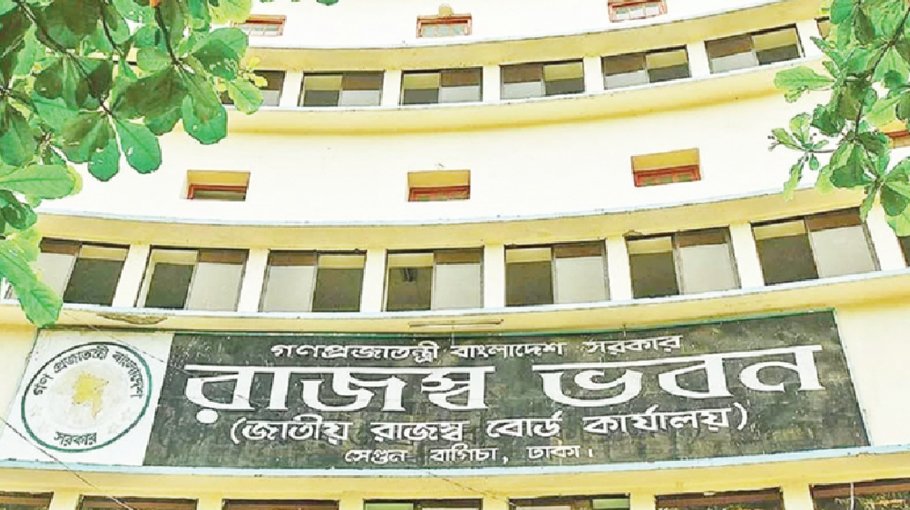
The country's renowned economist and executive director of Policy Research Institute (PRI), Dr Ahsan H Mansur, on Sunday said strong political commitment and fundamental reforms of the National Board of Revenue (NBR) could improve the tax-GDP ratio in Bangladesh.
Dr Mansur said this while addressing the PRI-CDRM pre-budget discussion held today at the PRI Conference Room in the capital.
He said over Taka 3 lakh crore of budgetary expenditure went for loans' interest payment, pension benefits, and social safety net programmes. "So, revenue collection should be raised to increase the government's ability to expend health, education, and many other necessary sectors."
Mansur said despite having potentiality, the revenue gap between the target and achievement is widened in each fiscal year (FY) due to the failure of existing revenue and taxation policies.
"So, fundamental reforms and a strong commitment to revenue collection is a must to increase domestic resource mobilization," he opined.
The noted economist opined that without massive reforms at banks, NBR, and other financial sectors and regulators, achieving the IMF set targets in these sectors would be impossible.
Citing an example, he said that over the last 9 months, the Bangladesh Bank (BB) spent around $12 billion from reserves, despite cutting imports by around 33 percent. "This is happening to control the exchange rate."
The volume of the economy, resources among people, and an increasing trend in the number of rich people are showing the leakage of the revenue system.
Dr Zaidi Sattar, Chairman, PRI, and Dr Muhammad Abdur Razzaque, Research Director of PRI also spoke at the function.
Dr Razzaque gave a presentation highlighting the achievements of different sectors and the government spending of the current fiscal year.
As of July 2022, the gross foreign exchange reserve was at a robust $39.6 billion. However, it experienced a significant reduction over the year, dropping to $30.34 billion by May 8, 2023, he pointed out.
Inflation also saw a sharp rise, peaking at 9.5 percent in August 2022 and maintaining an average of 8.9 percent over the subsequent 10 months, surpassing the annual target by 3.5 percentage points.
On the other hand, remittances accumulated from July 2022 to April 2023 amounted to $17.71 billion. The total inward remittance earnings will amount to $21.26 billion in FY23. However, this figure still falls short by $610.69 million of the revised remittance target outlined in the Monetary Policy Statement.
From July 2022 to April of FY23, the total earnings from exports amounted to $45.7 billion, falling short of the target by 3.46 percent.
One of the key IMF requirements for its loan package to Bangladesh involves bolstering revenue mobilization efforts by an additional 0.5 percent of GDP annually in both FY24 and FY25, followed by a further 0.7 percent increase in FY26.
This implies elevating the tax-GDP ratio from the current 7.8 percent of GDP to 8.3 percent in FY24, to 8.8 percent in FY25, and finally to 9.5 percent by FY26. The IMF has also recommended the establishment of Compliance Risk Management Units within the customs and VAT wings of the NBR by December of this year.
The PRI also recommended reforming some sectors to increase the revenue earnings, prioritizing fiscal reforms, expanding the tax net, reducing indiscrimination tax exemption, increasing compliance with corporate tax and personal income tax, reforming VAT, the VAT yield, reforming state-owned enterprises, and improving the quality of spending.