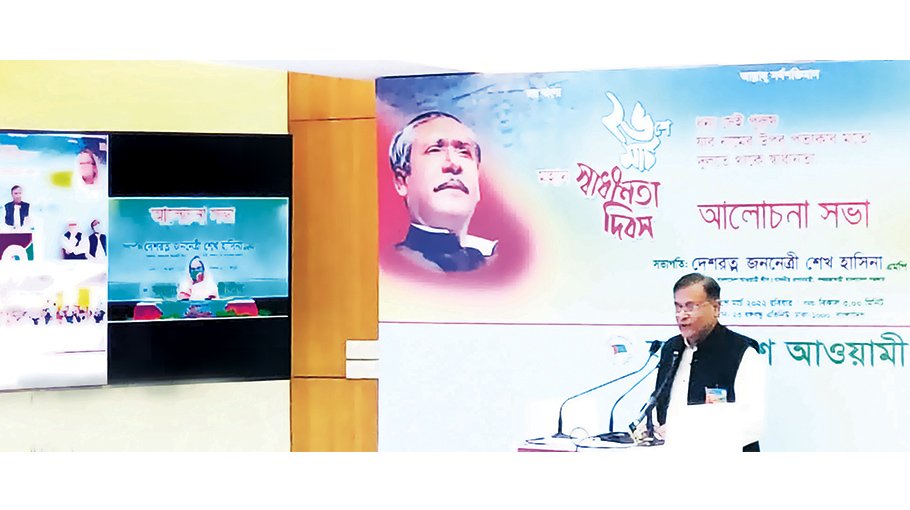
If Bangabandhu had survived, Bangladesh would have been a developed country in 10-15 years. Today, under the leadership of Prime Minister Sheikh Hasina, the country has been able to achieve an economic growth rate of up to 8 percent. The year Bangabandhu was assassinated, 10,000 metric tonnes of food was produced.
Information and Broadcasting Minister Minister Dr Hasan Mahmud made the comment while addressing a discussion meeting organized by Bangladesh Awami League on the occasion of Independence Day 2022 at the central office of Awami League on Bangabandhu Avenue in Gulistan of the capital on Sunday.
He said that the country is moving forward at an indomitable pace today under the leadership of Prime Minister Sheikh Hasina in fulfilling the dream of Bangabandhu Sheikh Mujibur Rahman.
The minister said, "Father of the Nation Bangabandhu realized immediately after the formation of Pakistan that Bengalis were not liberated in Pakistan and our language, culture, culture and heritage were all under threat."
"Bangabandhu declared independence in the early hours of March 26 when Pakistani forces carried out genocide in Dhaka city starting from Pilkhana in Bangladesh and that declaration of independence spread across Bangladesh through EPR wireless," the minister said.
Drawing the attention of the new generation to history, Hasan Mahmud said, "Bangabandhu wanted to make Bangladesh a developed state. When Bangabandhu was assassinated in 1975, the country's economic growth rate was 9.5 percent.”
Today, under the leadership of Sheikh Hasina, the country is moving forward on the path of fulfilling Bangabandhu's dream. Bangladesh is a country of food surplus.
It has the lowest per capita agricultural land of 160 million people is third in the world in rice production, third in vegetable production, third in freshwater fish production and seventh in potato production, he added.