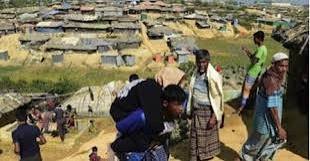
Bangladesh will convey its position to Myanmar over a “factually incorrect” statement issued recently by Myanmar’s military-backed government regarding Rohingyas sheltered in Bangladesh.
Myanmar Ambassador to Bangladesh Kyaw Soe Moe is scheduled to meet the relevant Director General at the Ministry of Foreign Affairs in Dhaka on Tuesday afternoon, a foreign ministry source said.
The meeting comes after Myanmar’s Ministry of Foreign Affairs issued a statement on August 15 questioning the identity and origins of Rohingyas living in Bangladesh.
Bangladesh has already provided Myanmar with the names of 828,824 internally displaced people, of whom 426,545 had been verified as of July 31, 2026, according to Myanmar’s statement.
Myanmar claimed its verification process found 308,797 people with evidence of having lived in Rakhine State, 4,241 people who had allegedly committed acts of terrorism and 113,507 people with no evidence of having lived in Rakhine.
Based on these figures, Myanmar said it was concerned about claims that all people living in camps in Bangladesh were from Myanmar. It also disputed claims concerning refugees who arrived by boat or travelled to other countries under ethnic identities that Myanmar does not recognise.
The United Council of Rohingya (UCR) has rejected and condemned the statement, describing it as misleading and an attempt to deny the Rohingya people's identity and evade accountability for past atrocities.
The group said the Rohingya are an indigenous ethnic community of Rakhine State and rejected Myanmar’s continued reference to them as “Bengalis”.
The UCR also rejected Myanmar’s account of the violence that triggered the mass displacement of Rohingyas, accusing the Myanmar military of carrying out systematic atrocities during its clearance operations in 2016 and 2017.
According to the UCR, more than 700,000 Rohingyas fled to Bangladesh in 2017, joining more than 200,000 who had fled earlier waves of persecution in 1991-92.
Myanmar, however, said more than 540,000 people crossed into Bangladesh following the 2017 violence, while more than 200,000 remained in northern Rakhine.
Myanmar does not recognise the Rohingya as one of the country’s 135 officially recognised ethnic groups and refers to them as “Bengalis”, implying that they originated in Bangladesh.
Myanmar said it would continue working with Bangladesh on the repatriation of verified former residents once security conditions in Rakhine improve.
Bangladesh and Myanmar agreed in 2018 to begin a two-year repatriation process, but the plan has yet to produce significant results. The situation deteriorated further after Myanmar’s military seized power in 2021, triggering widespread armed resistance.
Renewed fighting between the military and the Arakan Army in Rakhine since 2023 has further complicated repatriation efforts, with the Arakan Army now controlling large parts of the state.