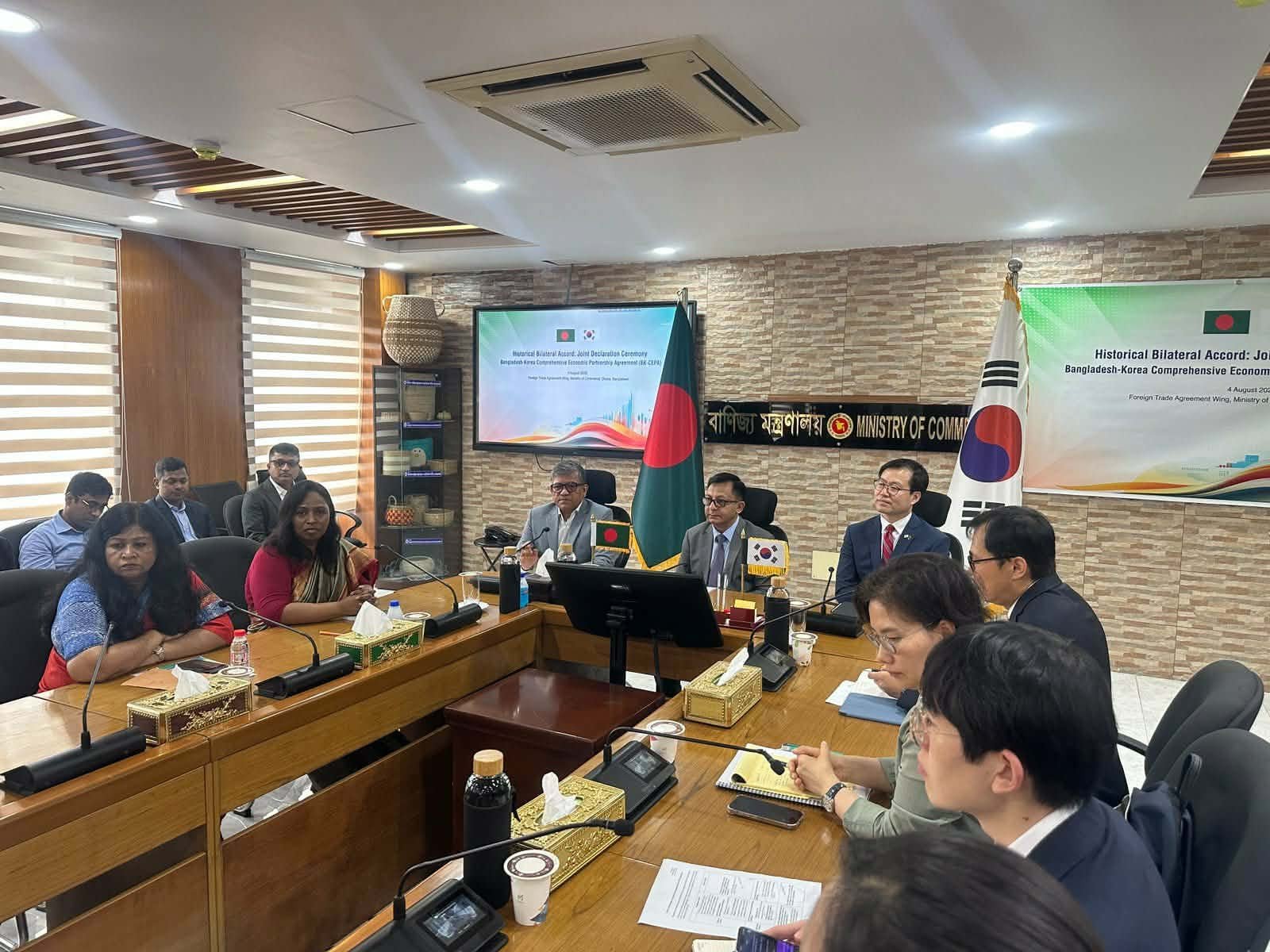
Bangladesh and South Korea have signed a Comprehensive Economic Partnership Agreement (CEPA), allowing preferential tariff access for 97% of Bangladeshi products in the South Korean market and 87% of South Korean exports in Bangladesh.
Commerce Minister Khandakar Abdul Muktadir described the agreement as a major milestone in Bangladesh's trade diplomacy, saying it is the country's first comprehensive free trade agreement under the current government.
Speaking at a press briefing after the conclusion of negotiations on Monday, the minister said the deal was completed within a short period and would help expand economic cooperation between the two countries.
Under the agreement, Bangladeshi products including readymade garments, leather goods and jute items will receive preferential tariff benefits in South Korea. In return, South Korean products such as agricultural goods, plastics and spare parts will enjoy similar access to the Bangladeshi market.
The minister said South Korea, with an economy of nearly $2 trillion, could become an important trading partner for Bangladesh.
He added that agreements like CEPA would help attract foreign investment as Bangladesh aims to become a $1 trillion economy by 2034.
South Korean Trade Minister Yeo Han-koo said the two countries have maintained economic relations for more than five decades, beginning with cooperation in the textile sector.
He stressed the importance of diversifying trade and expressed South Korea's interest in expanding cooperation with Bangladesh in technology, supply chains and investment.
According to Bangladesh's Commerce Ministry, bilateral trade between the two countries currently stands at around $1.39 billion. Bangladesh exports goods worth $491.73 million to South Korea, while imports amount to $902.9 million, resulting in a trade deficit of around $411 million.
Bangladesh mainly exports garments, home textiles, leather products, footwear, pharmaceuticals, jute goods, frozen food and ceramics to South Korea. Meanwhile, South Korea exports iron and steel, machinery, electrical products, plastics, chemicals and paper products to Bangladesh.