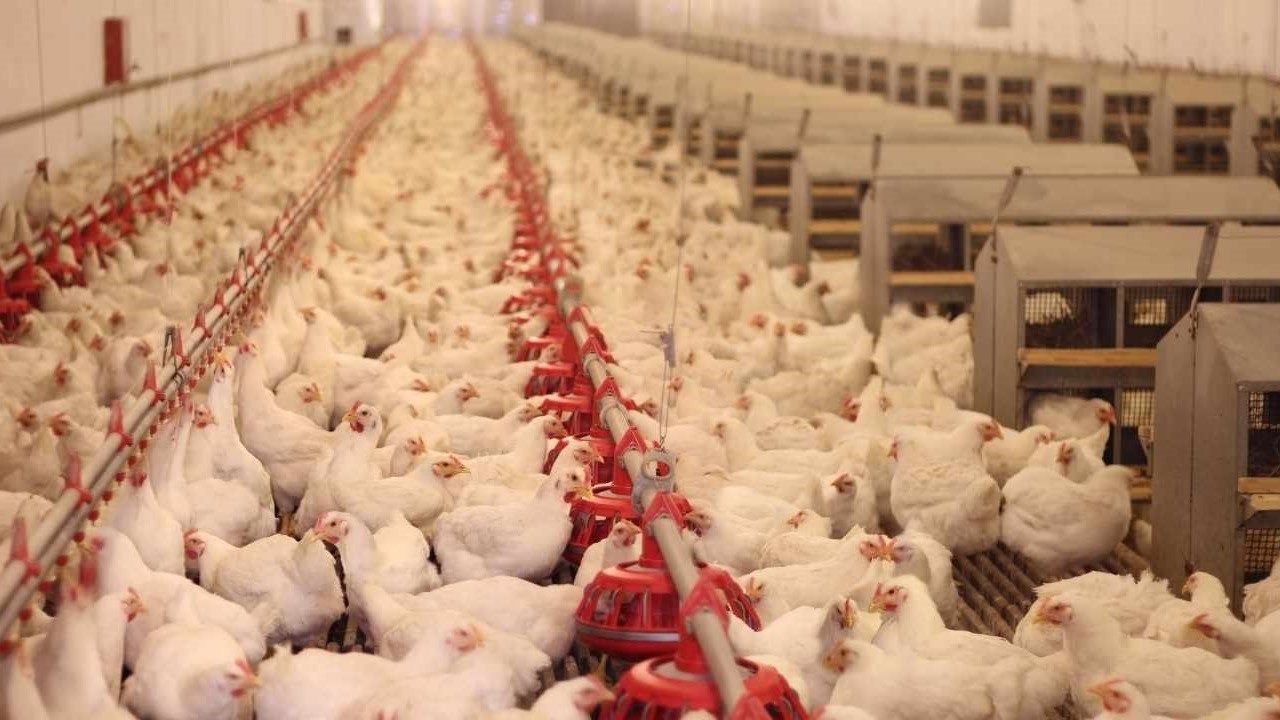
The country’s poultry industry has expressed concern over a proposed policy that would impose conditions on the import of parent stock, warning it could gradually concentrate control of the Tk 50,000 crore ($4.5 billion approx.) sector in the hands of a few large corporate groups.
The government recently approved a draft of the National Poultry Development Policy 2026, which includes restrictions on the import of parent stock chicks. Industry stakeholders say that unless the policy is revised to reflect ground realities, it may disrupt production, reduce competition and ultimately cause price volatility for eggs and chicken meat at the consumer level.
Under Clause 5.8.1.2 of the draft policy, approved at an advisory council meeting on Jan. 22, only day-old grandparent (GP) stock may be imported as a rule. Import of parent stock chicks would be permitted only “in special circumstances” in the event of a shortage of day-old grandparent stock or chicks.
Industry representatives say the policy does not clearly define what constitutes “special circumstances,” how a shortage would be determined, or whether the provision applies equally to broiler, layer and coloured birds. The lack of clarity, they argue, is a major source of concern.
According to the Department of Livestock Services (DLS), commercial poultry production in Bangladesh includes broilers, layers and coloured birds. While layer and coloured bird parent stock remain largely import-dependent, 19 companies are registered to produce broiler parent stock domestically.
However, industry insiders say several of these registered entities belong to the same corporate groups, and many GP farms are leased to larger firms. As a result, effective control of parent stock production is concentrated among five to six major corporate groups.
More than 300 breeder farms across the country rely on these firms for parent stock chicks to produce day-old commercial chicks. Stakeholders warn that any disease outbreak, production disruption or management failure at one of these companies could trigger a nationwide supply crisis.
They also fear that reduced import flexibility could strengthen the bargaining power of a few dominant players, leaving hatcheries with little choice but to buy at prices set by large companies or halt production.
“If import channels are narrowed, managing supply shocks will be nearly impossible,” said several farm operators, noting that importing parent stock is a lengthy process that typically takes five to six months. After arrival, rearing the birds, producing hatching eggs and bringing day-old chicks to market can take an additional seven to eight months. Resolving a major supply disruption could therefore take up to two years.
Farmers question official claims of surplus production, pointing to periodic spikes in day-old chick prices. Broiler chicks have at times sold for Tk 60–70 each, while layer chicks have reached Tk 100.
They argue that there is no mandatory, transparent reporting system detailing how much parent stock each company produces, making it risky to base policy decisions solely on GP import data.
Recent data show broiler parent stock imports have declined from 2.4 million in fiscal year 2019–20 to 1.1 million in 2023–24.
According to DLS sources, Bangladesh imported 2.152 million parent stock birds in 2025, including 1.1 million broiler parent stock. Total parent stock production stood at 8.2 million against a capacity of about 8.7 million, while overall demand is estimated at around 10.4 million. This leaves an annual gap of roughly 1.6 million birds that must be met through imports. Officials say Bangladesh has already achieved self-sufficiency in broiler parent stock production.
Industry leaders say Bangladesh has yet to achieve full self-sufficiency in overall parent stock production and that restricting imports at this stage could jeopardize food security and the livelihoods of thousands of small-scale farmers.
Mosharraf Hossain Chowdhury, president of the Bangladesh Poultry Industries Association, said policy decisions must prioritize farmers’ interests.
“The poultry industry is not just a business; it is closely linked to food security. Farmers must be able to purchase chicks on time and at fair prices,” he said.
Md. Imran Hossain, managing director of Oyster Poultry and Fisheries Ltd in Sylhet, said keeping import options open is critical for price stability and disease risk management.
“If there is a sudden bird flu outbreak or large-scale chick mortality, emergency imports will not be feasible overnight,” he said.
“Import provisions should remain open in a balanced way, without undermining domestic industry.”
Dr. Jahangir Alam, a former director general of the Bangladesh Livestock Research Institute and an agricultural economist, said some restrictions on chick imports may be justified but a limited import window should remain for producers and marketers to address shortfalls and encourage new hatcheries.
DLS Director (Production) A.B.M. Khaleduzzaman said the draft policy was formulated with the overall development of the poultry sector in mind.
“We believe that once implemented, the policy will further strengthen the country’s poultry industry,” he said.
Industry stakeholders, however, caution that unless the policy ensures transparency, competition and flexibility in imports, it risks creating new vulnerabilities in a sector critical to Bangladesh’s animal protein supply and rural employment.