The Russian Federation has alleged that the US Ambassador to Bangladesh Peter Haas has been interfering in Bangladesh's internal political affairs despite the Bangladeshi authorities having the ability to hold the 12th Jatiya Sangsad election free and fair without overseas interference.
However, the US state department denied the allegation claiming that the US supports free and fair elections and will continue to engage with government, opposition, civil society and others.
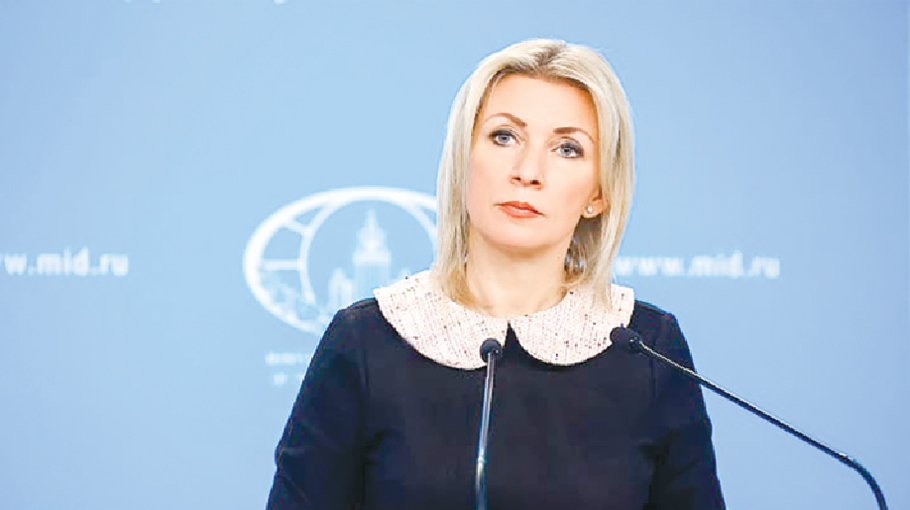
Earlier, on 22 November Russian Foreign Ministry Spokeswoman Maria Zakharova claimed in an embassy brief that US Ambassador to Bangladesh Peter Haas had met with a high-ranking representative of the local opposition at the end of October and reportedly discussed plans to organise mass anti-government protests.
Besides, the Russian spokeswoman also claimed that the American ambassador promised information support in the event that the authorities used force against participants in ‘peaceful demonstrations’, and that these assurances were purportedly made on behalf of the embassies of the United States, Britain, Australia and several other countries.
Moreover, the Russian Foreign Ministry Spokeswoman opined that the Bangladeshi authorities have the abilities to hold the parliamentary elections scheduled for January 7, 2024, in full compliance with national legislation, independently, and without the help of overseas well-wishers.
The statement of Russian Foreign Ministry Spokeswoman Maria Zakharova published by the official facebook page of the Russian Embassy in Dhaka reads:
We have spoken repeatedly about the attempts by the United States and its allies to influence internal political processes in Bangladesh, ostensibly under the banner of ensuring “transparency and inclusiveness” in the upcoming parliamentary elections there. Do you understand where the United States is and where Bangladesh is? Today I would like to return to this topic once again.
Information has come to light regarding a meeting at the end of October between US Ambassador to Bangladesh Peter Haas and a high-ranking representative of the local opposition. They reportedly discussed plans to organise mass anti-government protests in the country during the meeting. In particular, the American Ambassador promised his interlocutor to provide information support in the event that the authorities used force against participants in “peaceful demonstrations.” These assurances were purportedly made on behalf of the embassies of the United States, Britain, Australia and several other countries.
We witnessed a similar scenario ten years ago. And it worked. We remember how Victoria Nuland, the US Senior Under Secretary of State for Political Affairs, handed out buns. Nothing other than buns. The meme was about cookies, but in fact they were buns, as well as leaflets, T-shirts, scarves, flags and other symbols, millions of copies of which materialised out of nowhere.
Large quantities of food were provided for free, as long as people stayed in the squares and took part in what they labelled as illegal protests, but which in fact was an anti-constitutional coup. Someone did all this during the first and second Maidan. Where did these funds come from? Now it has become clear how it all works if we look at the example of Bangladesh.
How can these actions of the American Ambassador to Bangladesh be regarded? They can be seen as nothing less than gross interference in the internal affairs of a sovereign state on the part of Washington and its satellites, demonstrating open disregard for the norms and rules enshrined in the 1961 Vienna Convention on Diplomatic Relations.
On our part, we have no doubts regarding the ability of the Bangladeshi authorities to hold the parliamentary elections scheduled for January 7, 2024, in full compliance with national legislation, independently, without the help of overseas well-wishers.
On the other hand, the US State Department responded to the allegation on Saturday.
"The United States does not support any political party in Bangladesh. Nor does the United States favour one political party over another," the US embassy in Dhaka communicated the State Department's response on the matter through a WhatsApp group on Saturday.
"We want what the Bangladeshi people themselves want: free and fair elections, which are conducted in a peaceful manner."
It said to support that shared goal, US embassy personnel engage and will continue to engage with the government, opposition, civil society, and other stakeholders to urge them to work together for the benefit of the Bangladeshi people.