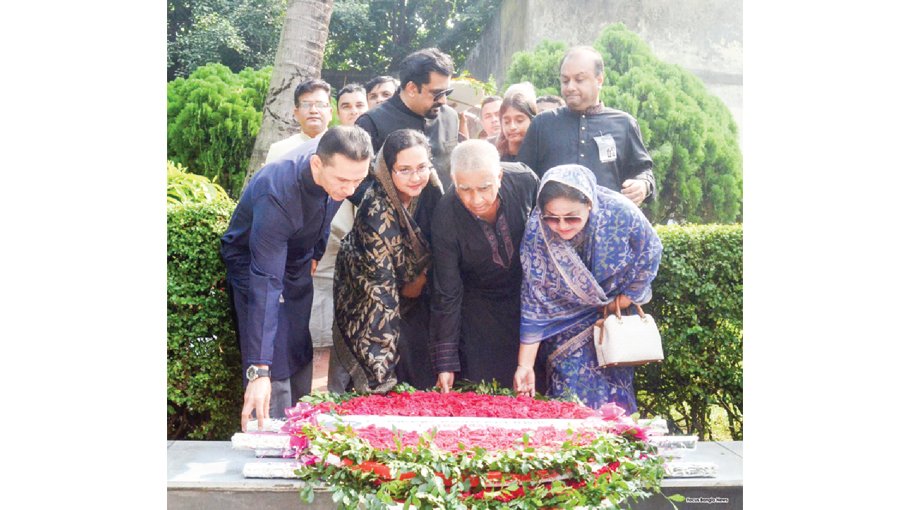
Academicians and eminent citizens have said that those who did not believe in the independence of Bangladesh and wanted to confederate the country with the then West Pakistan, killed Bangabandhu and four national leaders.
The killings of Father of the Nation Bangabandhu Sheikh Mujibur Rahman and four national leaders in 1975 were the implementation of a long-term conspiracy as the assassins started this plot during the country's liberation war in 1971, they said.
They said these at a discussion organised by Bangabandhu Parishad at Jatiya Press Club in the city on the occasion of Jail Killing Day.
Bangabandhu Parishad president Prof Dr AAMS Arefin Siddique chaired the discussion while Dhaka University of Engineering and Technology (DUET) Vice-Chancellor Prof Dr M Habibur Rahman, former inspector general of Prison Liaquat Ali Khan, documentary filmmaker Fuad Chowdhury, Bangabandhu's military secretary Colonel Jamil's daughter Afroza Jamil Kanka, prominent chartered accountant Shahadat Hossain and Bangabandhu Parishad member Parvez Zaman, among others adderessed. Bangabandhu Parishad general secretary Prof ABM Faruq moderated the discussion.
Prof Arefin Siddique said the plan to kill Bangabandhu and the four national leaders was not taken overnight, while this conspiracy started during the country's liberation war.
BSS adds: At the end of the liberation war, he said, Abdus Samad Azad instead of Khandaker Mushtaq was sent to the United Nations as the leader of the Mujibnagar government's observation delegation as Prime Minister of Mujibnagar Government Tajuddin Ahmed was informed by the Indian intelligence agency that Khandaker Mushtaq would propose a ceasefire by confederating with Pakistan if he went to the United Nations.
Prof Arefin said if Zulfiqar Ali Bhutto and Khandaker Mushtaq together formed the Pakistan Confederation, the liberation struggle of Bangladesh would have fallen flat.
Bangabandhu declared the independence and Tajuddin Ahmed's task was to achieve victory through war, he said.
"Because then there was no alternative to war. So Khandaker Mushtaq was not sent to the UN as a member of the delegation," he added.
Prof Arefin said a few people together occurred the Bangabandhu killing and jail killing incidents but those would not have happened if they were resisted by cantonment.
DUET Vice-Chancellor Habibur Rahman said after the assassination of Bangabandhu in 1975, the trend of healthy politics was halted in the country.
He said those who do not believe in the independence of the country and Bangabandhu's ideals killed Bangabandhu and the four leaders.
Their aim was to return the country to Pakistani style, he added.