France should not have been shocked that Australia cancelled a submarine contract, as main considerations about delays, price overruns and suitability had been aired formally and publicly for years, Australian politicians stated.
Paris has recalled its ambassadors from Canberra and Washington, saying it was blindsided by Canberra’s choice to construct nuclear-powered submarines with the US and Britain reasonably than persist with its contract for French diesel submarines.
Yet as early as September 2018, an unbiased oversight board led by a former US Secretary of the Navy Donald Winter had suggested Australia to look at alternate options to the French submarine, and questioned whether or not the project was within the nationwide curiosity, a 2020 public report from the nation’s Auditor-General reveals.
Australian parliamentary hearings and studies on the project, first priced at $40 billion and extra just lately at $60 billion, even earlier than development had begun, additionally showed issues rising. In June the defence secretary advised parliament “contingency planning” for the programme was below manner.
“They would have to have their eyes shut not to realise the danger they were facing,” stated Rex Patrick, an unbiased senator for South Australia, referring to France. Government ministers stated this week Canberra had been “up front” with Paris concerning the issues.
A French lawmaker additionally raised questions within the nation’s parliament in June about Australian considerations over delays, and whether or not Australia may be contemplating submarine alternate options, French authorities information present.
“We chose not to go through a gate in a contract,” Prime Minister Scott Morrison advised reporters when he arrived in New York on Monday. “The contract was set up that way, and we chose not to go through it because we believed to do so would ultimately not be in Australia’s interests.”
An official from the French Embassy in Canberra stated an intergovernmental settlement ought to have allowed for confidential discussions between ministers about adjustments to political or strategic circumstances.
“No warning, no proposals for discussion were offered,” the official stated, talking on situation of anonymity due to the sensitivity of the matter.
The deal was first introduced in 2016. A pre-design evaluation was delayed in 2018 as a result of the “work provided to Defence by Naval Group did not meet Defence’s requirements”, the audit stated, citing lack of design element, operational necessities and 63 research not accomplished.
The contract between Australia and Naval Group, majority owned by the French authorities, was signed 16 months late in February 2019.
It included contractual off-ramps wherein Australia may pay to exit the project, and established “control gates” whereby Naval Group should meet standards earlier than progressing to the following section. The defence division thought-about these “hold points” for assessing the project’s risk, the auditor-general stated.
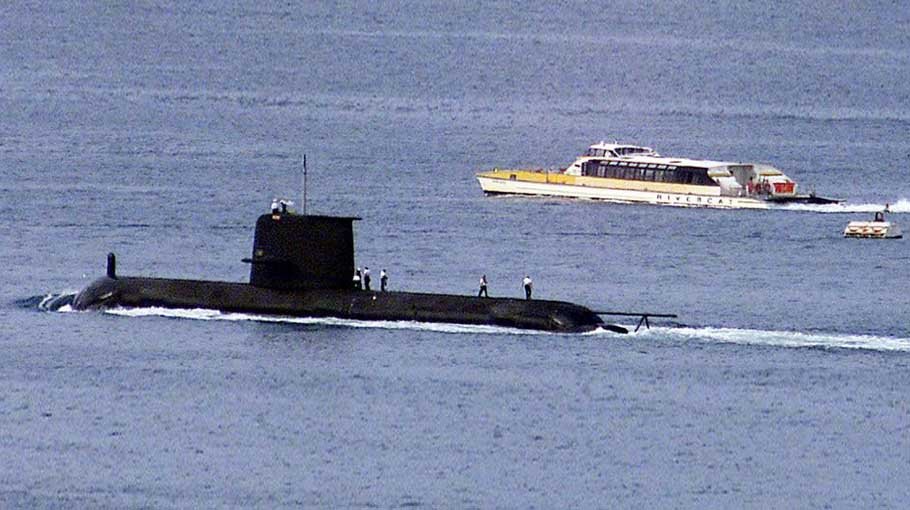
In September 2019, with A$446 million ($325 million) already spent in France, the defence division advised the auditor it had examined extending the lifetime of Australia’s Collins-class submarine fleet “and the time this would allow to develop a new acquisition strategy”.
The 2020 Auditor-General’s report analyzing the submarine deal – the Department of Defence’s greatest ever – discovered the division had been “frank and timely” in speaking considerations with Naval Group.
Naval Group stated in an announcement to Reuters that it was conscious of public dialogue, however that official declarations had been supportive of the submarine programme. It stated Morrison was “very clear that the decision was not a result of difficulties with the Future Submarine Program or Naval Group”.
“Naval Group delivered on its commitments to the Commonwealth of Australia as acknowledged by the letter for termination ‘for convenience’ we received,” the assertion stated.
In August, the Australian and French defence ministers, and French overseas minister, “underlined the importance” of the submarine programme, in keeping with a joint assertion from each international locations.
According to the Auditor-General’s report, the newest main milestone within the French contract – a preliminary design evaluation – was in January 2021.
An trade supply with direct information of the matter advised Reuters that Naval Group Australia offered materials to Defence in “late January or February”, however that Australia didn’t contemplate it to satisfy necessities.
Morrison’s workplace created a panel in January to advise an interior circle of his Cabinet on methods to proceed with the programme, contract notices and parliament information present.
In June, senators, together with Patrick, requested panel chairman William Hilarides, a former vice admiral within the US Navy, if it had suggested the federal government to cancel the French contract.
Hilarides, who had overseen ship and submarine development for the US Navy, stated the panel’s recommendation was confidential.
The former head of BAE Systems Submarines, Murray Easton, who had rotated a delayed British nuclear submarine programme, joined the panel in February, contract notices present.
It met by videoconference 10 occasions by June, together with confidential briefings for its US members at the Australian embassy in Washington, the parliament was advised.
Easton and Hilarides didn’t reply to requests for remark.