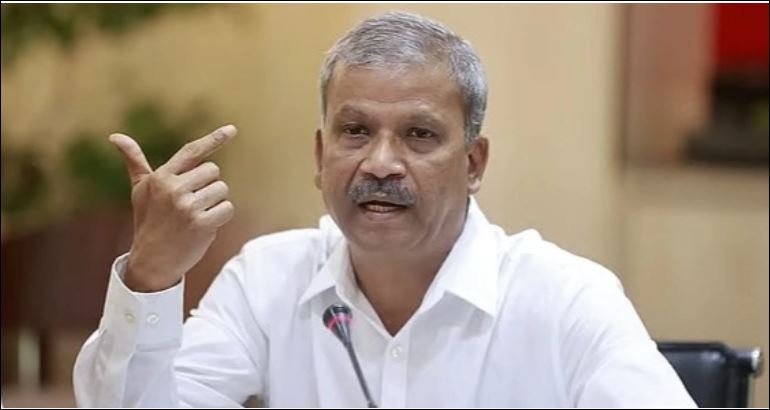
Law Adviser Dr. Asif Nazrul has outlined a wide range of legal and institutional reforms carried out by the Ministry of Law, Justice and Parliamentary Affairs since the July mass uprising, amid criticism over his role.
In a Facebook post, he said while the work was done collectively by the ministry, he had personally been involved in every initiative, often working long hours, including weekends, to ensure implementation.
Responding to critics, he urged them to review the ministry’s work before passing judgment.
According to the post, the ministry implemented 22 legal reforms, 15 institutional reforms and digitalisation measures, recommended withdrawal of 23,866 politically motivated harassment cases, supported genocide trials related to the July uprising, and significantly increased daily administrative output.
Legal Reforms
Among the key reforms highlighted:
The International Crimes (Tribunal) Ordinance was updated to align with international standards, incorporating enforced disappearance as a crime against humanity, ensuring witness protection, allowing international observers, introducing interim appeal provisions, and enabling victim compensation.
The Supreme Court Judges Appointment Ordinance established an independent Judicial Council to ensure merit-based appointments.
The Supreme Court Secretariat Ordinance ensured greater judicial independence by transferring administrative and financial authority over subordinate courts to the judiciary.
A Commercial Courts Ordinance introduced specialised courts with documentary-based trials, expedited case disposal, mediation, virtual hearings and online case management.
The National Human Rights Commission Ordinance, 2025 restructured the commission, enhancing its investigative and compensation powers and establishing a national preventive mechanism against torture under OPCAT. Commissioners were appointed through a public notice and interview process for the first time.
The Prevention of Enforced Disappearance Ordinance, 2025 defined enforced disappearance, set maximum punishment including the death penalty, empowered the NHRC to investigate, mandated trial completion within 120 days, and provided compensation and property use provisions for victims’ families.
The July Mass Uprising (Protection and Accountability) Ordinance provided protection to participants of the uprising while ensuring accountability for serious crimes. It also withdrew civil and criminal cases filed against protesters for political resistance and barred new such cases.
Amendments to the Code of Civil Procedure introduced affidavit-based testimony, online summons and enforcement of decrees within the main suit.
Criminal law reforms ensured transparency and accountability in arrest and remand processes, safeguarded accused persons’ rights, removed gender-insensitive terminology and addressed false case harassment.
Mandatory pre-case mediation was introduced in certain disputes. In 20 districts, ADR initiatives led to a 339.86% increase in successful settlements between September and December 2025, while dowry cases fell by 79.74%.
Amendments to the Women and Children Repression Prevention Act set investigation and trial deadlines, introduced accountability for investigators, ensured witness protection, created separate tribunals for child rape cases and recognised abuse of male children as an offence.
Reforms to the Representation of the People Order introduced postal ballots for expatriates and strengthened judicial oversight of election-related offences.
The Cyber Security Ordinance, 2025, formulated jointly with the ICT Ministry, repealed repressive provisions of the previous cyber law and cancelled related cases.
Amendments to Power of Attorney rules simplified procedures for expatriates, allowing execution without a valid Bangladeshi passport if supported by “No Visa Required” status, birth certificate or NID.
Marriage Registration Rules were amended to remove gender-discriminatory provisions and allow online marriage and divorce registration.
The ministry also assisted other ministries in drafting ordinances related to the Anti-Corruption Commission, Police Reform Commission and amendments to telecommunications law.
Institutional Reforms and Digitalisation
The ministry reported adopting three separate rules to strengthen judicial service independence, granting the Supreme Court authority to create judicial posts and establishing clear posting and promotion rules.
Information and Service Centres were established in all court premises nationwide to reduce harassment and provide case updates.
Centralised recruitment through the Bangladesh Judicial Service Commission was initiated to fill 2,733 vacant court positions.
Asset declarations of subordinate court judges were collected and reviewed as part of anti-corruption measures.
A Prosecution Monitoring Cell was formed to oversee cases related to crimes committed against students and civilians during July–August events.
Digital initiatives included online testimony for government officials, regular e-cause list updates in 80% of courts, launch of e-Family Courts in Dhaka and Chattogram, introduction of e-bail bonds in nine districts reducing procedural steps from 14 to one, and full digitalisation of attestation services in the ministry.
The National Legal Aid Directorate was established, introducing emergency legal assistance, expatriate support and a new hotline (16699).
Civil court renaming removed confusion by replacing “Assistant Judge Court” with “Civil Judge Court” and “Senior Civil Judge Court.”
Civil and criminal courts were separated, and a record 1,605 new courts were created.
Registration services reforms introduced modern digital systems, with plans for biometric verification and online deed storage to prevent fraud.
Withdrawal of Harassment Cases
Following district-level review and ministry evaluation, 23,866 politically motivated cases were recommended for withdrawal. Public notices were issued to ensure affected individuals could apply.
Additionally, 410 speech-related cases under cyber laws and nearly all cases filed against student protesters during the July–August uprising were withdrawn, benefiting several hundred thousand people.
Genocide Trial Support
The ministry facilitated appointment of judges and prosecutors of the International Crimes Tribunal for genocide cases linked to the July uprising, provided logistical support and oversaw prosecution work. Four verdicts have been delivered, at least six cases are in final stages, and trials including enforced disappearance cases have begun.
Increased Administrative Output
In the past one and a half years, 2,281 files were disposed of at the ministerial level compared to 1,235 during the same period under the previous government. The ministry provided 578 legal opinions to various ministries and departments (compared to 210 previously) and organised a record 15 stakeholder consultations on lawmaking.
It also provided secretarial support to reform commissions on the Constitution, election system, judiciary, enforced disappearance investigations and the National Consensus Commission.
For the first time, codification of rules and regulations has begun. A compilation of 127 ordinances and one order issued under the interim government has been published.
Due to the departure of previously appointed law officers during the past regime, around 5,500 law officers were newly appointed over the last 18 months — a record in Bangladesh’s history.
The ministry also provided secretarial assistance in appointing the Chief Justice and five Appellate Division judges, as well as 48 High Court Division judges.
Asif Nazrul mentioned that the details of work done at the Ministry of Expatriates’ Welfare would also be published before the nation in the near future.