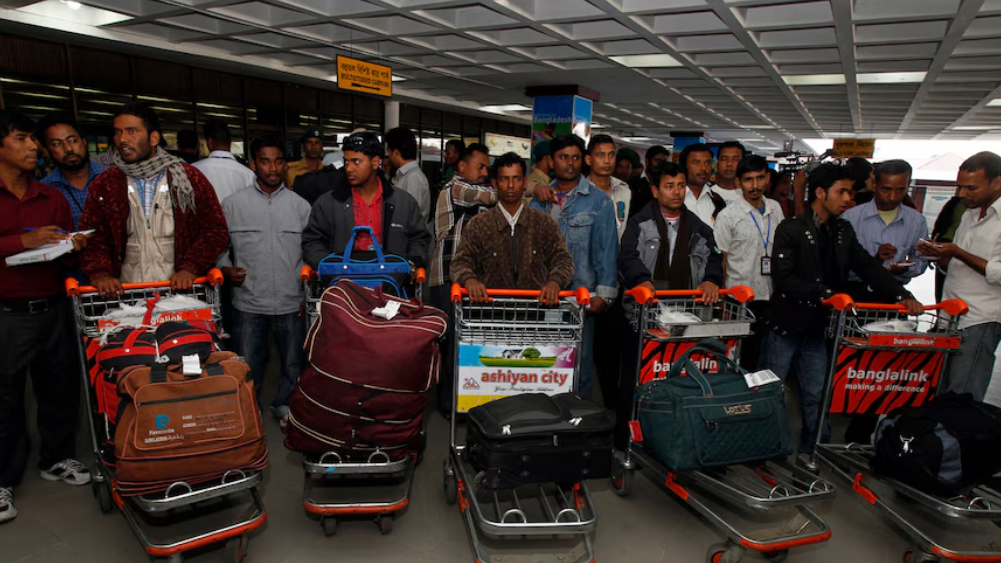
The Middle East is the largest destination for migrant workers from Bangladesh, but the overseas employment market is facing growing risks of shrinking amid the war there. If the war persists, economists fear, the domestic job market will also be under extra pressure. Thousands of Bangladeshis have been affected already by the impact of war as tourism, construction, and business activities slowed down across the Gulf countries, according to migrants, recruiting agents, and researchers. Many migrants report job losses and unpaid wages while thousands of prospective workers could not migrate. About 900 flights bound for the Middle East had been cancelled since the US-Israel war on Iran began on February 28.
Due to the war, at least seven Bangladeshi migrants have been killed and several others injured in Saudi Arabia, the UAE, Bahrain, and Lebanon. According to a report, a leader of the Bangladeshi migrant community in Lebanon said around 5,000 Bangladeshis have lost jobs and many have been displaced. Migrants are living in fear of bombing. They are more worried about their jobs and wages.
Bangladeshi businesses in the Gulf are also struggling. Be it clothing shops or construction work, every business is affected. The Middle East hosts about 70 lakh Bangladeshi migrants. But overseas employment has dropped sharply in recent months. Emigration clearance dropped from 95,095in January to 65,634 in February, and further to 44,661 in March, according to the Bureau of Manpower, Employment and Training. In 2025, more than 80 percent of over one million Bangladeshi migrants went to the Middle East, which accounted for around 60 percent of the country’s $32 billion remittance. Employers in the Middle East are hesitant to issue visas amid business slow down. Against this backdrop, remittance inflows is very likely to be affected. A significant number of Bangladeshi migrants are daily wage earners with irregular work. They are bearing the brunt of the crisis. If overseas employment declines, it will further aggravate economic challenges and as a result, migrant families will suffer from reduced income and job losses. Each year, over 20 lakh youths enter the job market, of whom about 10 lakh seek job abroad, while only around one lakh are absorbed into formal employment. With private investment already low, a decline in overseas jobs will create a double burden for the employment sector, experts opine.
Immediate attention must be given to migrants affected by the crisis. Emphasis should be given on diplomatic engagement with Gulf countries to protect migrants’ jobs and ensure support during the crisis. Assistance from international organisations may also be sought to help alleviate the plight of the migrant workers, if necessary, experts opine.