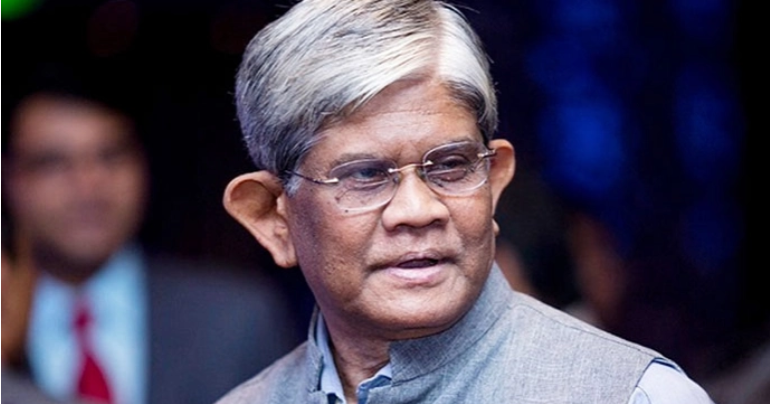
Finance Adviser Dr Salehuddin Ahmed on Tuesday rated his own performance at ‘around 70 out of 100’, acknowledging that while significant initiatives were undertaken during his tenure, several key reforms remained unfinished due to structural and policy limitations.
“I would give myself close to 70 – perhaps 70 or 80. If it is 80, I would say we at least started the work. We initiated programmes in the interest of the people and had no hidden agenda,” he said while talking to reporters after holding the Purchase Committee meeting at the Bangladesh Secretariat.
The adviser said he would not award himself full marks as many intended initiatives could not be fully implemented.
Dr Salehuddin said although the government managed to launch a number of reforms, many could not be completed to the desired extent.
“There were expectations. Some of the plans we had could not be carried out, and even those we started could not be fully finalised,” he said, adding that this reality prevented him from claiming a perfect score.
The adviser emphasised that the continuous annual development programme (ADP) process had become more functional and streamlined.
Dr Salehuddin, however, admitted that the “real work” lay in initiating deeper policy reforms, particularly in the policy divisions.
On taxation, he said a comprehensive report had been prepared which would serve as a guideline for future reforms. “We are leaving behind a tax policy report. It will function as a guideline going forward.”
Responding to questions about the autonomy of Bangladesh Bank, the finance adviser said the issue had been considered carefully.
He acknowledged calls from various quarters to grant the central bank greater independence but noted that the matter was complex.
“We thought about it extensively. It is a loaded issue,” he said, referring to the legal and operational dimensions involved.
He explained that the Bangladesh Bank Order already outlines the structure and authority of the institution, and the question is not merely whether the governor or the ministry holds greater power. “It is not simply about whether a particular governor or minister will exercise control. The key issue is how much operational independence exists within the framework.”
The adviser suggested that any decision regarding central bank autonomy must be weighed against broader economic stability considerations.
Throughout his remarks, Dr Salehuddin maintained that the government’s economic measures were driven by public interest rather than political motives. “In political affairs, one may try to avoid certain issues, but in economic management these matters cannot be sidestepped.”
The Finance Adviser reiterated that while he was satisfied with initiating key reforms, unfinished tasks and unmet expectations justified a score below 100.