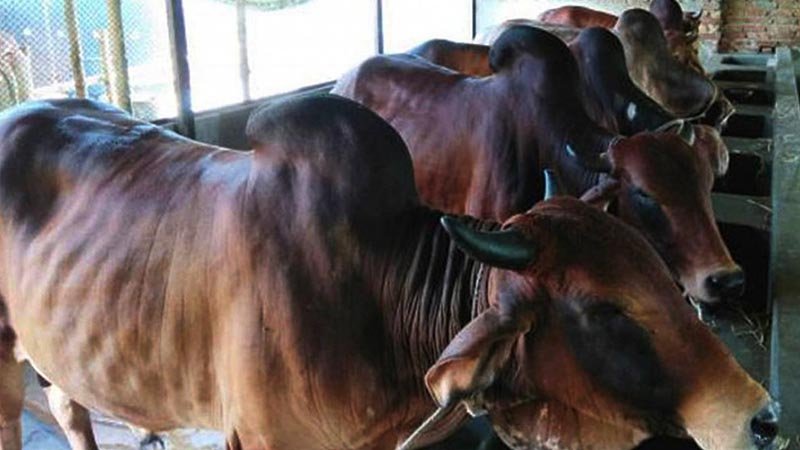
The present stock of domestic animals in the country is more than enough to meet the demand for sacrificial animals during the coming Eid-ul-Adha. But, officials opine that like in the previous year, a good number of the sacrificial animals will remain unsold this year as well. Md Mahbubur Rahman, director (production) of livestock department said this to Bangladesh Post on Saturday.
He said the country has a total of 1.17 crore sacrificial animals at present, even though the current demand is around 1.1 crore. Of the total stock, 45 lakh are cows while 72 lakh are goats and sheep. This year’s stock of sacrificial animals is two lakh more than that in the previous year. Last year, out of the total stock of 1.15 crore animals, 1.05 crore were sacrificed. Analysing these statistics it can be assumed that this year there will be a surplus of around 10 lakh sacrificial animals, he added.
Livestock department information show there are 1.36 lakh cattle farms (66000 registered farms and unregistered farms are 70000) in the country. The department has collected total information from these cattle farms. Mahbubur Rahman said the livestock department started taking its necessary preparations for this year’s Eid-ul-Adza six months ahead of the holy festival.
The department has been advising the farmers how to take care of their cows, goats and lambs, he continued the department has also been conducting strict surveillance so that none can use any harmful steroids for animal fattening. A good number of veterinary medical teams will also be deployed in different haats of the sacrificial animals up to upazila level to check up the health of sacrificial animals that will arrive in the markets.
To this end, Dr A B M Khaleduzzaman, livestock department’s assistant director (farm) told this correspondent that there would be 25 veterinary medical teams in the two city corporations in Dhaka and a total of 1,200 veterinary medical teams will work across the country.