
Naimuzzaman Mukta
When my flight landed in Ethiopia’s Addis Ababa Bole International Airport, it was already October 24. The local time was 2:00pm. The flight was right on time and the airport was clean, quiet and calm, and up to international standards. To be frank it was quite busy, but there was no rush. I crossed immigration and found Anteneh, my local guide, standing with a placard showing my name just a few yards from the exit.
A student of agriculture in the local university, Anteneh works as a guide on the side. I had found him through the internet and he would be showing me around for the next whole week. He welcomed me and after introductions, I told him that this was my first time in Africa only to find out that I was not the only one with firsts. Anteneh was meeting a Bangladeshi for the first time in his life!
Our rented ride was waiting. The airport was 12 kilometers from my hotel Intercontinental. Through the lush green hilly lands Addisabba much like our hill tracts, to reach Hotel Continental, where I was staying. Our journey started. The sun was bright and the weather enjoyable.
I had been ardently looking forward to this trip for the last couple of days, eager to reach Ethiopia and learn their stories. I took the scope and asked Antene about how the country, with its 4,000-year-old civilization, heritage and culture, turned into the capital of mutual cooperation and harmony for the other African country. Frankly, the whole of Africa is now tuned towards Ethiopia, which the world now knows as the country of Dr. Abiy Ahmed Ali.
My fascination with Abiy was not because of the Nobel Peace Prize. The award itself is much-debated now after being bestowed on warlords, religious extremists, loan sharks and child traffickers. My interest was on how Abiy, the first Oromo leader to become the prime minister, embarked the country on its ambitious and transformative journey. How the country, once known for communal conflict, poverty and contagious diseases, forgot its bloody past and took the road towards peace and harmony?
That is what drove me to undertake this 5,000 kilometre journey. To see firsthand how this new beacon of world peace is transforming his country and the people and present my findings as a journalist to the readers of The Bangladesh Post.
PROFILE:
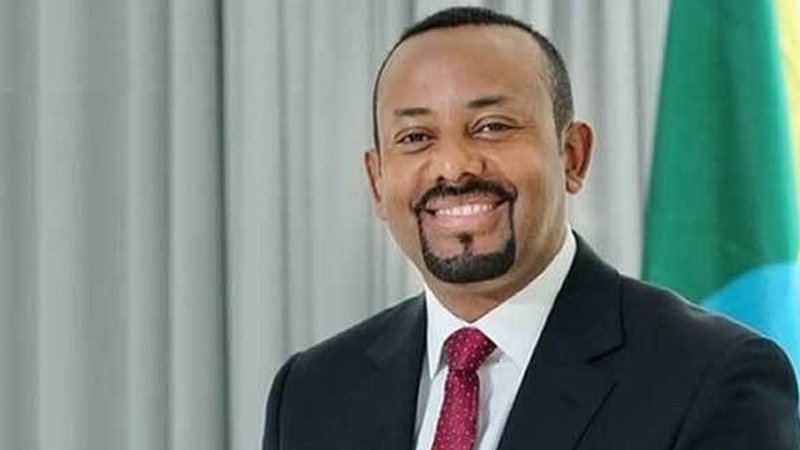
Dr Abiy Ahmed Ali is the first leader of the Oromo People's Democratic Organization (OPDO), one of the four ethnic parties which make up the ruling Ethiopian People's Revolutionary Democratic Front (EPRDF) coalition, to become the prime minister of Ethiopia. Oromo is the ethnic group at the centre of nearly three years of anti-government protests, which left many dead and thousands arrested following clashes with security forces.
The new beacon of Africa, Abiy, was born in Agaro in southern Ethiopia on 15 August 1976 to an Oromo Muslim father and an Amhara Christian mother. He went to the local primary school and later continued his studies at secondary schools in Agaro town. Abiy, according to several personal reports, was always very interested in his own education and later in his life also encouraged others to learn and to improve further.
While serving in the Ethiopian National Defense Force, Abiy received his first degree - a Bachelor's degree in computer engineering from the Microlink Information Technology College in Addis Ababa in 2001. Abiy holds a Master of Arts in Transformational Leadership earned from the business school at Greenwich University, London. He also holds a Master of Business Administration from the Leadstar College of Management and Leadership in Addis Ababa in partnership with Ashland University in 2013.
Abiy, who had started his Doctor of Philosophy (Ph.D.) work several years ago as a regular student, completed his Ph.D. in 2017 at the Institute for Peace and Security Studies, Addis Ababa University. He did his Ph.D. work on the Agaro constituency with the PhD thesis entitled "Social Capital and its Role in Traditional Conflict Resolution in Ethiopia: The Case of Inter-Religious Conflict In Jimma Zone State". Later he published his thesis, in the Horn of Africa in a special journal issue dedicated to countering violent extremism.
As a teenager and in early 1991, he joined the armed struggle against the Marxist–Leninist regime of Mengistu Haile Mariam after the death of his oldest brother. He did so as a member of ODP (Oromo Democratic Party), which at that time was a tiny organization of only around 200 fighters in the large coalition army of about 100,000 fighters that resulted in the regime's fall later that year.
Later on, he became a soldier in the now Ethiopian National Defence Force in 1993 and worked mostly in the intelligence and communications departments. In 1995, after the Rwandan genocide, he was deployed as a member of the United Nations Peace Keeping Force (UNAMIR), to Kigali, Rwanda. In the Ethio-Eritrea War between 1998 and 2000, he led an intelligence team to discover positions of the Eritrean Defence Forces.
After that, Abiy was posted back to his home town of Beshasha, where he, as an officer of the Defence Forces, had to address a critical situation of inter-religious clashes between Muslims and Christians that resulted in a number of deaths. He brought calm and peace in a situation of communal tensions accompanying the clashes. In later years, following his election as an MP, he continued these efforts to bring about reconciliation between the religions through the creation of the Religious Forum for Peace.
In 2008, Abiy was one of the co-founders of the Ethiopian Information Network Security Agency (INSA), where he worked in different positions. For two years, he was acting director of INSA due to a leave of absence of the director assigned to the post. In 2010, Abiy eventually decided to leave the military. The highest rank he had achieved during his military career was that of a Lieutenant Colonel. He started his political career as a member of the ODP (Oromo Democratic Party). The ODP is the ruling party in Oromia Region since 1991 and also one of four coalition parties of the ruling coalition in Ethiopia, the EPRDF (Ethiopian People's Revolutionary Democratic Front). He became a member of the central committee of ODP and congress member of the Executive Committee of the EPRDF – in quick succession.
In the 2010 national election, Abiy represented the woreda of Agaro and became an elected member of the House of Peoples' Representatives, the lower chamber of the Ethiopian Federal Parliamentary Assembly. Abiy, as an elected member of parliament took a proactive role in working with several religious institutions and elders to bring about reconciliation in the zone. He was then setting up a forum entitled "Religious Forum for Peace", an outcome of the need to devise a sustainable resolution mechanism to restore peaceful Muslim-Christian community interaction in the region.
In 2014, during his time in parliament, Abiy became the Director General of a new and in 2011 founded Government Research Institute called Science and Technology Information Center (STIC). Starting from 2015, Abiy became one of the central figures in the violent fight against illegal land grabbing activities in Oromia Region and especially around Addis Ababa. He played an important role to solve those problems that finally boosted his political career, brought him into the spotlight and allowed his journey up the throngs of the political ladder.
In October 2015, Abiy became the Ethiopian Minister of Science and Technology (MoST), a post which he left after only 12 months. Abiy became the major driving force behind Oromia Economic Revolution, Oromia Land and Investment reform, youth employment as well as resistance to widespread land grabbing in Oromia region.
Until early 2018, Abiy continued to serve as head of the ODP secretariat and of the Oromia Housing and Urban Development Office and as Deputy President of Oromia Region. Then he left all these posts after his election as Leader of EPRDF. Following three years of protest and unrest, on 15 February 2018 the Ethiopian Prime Minister, Hailemariam Desalegn, announced his resignation – meaning that he also resigned from the post of EPRDF Chairman.
On 2 April 2018, Abiy was confirmed and sworn in by the Ethiopian parliament as Prime Minister of Ethiopia. During his acceptance speech, he promised political reform; to promote the unity of Ethiopia and unity among the peoples of Ethiopia; to reach out to the Eritrean government to resolve the ongoing Eritrean–Ethiopian border conflict after the Eritrean–Ethiopian War and to also reach out to the political opposition inside and outside of Ethiopia. His acceptance speech sparked optimism and received an overwhelmingly positive reaction from the Ethiopian public including the opposition groups inside and outside Ethiopia. Following his speech, his popularity and support across the country reached an historical high and some political observers argued that Abiy was overwhelmingly more popular than the ruling party coalition, the EPRDF. Since taking office in April 2018, Abiy's government has presided over the release of thousands of political prisoners from Ethiopian jails and the rapid opening of the country's political landscape. In May 2018 alone the Oromo region pardoned over 7,600 prisoners.
Since coming to power on April 2018, Dr. Abiy seems to be unstoppable, making the world headlines on many occasions. He has embarked the country on an ambitious and transformative project; he has freed thousands of prisoners and established a Reconciliation Commission, has called on the privatization of state-owned enterprises and signed a stunning peace treaty with Eritrea. Furthermore, in a complete shift from the old paradigm of developmental state, the new PM outlined his renewed vision for the country’s development at the World Economic Forum (2019), which he said are deeply rooted in the concept of Medemer (meaning coming together or synergy in Amharic). Yet, with the next elections planned for 2020, change is pressing in Ethiopia and the new administration has to step on the accelerator to implement the promised radical reforms.
He was awarded with Nobel Peace Prize this year for his efforts to “achieve peace and international cooperation,”. As the prize committee said “the prize is also meant to recognize all the stakeholders working for peace and reconciliation in Ethiopia and in the East and Northeast African regions.” The whole world is eagerly waiting to see the lighthouse to be real change maker.