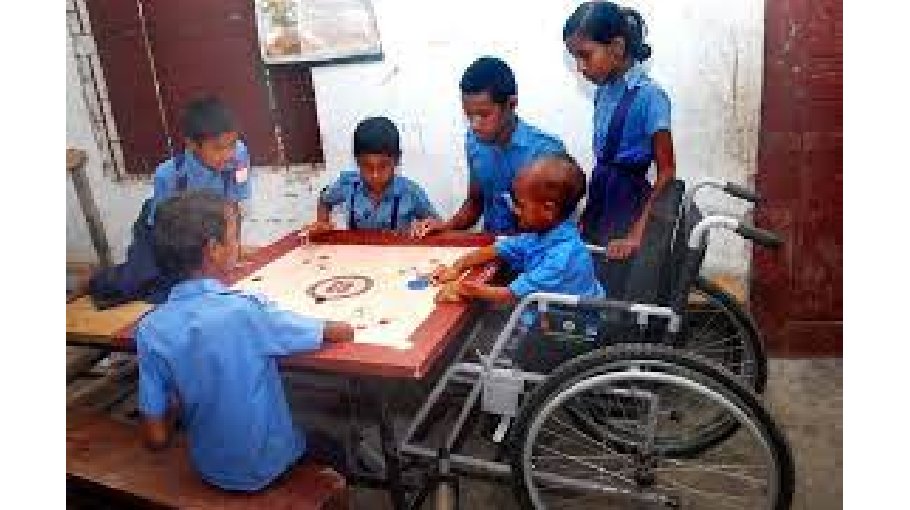
Access Bangladesh Foundation (ABF) in association with the Bangladesh Post with the support of Commonwealth Foundation arranged a virtual meeting on “Challenges of Students with Disabilities and Way Forward” on December 28.
Rasheda K. Choudhury, Executive Director of Campaign for Popular Education (CAMPE) and former adviser to Caretaker Government was the chief guest.
In the welcome speech, Mohua Paul, Chairperson of Access Bangladesh Foundation, said that the education of students with disabilities was impacted very badly by COVID 19. Ahammad Parvej Khan from the Bangladesh Post said in his opening remarks, “Bangladesh Post gives priority to highlighting challenges, success stories and news related to disability. Bangladesh Post is happy to work closely with the development organizations for disability inclusion.” The event was moderated by Albert Mollah, Co-founder and Executive Director of Access Bangladesh Foundation.
Litan Baruri, Head of Program of Access Bangladesh Foundation, presented a keynote paper where he mentioned the rights of students with disabilities in line with the disability related national and international legal instruments like UNCRPD, Rights and Protection of Persons with Disabilities Act, 2013, National Action Plan on Disabilities, SDGs, Commitments of Bangladesh Government to the Global Disability Summit 2018, 2022 and 8th Five- Year Plan. He highlighted ongoing initiatives of the Bangladesh Government with regard to education of students with disabilities. He shared some challenges like inaccessibility of educational institutes, lack of flexible curriculum, lack of accessible educational materials and trained teachers on sign language, insufficient budgetary allocation, complex procedure of writer permission for persons with visual impairment, negative attitude of teachers, students, discrimination, abuse and harassment. He presented 12 recommendations to address the challenges of students with disabilities such as Government should take necessary initiatives to implement education related acts, rules, action plan and commitments for students with disabilities, strengthen coordination among Ministry of Education, Ministry of Primary and mass Education and Ministry of Social Welfare responsible for educational affairs of students with disabilities, allocation of sufficient budget for educational purpose of students with disabilities, improvement of data of students with disabilities, necessary training for teachers , ensuring both structural and informational accessibility of educational institutes, strengthening monitoring mechanism and taking research project for identifying gaps and way forward. He also mentioned that the development organizations should support building capacity of different level stakeholders, support for programmes to promote inclusive education.
Afia Kabir Anila, Student with Cerebral Palsy, Department of Law, North South University said, “My institute is not accessible for me as teachers are not supportive and there is no flexible curriculum and teachers and students are not oriented on disability”.
Samima Akter, Student with Cerebral Palsy, Department of English, Dhamrai Government College explained her struggle, “her name has not been enrolled unless the teacher show her results after four months, she was not able to use the school washroom as she uses wheelchair and the toilet was not accessible for her, she used washroom at home at the time of going to school and again she used after her return to home from school, she is worried about her employment after completing education.
Nazia Hasan Maisha, Student with visual disability, Department of English, Dhaka University said, “There is no available accessible reading materials, writer support, especially I had to face challenges when my writer refused to support just before the exam date, recording permission is not welcomed in the classroom, inaccessible campus for visually impaired persons, always I am in a tense situation to arrange supports”.
Rasheda K. Choudhury, in her speech, said, “Government should focus on implementation of the policies and legislations related to education, monitoring should be strengthened, ministry of primary and mass education and education should be responsible for education of students with disabilities instead of social welfare ministry, defining role of development organizations for ensuring inclusive education of students with disabilities”
Dr. Ajanta Rani Saha, Associate Professor (Paediatrics) of Dhaka Medical College, Mahabubul Munir, Secretary General of SWID Bangladesh, Ghulam Faruq Hamim, Head of Programmes of ADD International, George Tripura, Executive Director of Protibandhi Kallyan Samity from Bandarban, Saifur Rahman, Executive Director of Protik Mohila O Shishu Sangstha from Pabna and six students with disabilities from public and private universities, colleges and technical school and college also spoke in the meeting.
Albert Mollah stated referring to the World Bank’s study that in Bangladesh, lost income due to lack of schooling and employment of persons with disabilities is estimated US$ 1.2 billion annually or 1.74 of GDP. Therefore, all the actors-government, development agencies, civil society, corporate should work together to ensure inclusive education of persons with disabilities in Bangladesh. He concluded the meeting with vote of thanks.