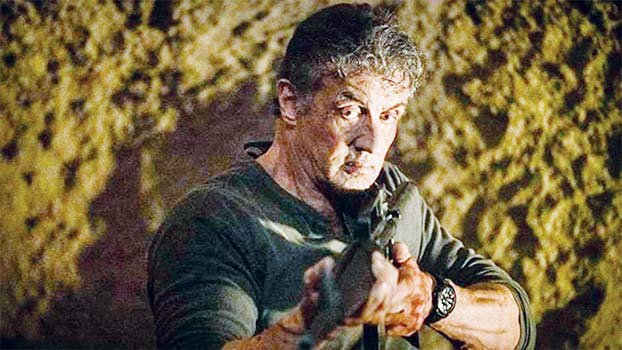
In one scene in Rambo: First Blood (1982), Sylvester Stallone holds a knife to the neck of the local sheriff, somewhere in the woods in small-town northwest America, and says ‘Don’t push it or I’ll give you a war you won’t believe’.
John Rambo has been pushed for over three decades, and has single-handedly waged wars and brought bedlam to the lives of men he usually gives a polite warning to first. Though Stallone’s quietly magnetic portrayal of the archetypal action hero became universally popular, it is interesting to examine how America’s politics cast its shadow on the character, as much as Stallone cast one on the action stars that followed.
The fifth Rambo movie — Last Blood — will be released in India on September 20. Since Stallone is now 73, it’s safe to assume this will be the character’s last outing, so here’s a look back at the evolution of the character that became the gold standard for action heroes.
In 1982, the same year as First Blood, a third instalment of the Rocky franchise was released; it had already made Stallone a household name, and an Academy award nominee. His bodybuilder’s frame wasn’t new to the screens, but the sight of him with a gun in his hands was.
John Rambo’s shadow loomed large, but it would be two decades before Stallone returned to his much-loved role, for Rambo (2008). This was one of the most violent, viscerally nightmarish films ever put together. Stallone’s aging hero waged war in a Burmese jungle, without a political compass or so much as a frown. Rambo, the film suggested, had been all along the child of war and violence, as much as he sought to escape it.
As the new Rambo rolls into theatres, one wonders what final message the killing machine, the original action hero, will leave us with, other than of course, the blood and corpses. —HT