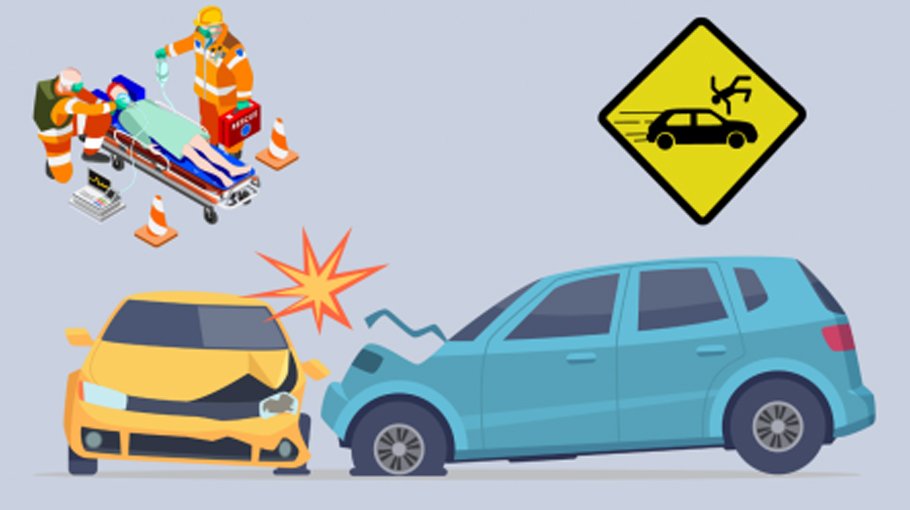
An average of 22 people were killed and 48 were injured daily in road crashes in Bangladesh in 2023.
At least 7,902 people were killed and 10,372 others were injured in 6,261 road crashes in the country in the year.
The figures came from a report revealed by the Bangladesh Jatri Kalyan Samity (Passengers’ Welfare Association of Bangladesh) published on Sunday (January 14 in 2024).
It means on average, nearly 22 people were killed every day in road crashes across the country.
In 2023, a total of 6,929 accidents took place in roads, rail tracks and waterways, resulting in 8,505 fatalities and 10,999 injuries.
Among them, 7,902 people were killed and 10,372 others were injured in 6,261 road crashes, while a total of 512 people were killed and 475 more were injured in 520 railways accidents and 91 people were killed, 152 injured and 109 remained missing in the 148 waterways accidents.
The Bangladesh Jatri Kalyan Samity published the annual report after analysing accident reports published in the country’s national and regional dailies and online news portals during the period.
Secretary General of the organisation Md Mozammel Haque Chowdhury placed the annual report at a press conference at the Dhaka Reporters’ Unity.
He said that road crashes and fatalities have increased over the past nine years as the number of registered vehicles as well as small vehicles, particularly motorcycles and easybikes, has increased four to fivefold. The number of easybikes, motorcycles, and three-wheelers has increased because they continue to operate on national and regional highways despite the government’s ban, said Mozammel Haque Chowdhury.
According to the annual report, motorcycle crashes contributed the most to the deaths with 2,031 incidents resulting in 2,152 deaths and 1,339 injuries.
“In the year, 27.23 per cent or 2,152 people were killed and 12.9 per cent or 1,339 more people were injured in 32.43 per cent or 2,031 motorcycle related crashes,” says the report.
The fatalities in the road crashes and accidents in rails tracks and waterways included 1,950 drivers, 968 pedestrians, 485 transport workers, 697 students, 97 teachers, 154 law enforcement officers, 985 women, 612 children, 30 journalists, 32 doctors, 16 freedom fighters, eight lawyers, 10 engineers, and 111 political activists.
Out of the 8,055 vehicles involved in the incidents, buses constituted 16.15 per cent; trucks, pick-up trucks, covered vans, and lorries 24.84 per cent; cars, jeeps, and microbuses 5.91 per cent; CNG-powered autorickshaws 5.39 per cent; motorcycles a 26.2 per cent; battery-operated rickshaws and easybikes 14.47 per cent; and various other types of three-wheelers 7.19 per cent.
Of all the reported incidents, 52.83 per cent were cases where vehicles struck pedestrians, 20.5 per cent were from head-on collisions, and 14.29 per cent resulted from vehicles veering off control.
Geographically, 34.86 per cent of road crashes took place on national highways, 28.41 per cent on regional highways, and 28.5 per cent on feeder roads. Within city areas, Dhaka accounted for 6.32 per cent of road crashes, and Chattogram registered 1.11 per cent.
Although the report of Bangladesh Jatri Kalyan Samity says that nearly 22 people were killed every day in road crashes in the country, the death rate on the road is actually much higher.
According to the World Health Organization (WHO), nearly 25,000 people are killed in road crashes each year in Bangladesh. It means on average, about 68 people are killed in road crashes in the country every day.
Aminul Islam Sujon, Technical Adviser, Road Safety, Bangladesh at Vital Strategies; said that road crash is a major public health crisis in the country. “We should work together to correct the system and establish safer roads for everyone,” he said.
Talking to the Daily Bangladesh Post, the expert on road safety said that publicity campaigns and awareness raising programmes on safe roads need to be scaled up in the county to reduce death on the road.
He said that the WHO has identified risk factors that can be managed to reduce road traffic death and disability, and the simple, cost-effective solutions to prevent them. These include: establishing speed limit regulations to determine maximum speeds based on each road’s use; regulations requiring proper motorcycle helmet use and enforcement of those regulations; vehicle safety standards that ensure people are buying safe cars; and mass media campaigns paired with enforcement of traffic laws to change road user behaviors.