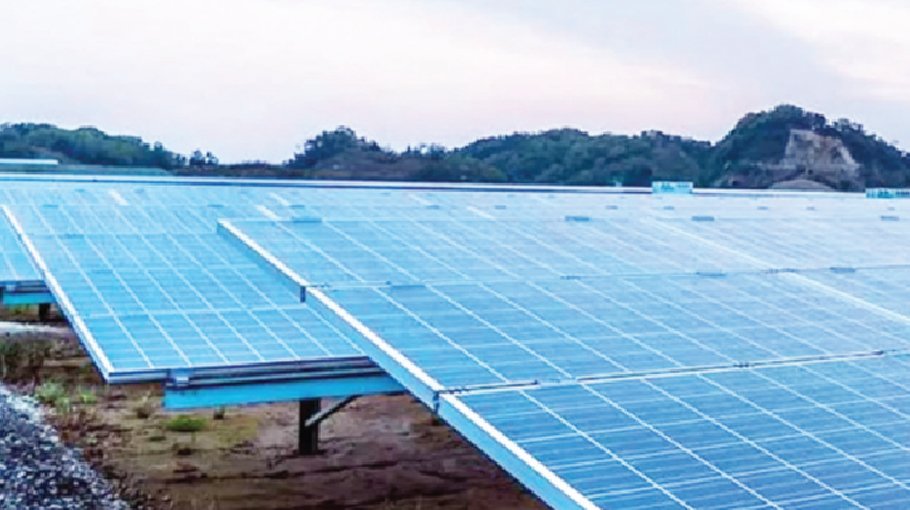
The 68 MW solar park project in Sirajganj is almost completed, and expected to start power supply to the national grid from next month.
This is the first phase of the China-Bangladesh collaborative development of a 500 MW solar power project in North Bengal.
There are currently 10 solar plants in operation as a result of the Teesta 200 MW Solar Park’s opening in Gaibandha last year. There are plans to build 12 more solar power facilities.
To reduce electricity costs, Ministry of Power officials assert that efforts are being made to generate electricity from renewable sources.
The country entered its renewable energy era in 2017 with the launch of a 3 MW solar power plant in Jamalpur’s Sarishabari. Ever since, the country has added only 459 MW of renewable energy to the national grid from 10 solar power plants as of January 2024.
Sources said the rising industrial activities in the northern agricultural areas are boosting the demand for electricity. To meet this growing demand and reduce reliance on fossil fuels, the government is increasing renewable energy-based electricity production.
The aim is to have 40 percent of electricity generated from renewable sources to cut down on foreign currency expenditure. Solar parks are being set up on unused lands in various districts, including Sirajgan, Pabna, and Kurigram.
The Sirajganj 68 MW Solar Park, a joint venture between Bangladesh and China, is being built on 214 acres of land in Syedabad. Over 400 engineers and skilled workers, both domestic and foreign, are working on it. Around 27,000 pillars have been set up, each supporting solar panels. Other necessary structures, like control buildings and dormitories, are in the final stages of completion.
According to Shamim Talukder Labu, managing director of Lam Enterprises, the contracting company, the project is 80 percent complete. Once all the panels are installed, electricity will start flowing into the national grid by the end of next month.
Engr. AM Khurshedul Alam, Managing Director of Bangladesh-China Renewable Energy Company, mentioned that the Sirajganj Solar Park project is a joint effort of Northwest Power Generation Company Limited and China National Machinery Import and Export Corporation. Plans for generating 500 megawatts of electricity from solar parks in districts like Pabna and Kurigram are also in progress.
Jannat Ara Henry, Member of Parliament for Sirajganj-2 Constituency, highlighted the positive impact of this project on the local economy and industrial development. Alongside this 68 MW plant, more solar power plants are planned for the vast fields along the Jamuna River.
The estimated cost of building the Sirajganj solar power plant is $77 million.
Additionally, the government has approved proposals recently for establishing 100 MW solar power plants in Khulna, Moulvibazar, and Rajbari, totaling 300 MW. These projects will operate under a ‘no electricity, no pay’ arrangement for 20 years, with electricity priced at Tk 10.92 per unit.
The country’s solar project approvals hit 2.1 GW in 2023. In December alone, the Bangladeshi authorities approved 630 MW of PV projects. Most of these projects secured a fixed tariff of around $0.10/kWh.
The Bangladesh Solar and Renewable Energy Association’s chief adviser, Dipal C. Barua, expressed strong expectations that green energy will make up a sizable portion of the nation’s overall energy mix.
The nation still has to pay about Tk 16–17 per kilowatt of solar electricity, while the global average is Tk 5, according to M. Zakir Hossain Khan, chief executive of Change Initiative, an energy research organization, and a climate finance analyst.
Policymakers emphasized that Bangladesh heavily relies on fossil fuels for energy and aims to shift towards renewable energy. Solar power is crucial to achieving these targets, considering the country’s high solar potential and growing energy demand.
The government’s efforts, including large-scale projects and off-grid solar initiatives, signify a significant step towards a greener future.