The 1974 tripartite agreement, which is often referred by the Islamabad as a reconciliatory deal when Dhaka seeks justice for 1971 genocide, cannot prevent Bangladesh asking for trial of Pakistan for the atrocities committed during the Liberation War.
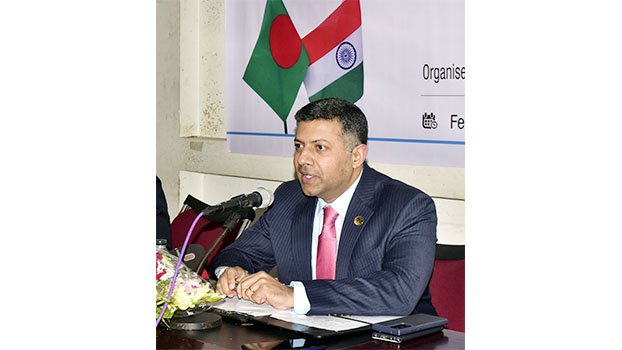
The trial can take place anytime as there is ‘no statute of limitations’ in terms of times and in other arrangements for genocide, Indian High Commissioner in Dhaka Vikram Kumar Doraiswami said on Monday, replying to a question at the ‘DCAB Talk’ with the Diplomatic Correspondents Association, Bangladesh.
India is a party of the tripartite agreement along with Dhaka and Islamabad which was signed mainly to bring back stranded Bangladeshis from Pakistan.
About 3 million people were killed and 300,000 women were raped in Bangladesh during the war of independence in 1971 by the Pakistan army and their occupational forces. Indian soldiers fought with Bangladesh. This year marks the 50 years of Bangladesh.
State Minister for Foreign Affairs Md Shahriar Alam recently asked Pakistan to seek apology officially for the genocide and also sought completion of the repatriation of stranded Pakistanis in Bangladesh, and settling the issue of the division of assets, when new Pakistan High Commissioner Imran Ahmed Siddiqui called on him.
Following that meeting, the Pakistan High Commission in a separate statement said all the issues were resolved through the 1974 tripartite agreement, a comment which drew public outrage in Dhaka.
Dr Nuzhat Choudhury, daughter of martyred-intellectual Dr AFM Alim Choudhury, rejected such narrative and demanded trial of the Pakistani army and government for the genocide of 1971, later in a programme.
A direct victim of the 1971 genocide, Dr Choudhury said his father, a prominent doctor in Dhaka that time, was abducted and brutally killed by the Pakistan army and its collaborators in Dhaka just before the surrender on December 16.
“There have been thousands of attempts (by pro-Pakistanis) to forget that genocide, and it is still happening today. Pakistan has said that what has happened is over, now let us both move forward in the spirit of Muslim brotherhood. But they did not apologize even once, not even a single Pakistani general was tried for that genocide,” she had lamented in an event in New Delhi.
“Any injury needs a 'closure'. As a doctor, I can say that if the wound is not healed properly, the pain in the wound remains. And here we see constant attempts to reduce the number of victims of genocide,” she had said.
The Indian High Commissioner said: “To the best of my knowledge there is no statute of limitations on genocide. The genocide convention makes it very clear that there is no statute of limitations in terms of time, and there is no statute of limitations on any kind of arrangement that may have been arrived at”.
“So this (genocide trial) is something that is entirely within the prerogative of the government of Bangladesh to assess history and to see how this goes forward,” he said while sharing his ‘personal understanding’ of the international law on this matter.
He also suggested that the 1974 agreement must be looked at from the context of that time since it was done to ensure that Bangladeshis in Pakistan custody can return home.
“History is history and whatever was signed was signed at that particular time. It’s the prerogative of the Bangladesh government to have its own perspective on the matter,” he said.
“We would certainly watch it with sympathy and understanding,” the High Commission added.